Last Updated on October 13, 2026 by Sarah Wilson
Turkmenistan isn’t a country that many people get to visit. It’s one of the more unusual destinations I’ve travelled to, with its strange capital city, spectacular landscapes, ancient ruins and traditions that you don’t come across every day.
I recently spent two weeks travelling around the country on the Turkmenistan Encompassed tour with Undiscovered Destinations. White marble buildings, golden horses, furry hats, dinosaur footprints, and landscapes that looked almost unreal.
And then there were the people, the markets and a few unexpected encounters along the way.
These are my personal highlights from Turkmenistan — the places, experiences and little moments that have stayed with me since I returned.
Ashgabat: A Capital City Like No Other
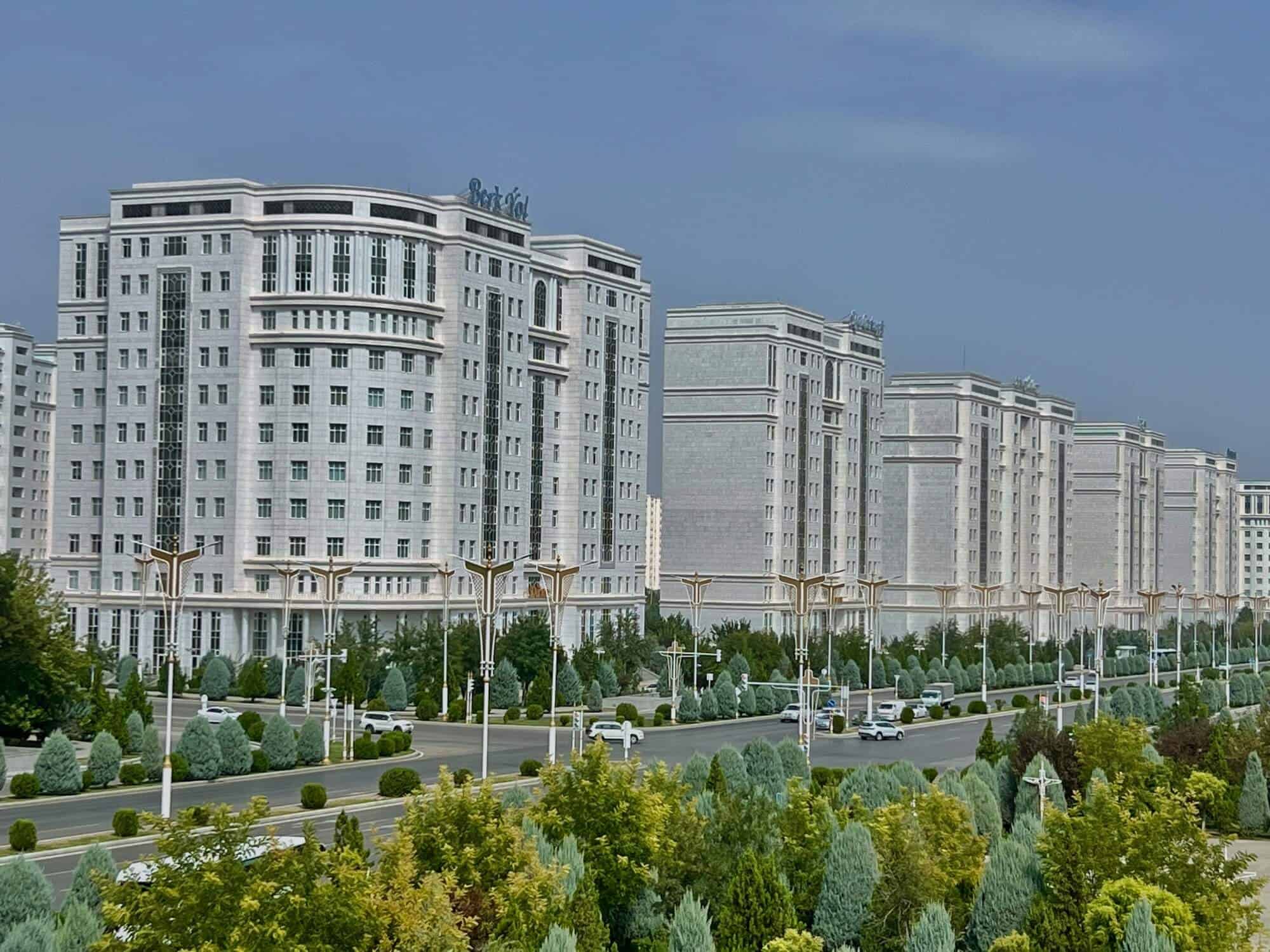
Ashgabat is a city that takes a bit of getting used to. Known for its white marble buildings, gleaming white cars and grand monuments, it feels unlike almost any other capital I’ve visited.
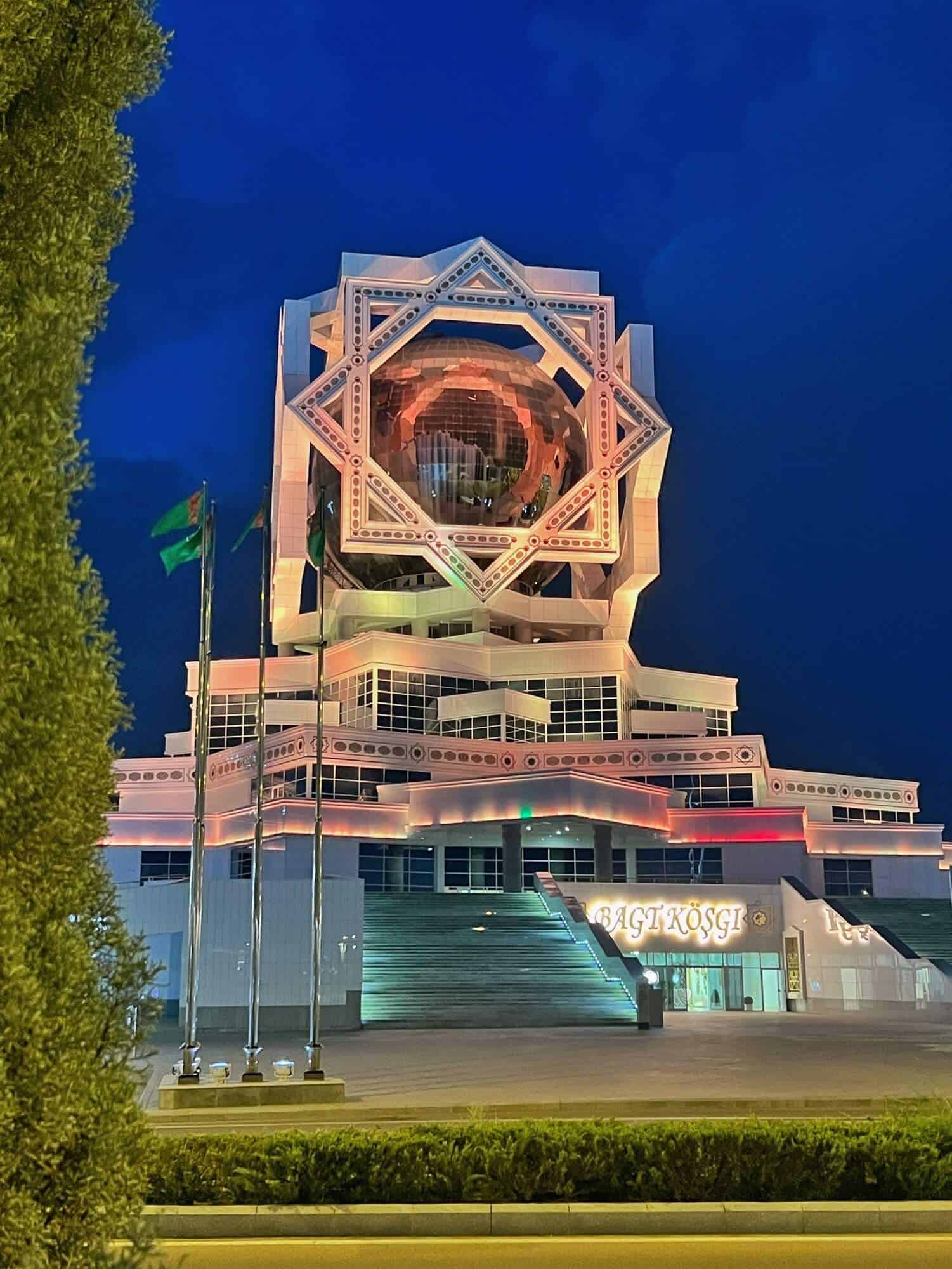
One of the most striking buildings is the Wedding Palace, perched on a hill overlooking the city. Looks a bit alien-like at night.
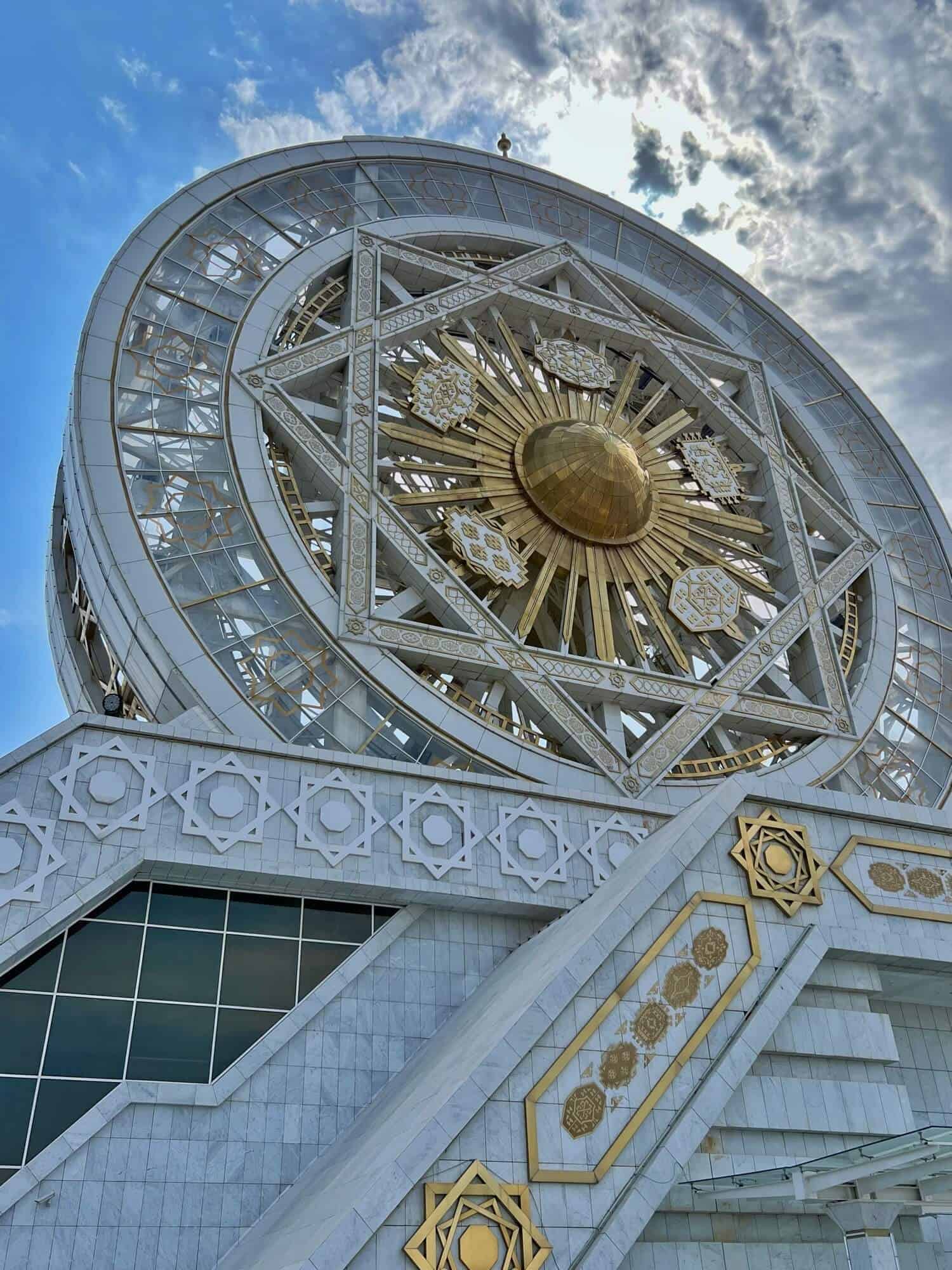
The city is also home to the world’s largest indoor Ferris wheel, housed inside an enormous glass-covered structure. It’s certainly not something you expect to find every day!
What surprised me just as much as the architecture, though, was how quiet the city was. For a capital city, with all those enormous buildings and wide roads, there seemed to be remarkably little traffic around. It was hard not to wonder where everybody was.
The city also takes on a completely different character at night, when the buildings and monuments are illuminated. In some places, it felt a little like Las Vegas, with extravagant displays of lights, including some rather striking illuminated camel decorations.
Ashgabat is certainly memorable. Whether you find all that marble and grandeur impressive or a little surreal, it’s not a city you’ll forget in a hurry.
An Unexpected Invitation to a Turkmen Wedding
One of the highlights of my trip to Turkmenistan was something that wasn’t on the itinerary at all: being invited to a local wedding reception.
The owner of our hotel was a guest at the wedding and, somehow, we were invited along too. It was a wonderful opportunity to experience something much more personal than visiting another monument or historical site.
The music was excellent, and everyone was so welcoming. I honestly can’t imagine turning up as a foreign tourist at a wedding in the West and receiving quite the same welcome.
Of course, being invited to a wedding also meant dancing. So I found myself enthusiastically partnered with a rather drunk uncle who was clearly determined to show me a good time.
His English mostly consisted of proudly shouting “1234 thank you very much” at me, which was eight words more than I could manage in Turkmen.
Fortunately, some of the local ladies came to my rescue and invited me to dance with them instead. I was more than happy to accept!
It was one of those travel experiences you simply can’t plan. We arrived as visitors and were welcomed into a celebration by people who had no particular reason to make us feel included, but did so anyway. I’ll remember that wedding long after I’ve forgotten the names of some of the places we visited.
Goat Massages and Other Unexpected Experiences
The wedding wasn’t our only unexpected experience in the area. We also visited the home of a lovely old lady who kept goats, and discovered that her animals offered a rather unusual form of massage.
All you had to do was kneel down on the ground, and the goats would jump up and walk around on your back. It sounds a little bizarre, but it actually felt lovely!

There was, however, one larger goat who seemed to have rather more in mind than simply giving me a massage. I’ll leave that to your imagination, but let’s just say he was a little overenthusiastic with his attention.
Between the goat massages, the wedding reception and the warmth of the local people, this was one of those parts of Turkmenistan that made the trip special. It wasn’t about ticking off sights on a list. It was about being welcomed into people’s lives, even if only for a little while — and occasionally having to fend off a rather amorous goat.
Big Furry Telpek Hats and a Market Photo
One thing I noticed in Turkmenistan was how many older men wore enormous furry hats. These traditional sheepskin hats are called telpek, and they certainly make a statement!
We came across them again at a local market, where the hats were on sale. The seller was keen for us to try them on and insisted on taking a photograph of us all wearing them.
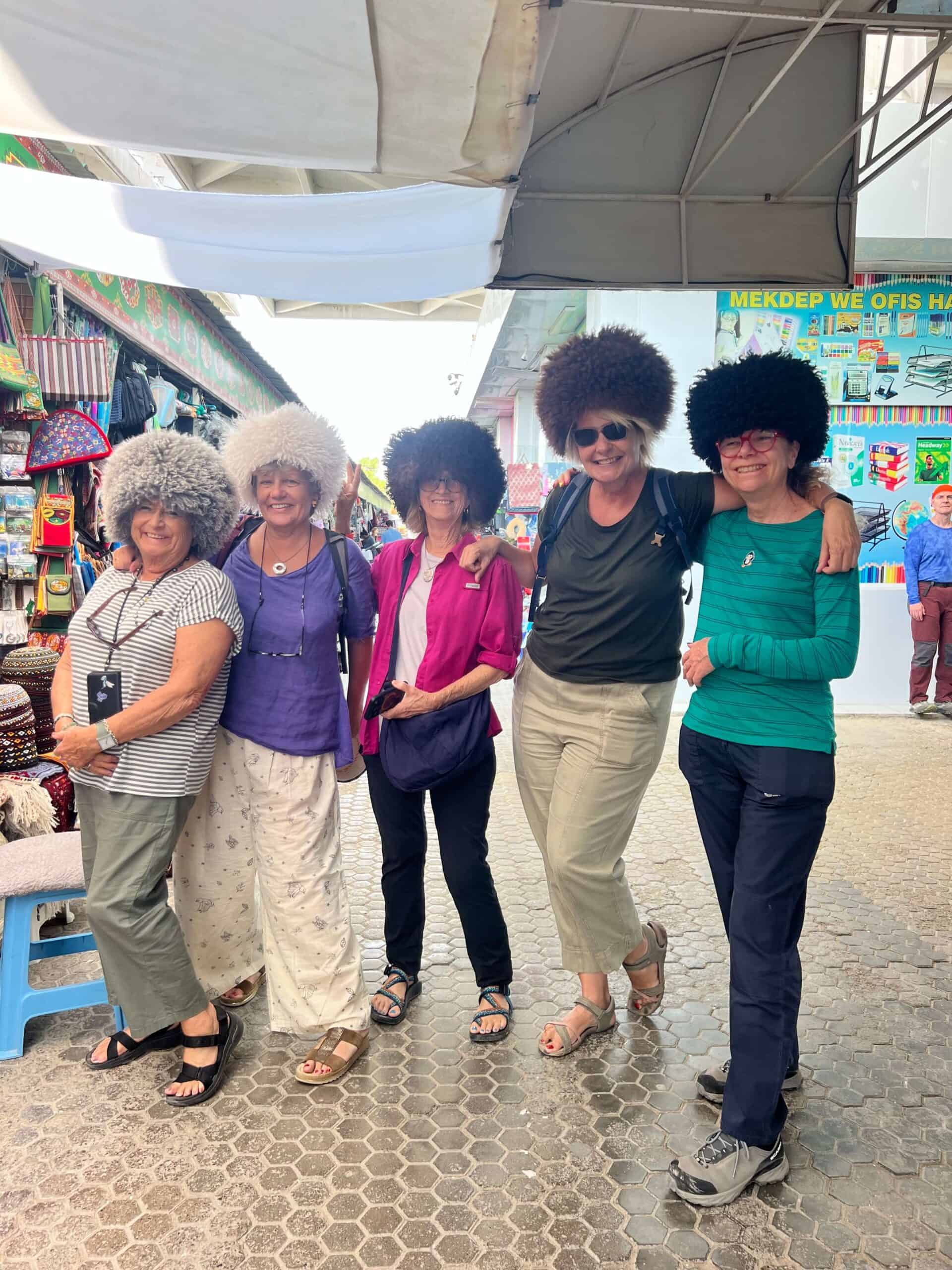
Naturally, we obliged. It’s not every day you find yourself posing in a giant furry hat in Turkmenistan!
It was another of those small encounters that made the trip enjoyable. The markets weren’t just places to buy things; they were opportunities to meet people, have a laugh and come away with a few memories — and photographs — that were rather more interesting than the usual holiday snaps.
The Moon Mountains: A Definite Highlight
The Moon Mountains were one of my absolute highlights in Turkmenistan. It’s difficult to explain just how stunning this area was. The scenery was extraordinary, and no matter how many photographs I took, I couldn’t quite capture what it was like to be there.
Naturally, I tried. I must have taken a million photographs, which is my excuse for the camera roll being full of them. Looking at the pictures afterwards, though, I still felt they didn’t do the landscape justice.
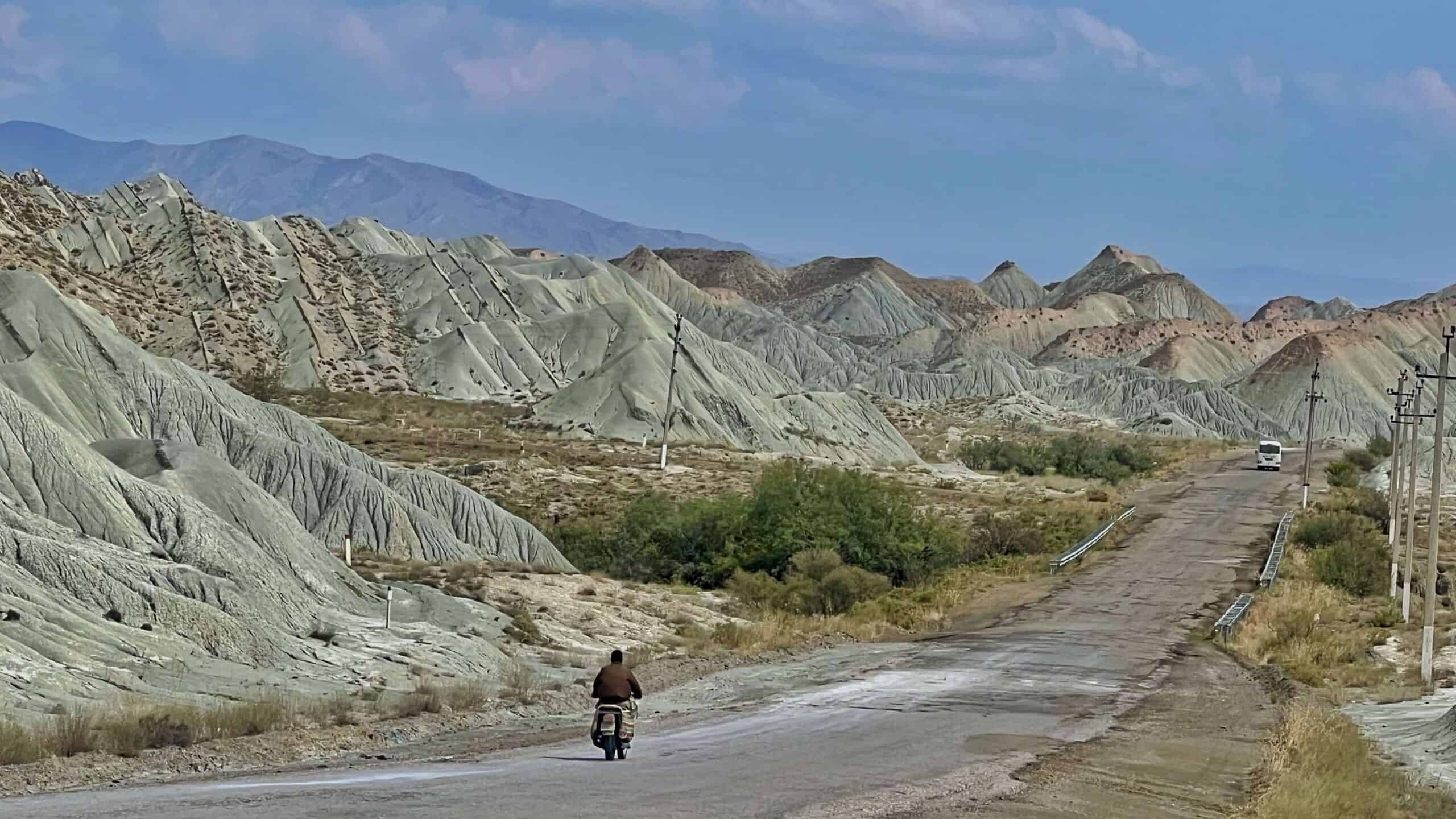
Getting there also involved passing through a security checkpoint, as we were travelling close to the Iranian border.
But the thing I remember most is the scenery itself. Sometimes you visit somewhere famous and wonder what all the fuss is about. The Moon Mountains were the opposite. I was genuinely impressed, and this was one place where I simply wanted to keep looking — and taking photographs.
Nohur: A Rainy Night and a Curious Cemetery
Our first planned camping night was in Nohur, a remote mountain village. Unfortunately, the weather had other ideas. It was pouring with rain, so camping wasn’t an option, and we all ended up sleeping together in a large room instead.
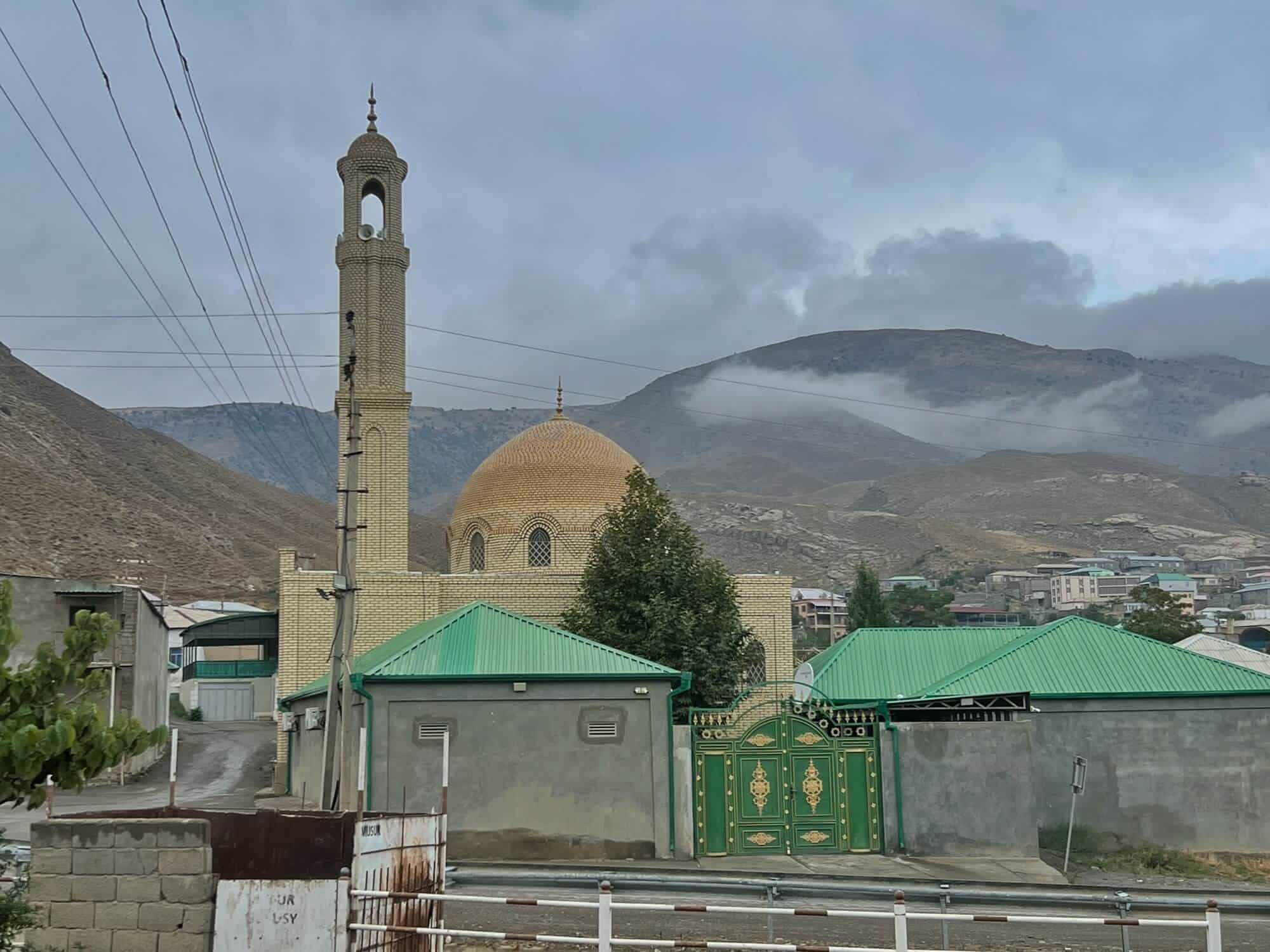
Sleeping arrangements were basic, to say the least. But the real challenge wasn’t the floor. It was the SNORING!
When you’ve got a whole group of people sleeping in the same room, it only takes a couple of enthusiastic snorers to make a decent night’s sleep impossible.
Let’s just say it wasn’t my most restful night of the trip.
Still, these are the things that happen when you travel to remote places. You can’t control the weather, you can’t always choose your sleeping arrangements, and you certainly can’t control your fellow travellers’ nocturnal noises.
After our rather sleepless, rain-soaked night, we had the chance to walk around the local village.
The contrast with Ashgabat was striking. Having seen the capital’s grand white marble buildings and displays of wealth, Nohur felt like a very different world. The village appeared much poorer, and it was a reminder of how varied life can be within the same country.
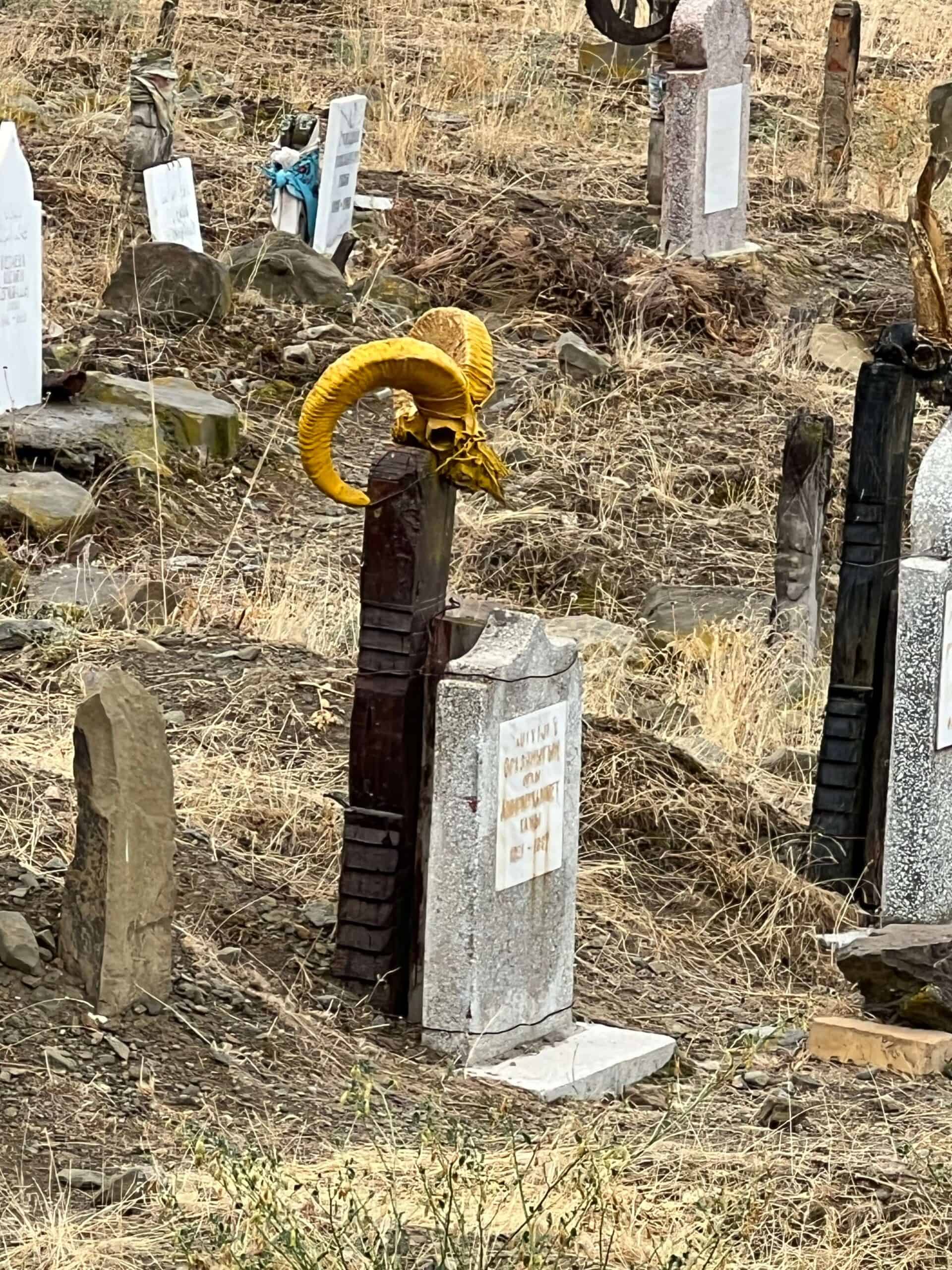
We visited a graveyard, and what caught my attention was the unusual decoration on some of the graves. Several had golden ram’s horns, which supposedly meant they were descendants of Alexander the Great. It’s a fascinating story, although it’s worth treating that connection as a local tradition rather than an established historical fact.
Yangykala Canyon: A Sunset to Remember
Yangykala Canyon was one of the most beautiful places we visited in Turkmenistan. The landscape is spectacular, with layers of coloured rock creating an almost unreal-looking scene.
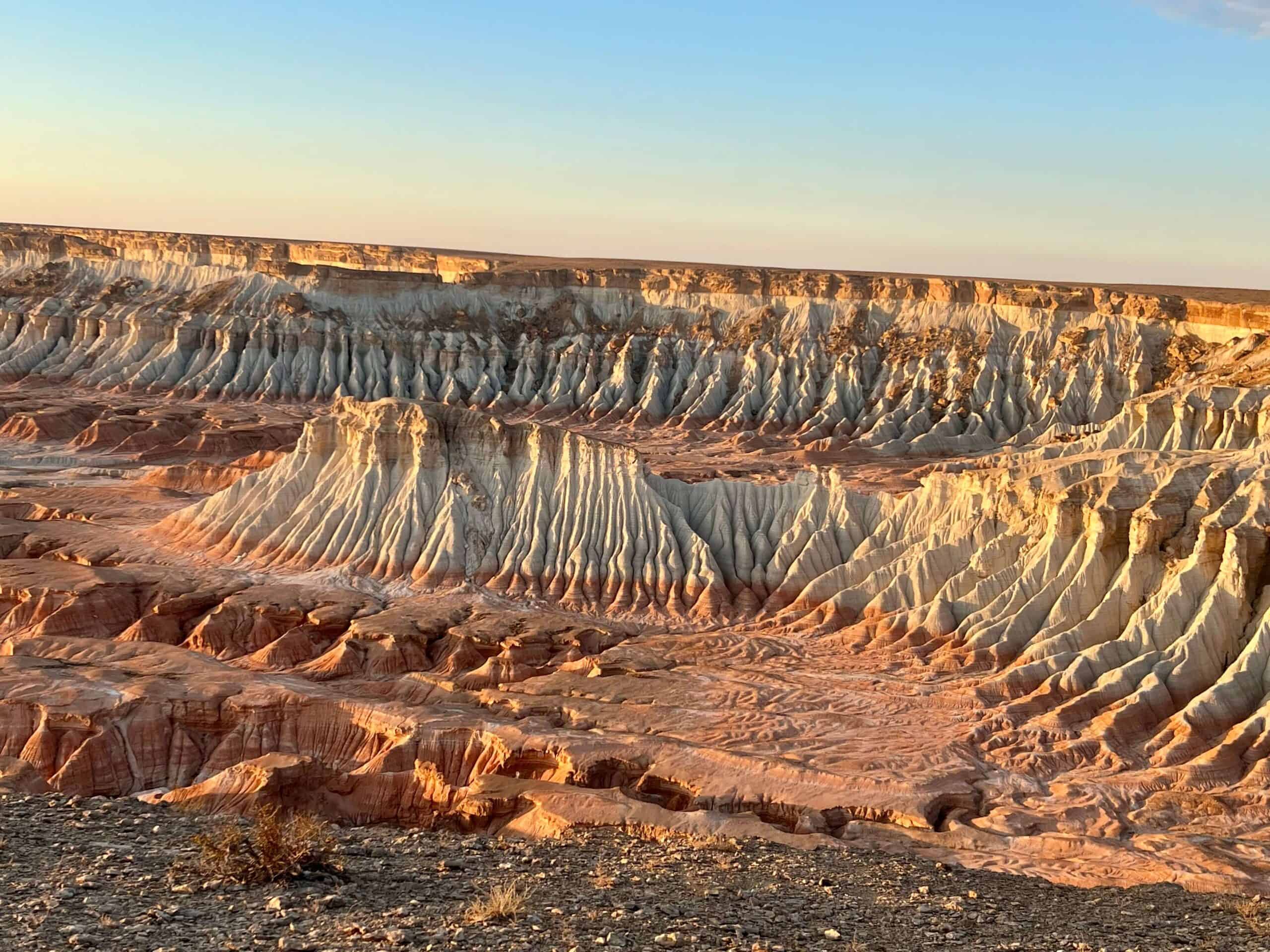
We were lucky enough to see a lovely sunset, with the changing light bringing out the canyon’s colours. It’s the sort of place where you can simply stand and take in the scenery rather than feel you have to rush off to the next attraction.
One of the things that made it so special was its remoteness. We were a long way from anywhere, and there were very few other people around. No crowds, no queues and no jostling for the best photo spot.
One slight drawback: the wind! It was an extremely windy night, which made camping a little less idyllic than the scenery might suggest. I did fear that I might wake up at the bottom of the canyon!
Dinosaur Footprints: A Prehistoric Surprise
I was rather impressed by the dinosaur footprints in Turkmenistan. I’d never seen anything quite like them before, and it’s not every day you get to stand beside tracks left by dinosaurs millions of years ago.
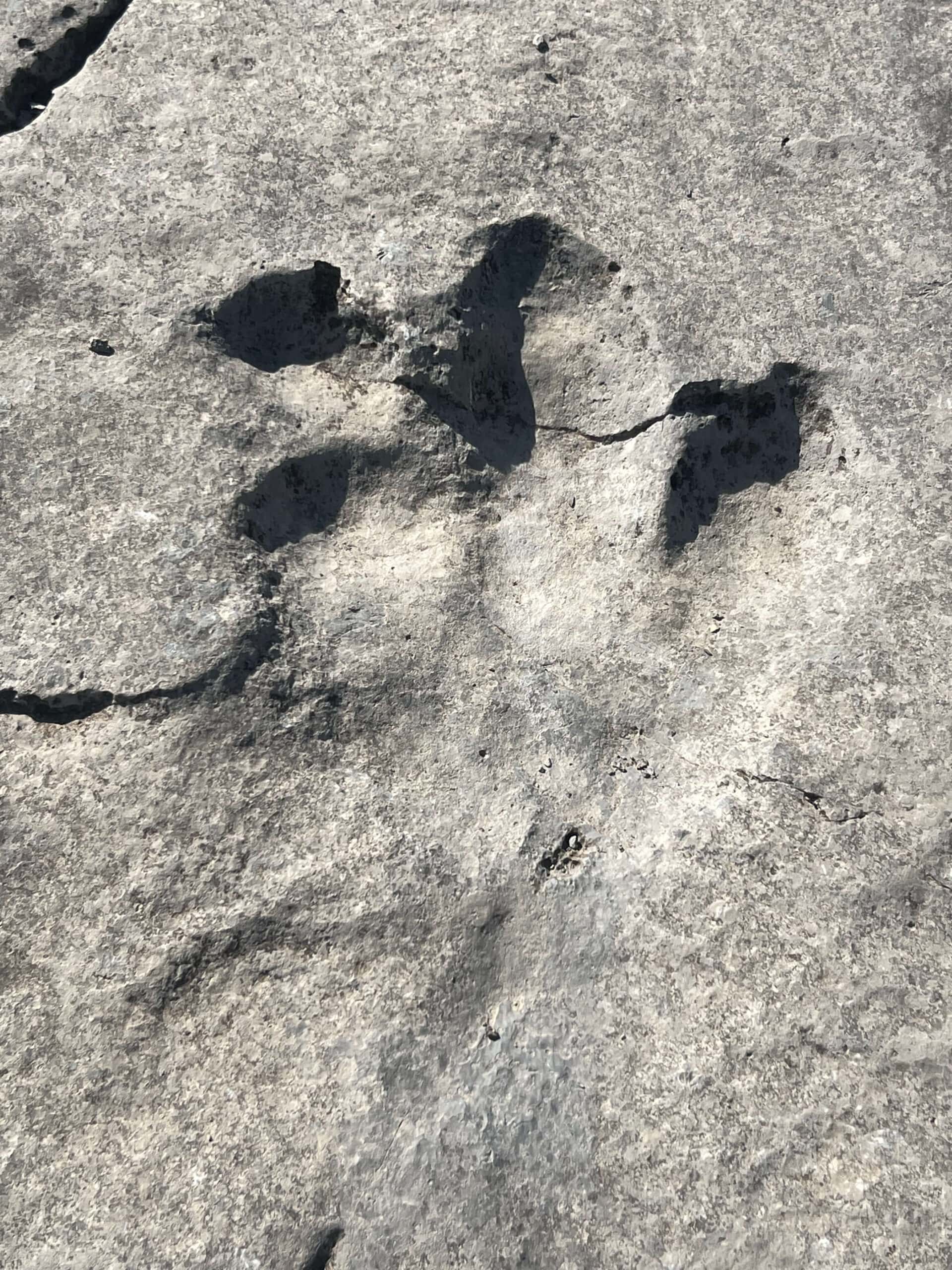
Getting to them was an adventure in itself. There’s a steepish scree slope to negotiate, but you can take a motorbike up instead of walking the whole way. It is only a 20-25 minute walk uphill. Nevertheless, I opted for the motorbike on the way up and walked back down, and even then I found myself questioning my life’s choices.
The footprints themselves are on a steep, sheer-looking slate slope. The strange thing is that, as you make your way up, it doesn’t necessarily feel quite as vertical as it looks. Only when you turn around and look back down do you realise how steep the climb has been. It made my legs go a little bit wobbly!
But the effort was worth it. Seeing the footprints in their natural setting was fascinating, and this was one of those experiences that made Turkmenistan feel so different from other places I’ve visited.
Turkmenistan’s Largest Waterfall — Without the Water
After the dinosaur footprints, but before our visit to the Cave of Forty Girls, we stopped to see Turkmenistan’s largest waterfall.
Our guide had already warned us that there was currently no water flowing, but that didn’t deter one member of our group. If it was on the itinerary, we were all going to see it!
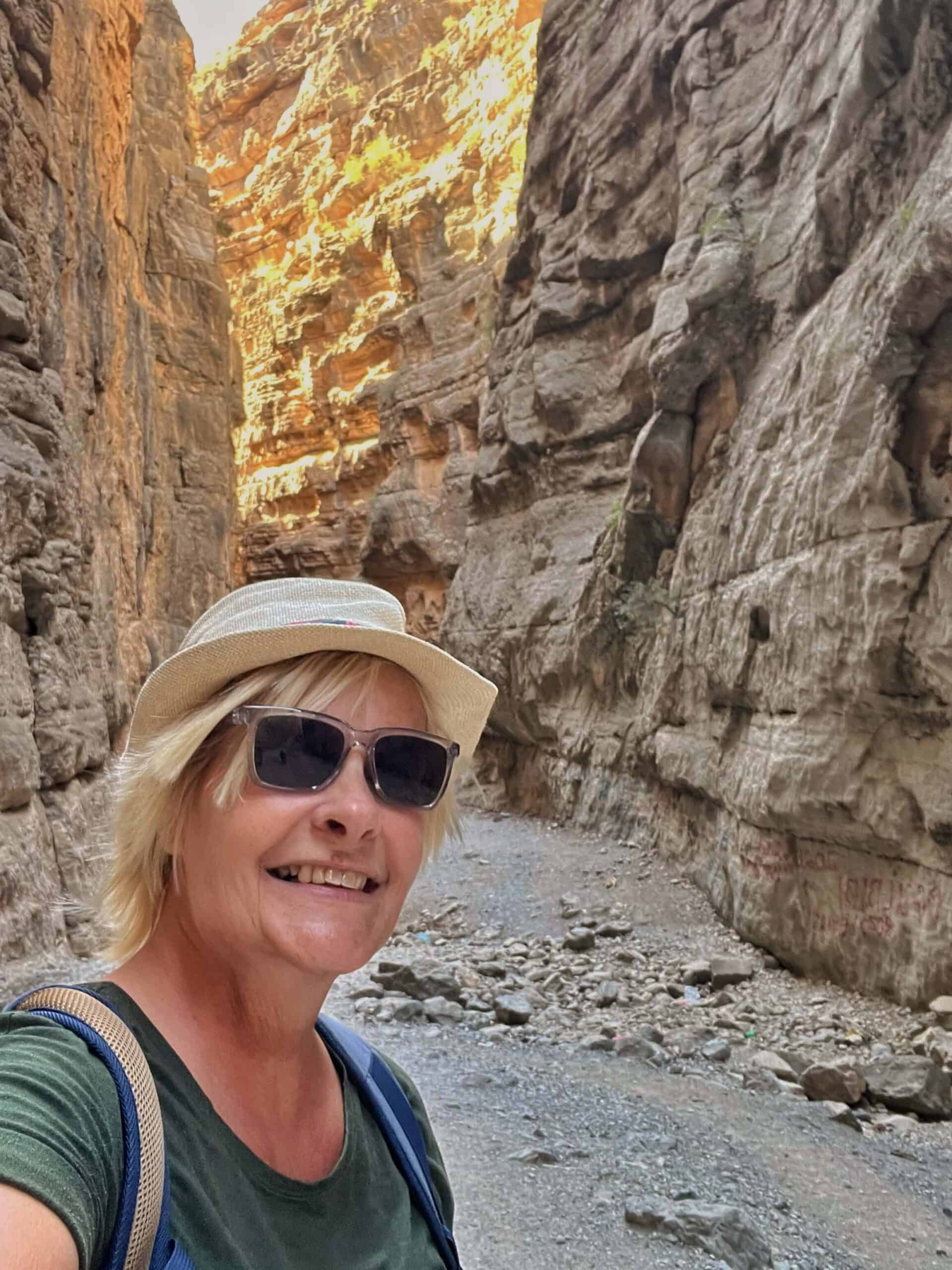
So off we went, walking along an empty riverbed that was unfortunately littered with rubbish. This was one of the few places on the trip where we’d seen much rubbish. Overall, Turkmenistan had struck me as a remarkably clean country, so the contrast was noticeable.
If you ignored the litter, the walk through the gorge was actually quite pretty. After about 20 minutes, we reached our destination: Turkmenistan’s largest waterfall.
There it was. No water, no cascading torrent, no dramatic waterfall moment.
Naturally, we did what any sensible group of tourists would do. We posed for a photograph beneath it, pretending it was every bit as impressive as a waterfall in full flow!
Then it was back to the jeeps, where we enjoyed a lovely picnic. At least lunch delivered!
The Cave of Forty Girls: A Place of Wishes and Legends
After our picnic, we enjoyed a lovely walk through the gorge. The scenery was beautiful, and unlike our earlier walk to the dry waterfall, there was no litter to spoil it.
Eventually, we reached the Cave of Forty Girls, a pilgrimage site. The first thing I noticed was the fabric hanging from the cave roof. Strips of different colours hung everywhere, giving the ceiling a rather unusual appearance.
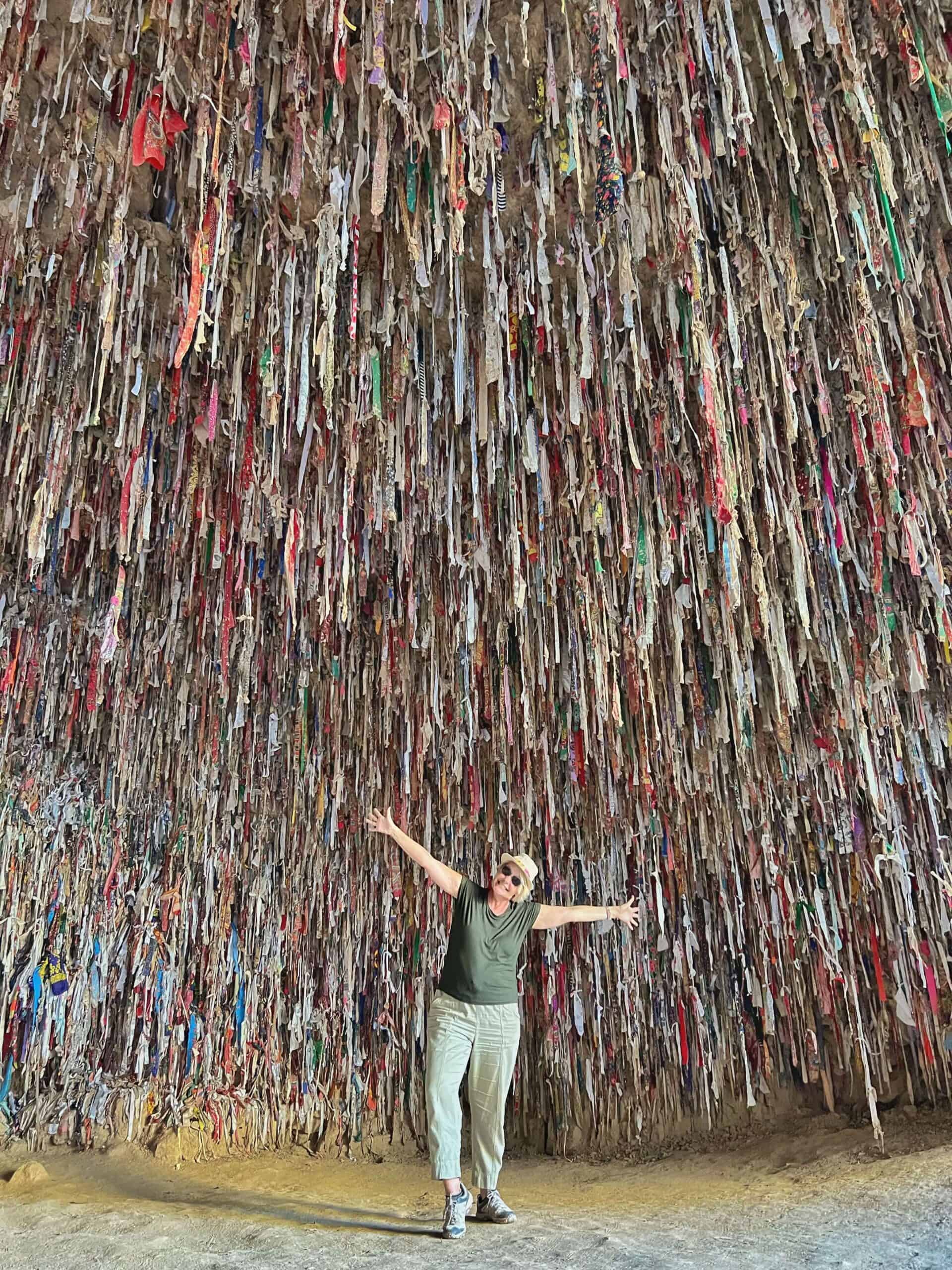
The cave is associated with a rather grim local legend. According to one version, forty girls were hiding from their enemies when the rocks suddenly opened up and swallowed them, closing behind them so their pursuers couldn’t reach them.
Today, it’s a place of pilgrimage. Visitors leave strips of colourful fabric associated with wishes and prayers. There are also traditions involving throwing small pieces of clay towards the roof and hoping they stick, which is said to bring good luck or help a wish come true.
It’s a strange and memorable sight.
Merv: Ancient Cities and a Sponge-Finger Cake
We spent a good four hours or so exploring Ancient Merv, one of Turkmenistan’s most important historical sites. It’s a UNESCO World Heritage Site, and once you know a little about its history, you can understand why it deserves so much time.
Merv was a major stop on the Silk Road, the network of trade routes that connected places across Asia and beyond. It wasn’t just a trading centre, either. At its height under the Seljuk Empire in the 11th and 12th centuries, it was a major centre of power, learning and culture.
The interesting thing is that Ancient Merv isn’t one city that grew and developed in the same place. Over thousands of years, a succession of cities was built across the oasis as settlements shifted and earlier ones were abandoned. Today, you can explore the remains of these different cities, including their old walls, fortifications and monumental buildings.
There are several mausoleums and other historic structures scattered across the site. I’ll be honest: after a while, one mausoleum can start to look much like another, especially when you’re trying to take in so much history in one visit!
One building that really stood out was the Great Kyz Kala, an ancient fortress with unusual ribbed walls. To me, it looked rather like a giant sponge-finger cake! It’s one of Merv’s most distinctive structures, with its corrugated mud-brick walls thought to date to around the 8th or 9th century. It was part of the wider medieval settlement around Merv, rather than a mausoleum like many of the other buildings we explored.
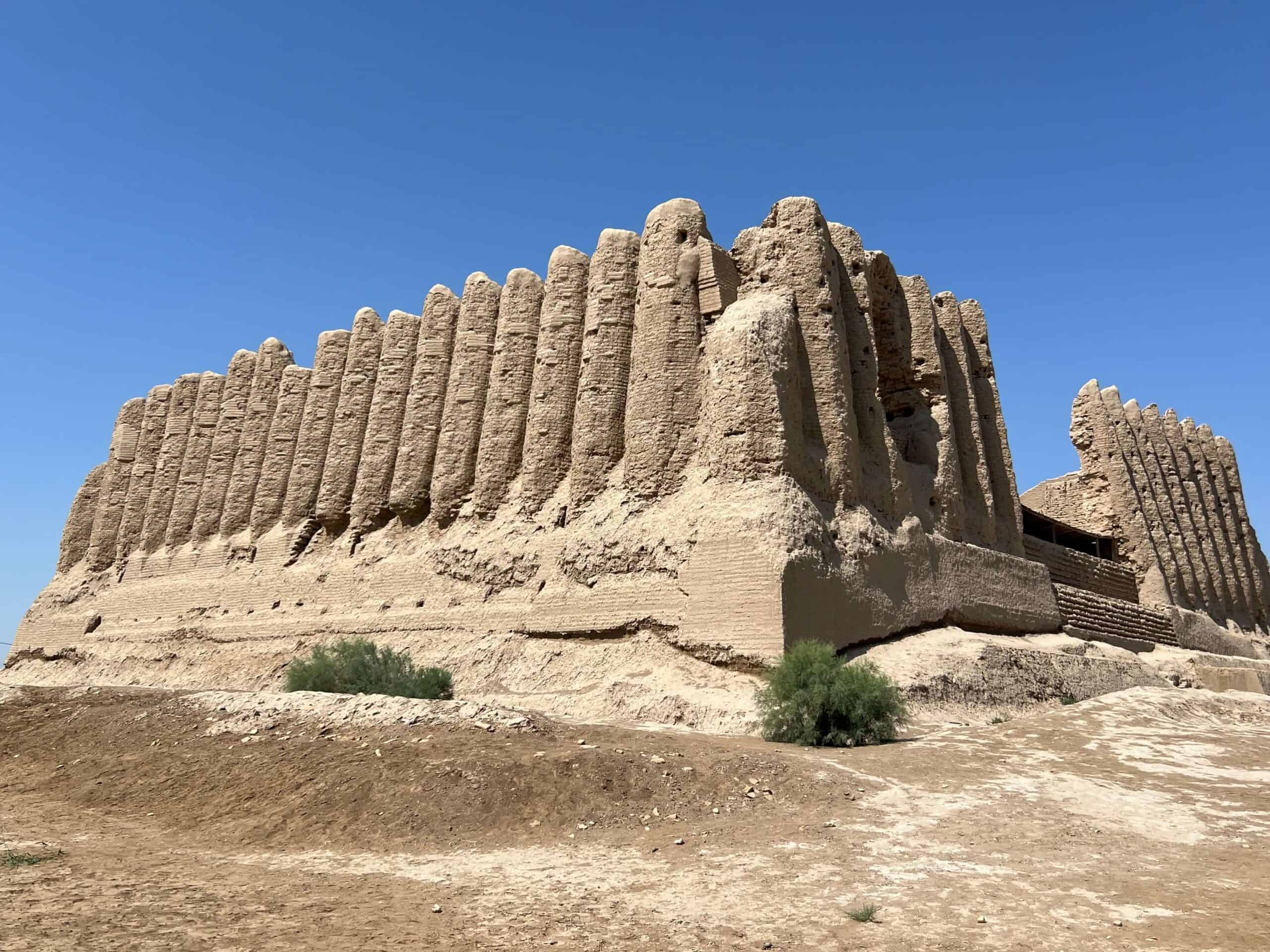
Apparently, my brain prefers remembering ancient architecture through cake comparisons.
Merv is a vast site, and half a day gives you time to appreciate its scale without necessarily remembering every building afterwards. What makes it special is knowing these quiet ruins were once part of a thriving city at the crossroads of the Silk Road — a place that played a significant role in Central Asia’s history.
Kunya-Urgench: Ancient History and Living Traditions
Kunya-Urgench was another of Turkmenistan’s important historical sites. Compared with Merv, it felt much busier, but with local people, not tourists who were visiting the mausoleums to pray and pay their respects. It made the site feel like more than just an archaeological attraction for tourists. These places still held meaning for the people who lived nearby.

We spent time strolling around the mausoleums, taking in the architecture and the atmosphere. I found it fascinating to see people using the site for their own religious and personal reasons while we were there as visitors, exploring the history.
The Beautiful Golden Horses of Turkmenistan
You can’t write about Turkmenistan without mentioning its horses. The country is famous for its Akhal-Teke horses, known for their elegant build and distinctive metallic-looking coats, which can almost seem to shimmer in the light.
I’m not usually the most confident person around horses, but these were something else. They were absolutely beautiful, and I even cuddled one.
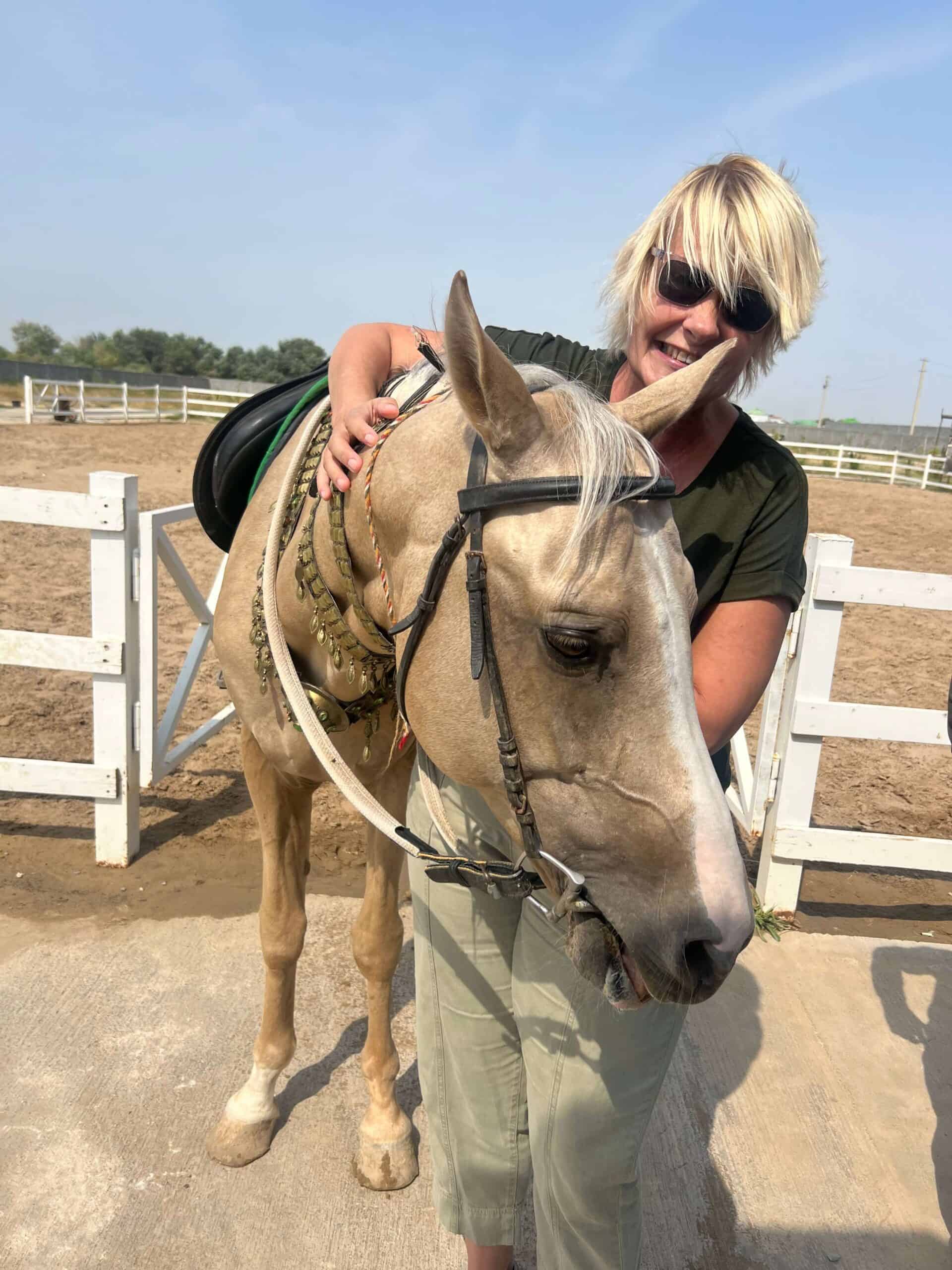
So much for being nervous around horses! I was practically ready to kidnap it and take it home with me. I’m not sure Winston, my cat, would have been quite so impressed with my new addition. I suspect the terrace might have been a bit of a squeeze!
The Akhal-Teke is one of Turkmenistan’s great national symbols, and it’s easy to understand why the breed is so prized. They’re elegant, striking animals, and seeing them in their home country made them all the more special.
Darvaza Gas Crater: The Famous Door to Hell
I’d heard plenty about Turkmenistan’s famous Darvaza Gas Crater, often nicknamed the Door to Hell, and it was somewhere I was particularly keen to visit.
The photographs you see online show an enormous crater filled with roaring flames, looking like something from another planet. The reality, at least on my visit, was rather different.
We stayed in a huge yurt complex designed for tourists, and from there we went to see the crater. It was probably the most touristy experience of the entire trip.
Instead of the vast inferno I’d imagined from the photographs, I found a crater containing lots of smaller fires burning in different places.
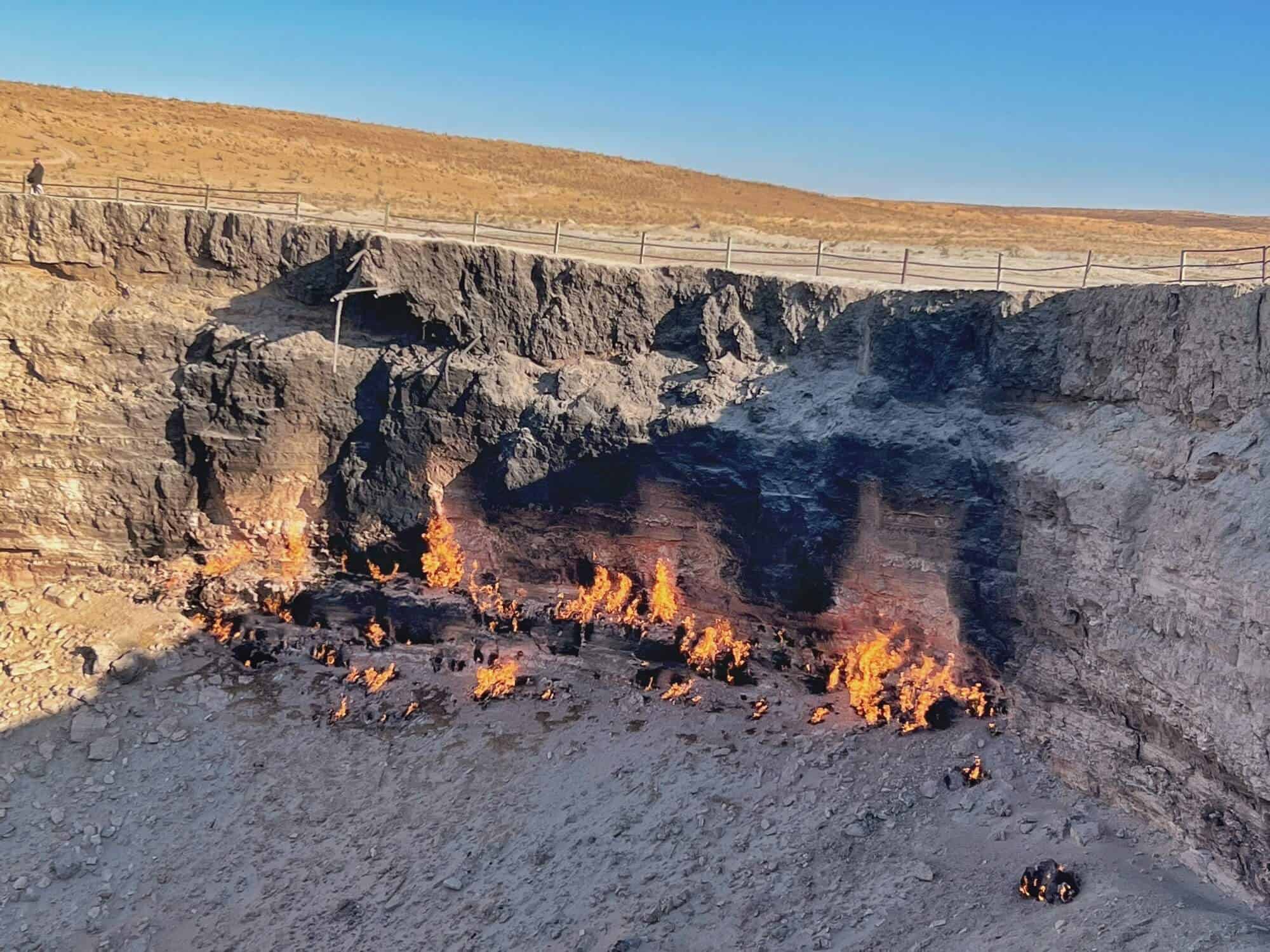
I also struggled to capture it on camera. In fact, I thought the crater looked better in daylight, with the flames burning in the middle of the desert.
For me, it was a little underwhelming and, dare I say it, rather oversold as a tourist attraction. Perhaps my expectations were too high, but I came away feeling the reality didn’t quite live up to the hype.
That said, the story behind the crater is fascinating.
The crater lies in the Karakum Desert, where substantial underground natural gas deposits exist. The commonly told story is that Soviet geologists were drilling for gas in 1971 when the ground collapsed into an underground cavity, leaving a crater through which gas escaped. They then set the gas alight, reportedly hoping it would burn off within a few weeks.
It didn’t quite go to plan.
The flames continued to burn for decades, turning what is often described as an industrial accident into one of Turkmenistan’s best-known attractions. However, the exact origins and timeline are less certain than the familiar story suggests, with research published in 2026 raising questions about when sustained burning actually began.
It’s an extraordinary story, and I can understand why people want to see it. But this was one occasion when the reality didn’t quite match the image I’d built up in my head. I’m glad I visited, but it wasn’t one of my personal highlights.
Turkmenbashi and a Dip in the Caspian Sea
Turkmenbashi was a surprisingly nice town, and it was a chance to see another side of Turkmenistan. While I was there, I even managed a paddle in the Caspian Sea. I can now say I’ve dipped my toes into the world’s largest inland body of water!
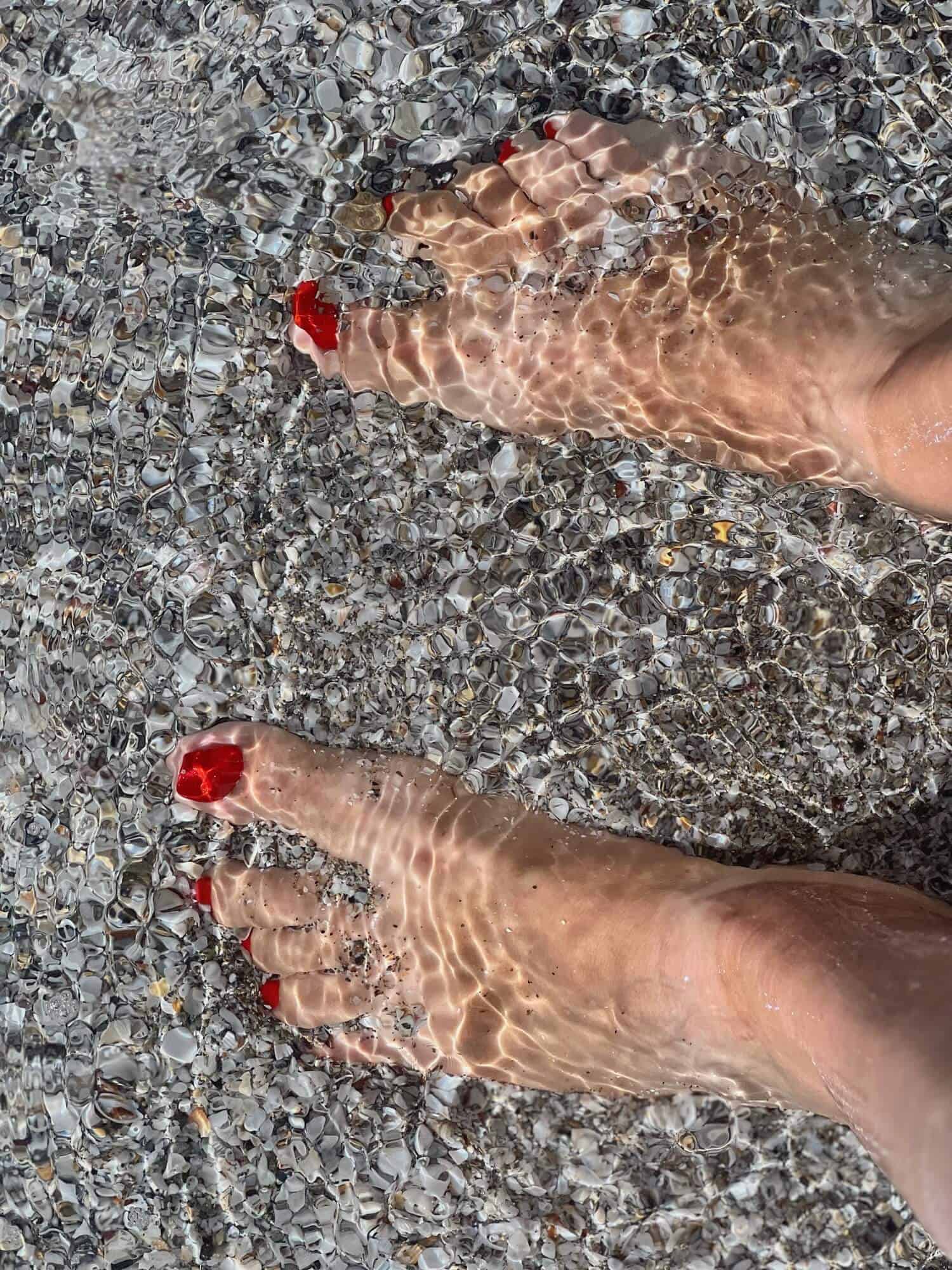
We also visited Avaza, a purpose-built resort area beside the Caspian Sea. It has grand hotels and holiday facilities designed mainly for Turkmen holidaymakers.
And then came another surprise. Internet access had been a real challenge throughout much of the trip, with WhatsApp and Facebook often inaccessible. Yet, oddly enough, Avaza was one of the few places where they actually worked!
After spending so much time struggling to get online, I wasn’t going to complain about being able to send a few messages. It was an unexpected bonus to our visit to the Caspian coast.
Is Turkmenistan Worth Visiting?
I loved my time in Turkmenistan. It’s an unusual country, with spectacular landscapes, fascinating history and some wonderful unexpected experiences along the way.
Many travellers only pass through as part of a five-Stan tour, giving each country a relatively short visit. I’m glad I spent two weeks exploring Turkmenistan on its own. It gave me time to see more of the country and experience things that went beyond the usual sightseeing stops.
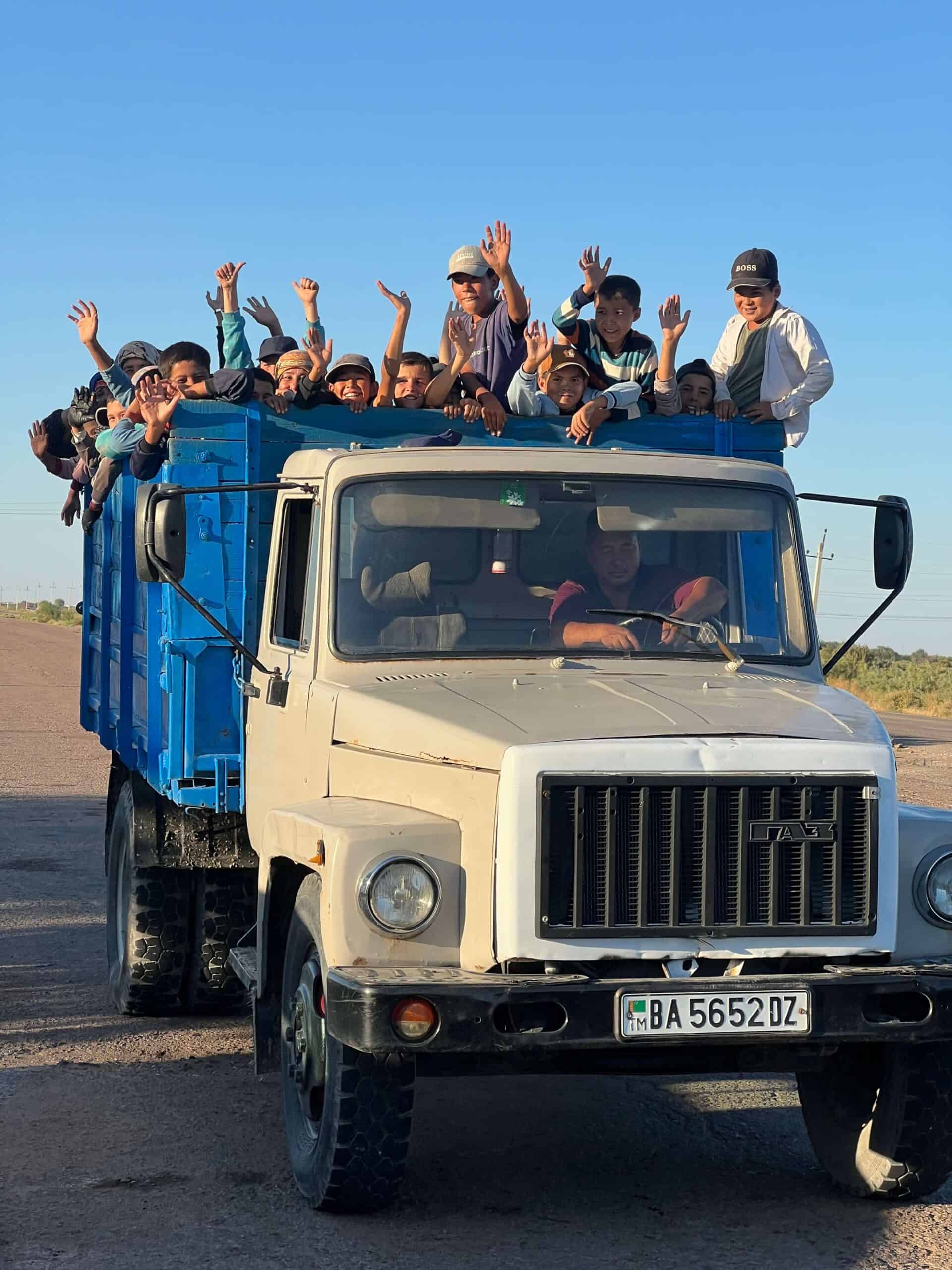
One of the things that makes Turkmenistan so special is that it hasn’t been inundated with tourists. At many of the places we visited, there were few other visitors around, and the country still felt like somewhere a little off the beaten track. You don’t get that feeling so much these days.
It’s not the easiest country to visit, and you’ll want to consider a few practicalities before you go. But if you’re curious about somewhere genuinely different, I’d certainly recommend giving Turkmenistan more than just a quick stop on a tour of Central Asia.
I came away with some wonderful memories, a camera full of photographs and a few stories that probably wouldn’t have happened anywhere else!
Planning a Trip to Turkmenistan: What You Need to Know
Visas
Visas can be expensive, and the cost varies depending on your nationality and the length of your stay. A Letter of Invitation has traditionally been part of the visa process for visitors.
Turkmenistan has recently introduced an e-visa option, but this wasn’t available when I visited in September 2026. Visa rules can change, so check the latest requirements for your nationality before making any arrangements.
Can you travel independently?
At the time of writing, tourists cannot travel independently around Turkmenistan and must visit as part of an organised group tour. This means your itinerary is planned for you, so choose a tour that gives you enough time to explore the places that interest you.
I chose Undiscovered Destinations as they were one of a few companies I found that offered a two-week tour, and I had travelled with them before to Benin and Togo.
Internet access
Don’t expect to stay connected as easily as you might elsewhere. I found WhatsApp and FaceTime largely inaccessible during my trip, though there were occasional exceptions. Gmail seemed to work fine.
If staying in touch with people at home matters to you, expect limited access rather than assuming you can message whenever you want.
How long should you spend in Turkmenistan?
If you can, I’d recommend spending longer than just a day or two passing through on a five-Stan tour. Two weeks let me visit a range of places, from the unusual capital to remote landscapes, ancient cities, and the Caspian coast.
Turkmenistan isn’t a destination where every moment will necessarily go according to plan, but that is part of the experience. Some of my favourite memories came from unexpected encounters rather than the sights themselves.
And if you happen to meet a particularly enthusiastic goat along the way, you’ve been warned!
Save This Post For Later!