
Last Updated on August 25, 2026 by Sarah Wilson
Cádiz was one of our stops on our six-night road trip through southern Spain, and it turned out to be one of my favourites. I visited with a friend, and during the trip we also spent time in Ronda and Málaga.
We stayed in Jerez de la Frontera and visited Cádiz for a day. The city is easy to walk around, which is great if you like to explore at your own pace.
Where Is Cádiz?
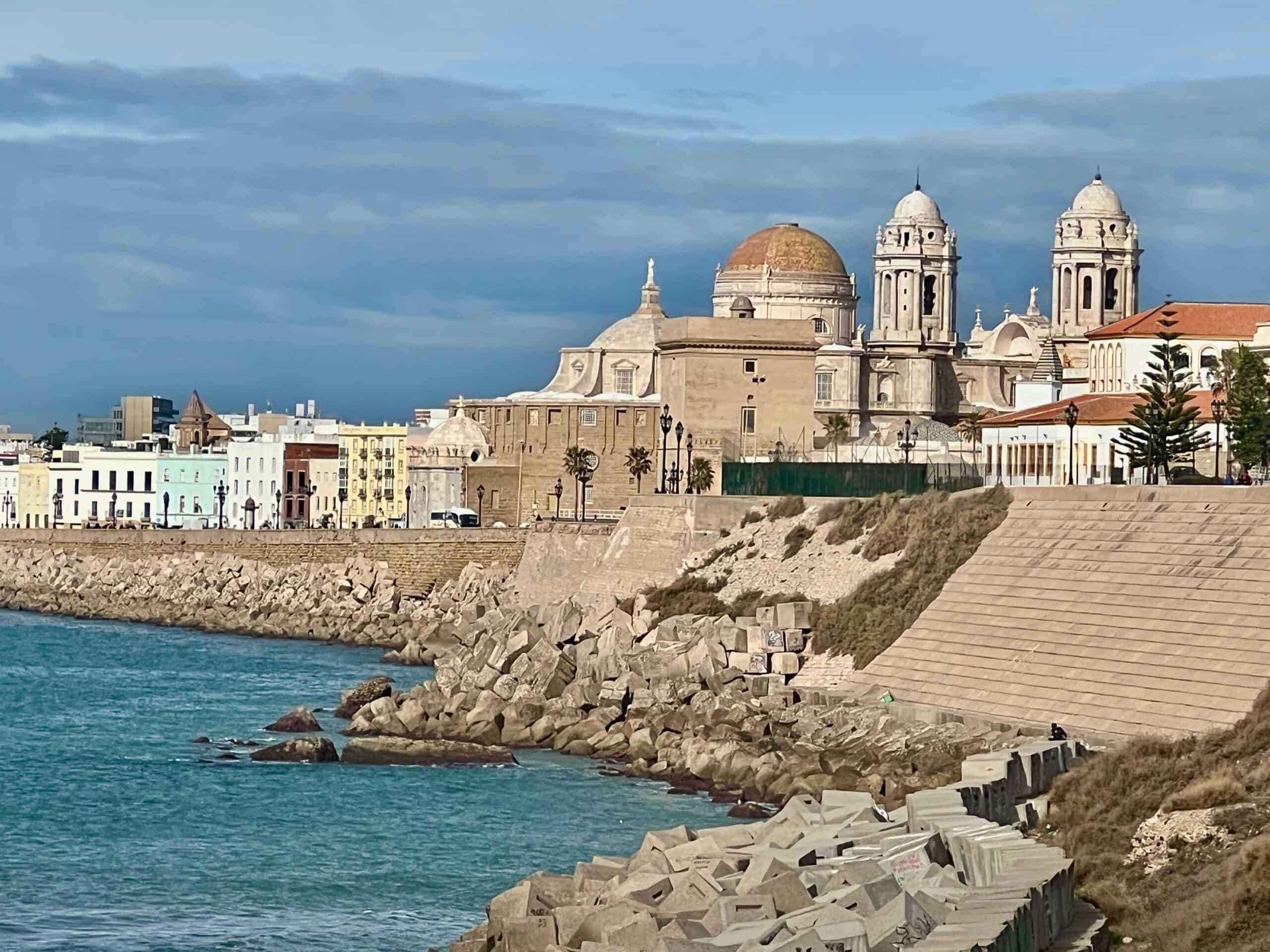
Cádiz is in south-west Andalusia, right on the Atlantic coast. The old town sits on a narrow strip of land almost completely surrounded by water, giving it a very different feel from other Andalusian cities.
The sea is always nearby. You can sense it in the air and often see it at the end of the streets. Cádiz doesn’t feel polished or too touristy. It feels lived-in, a bit worn, and very real.
A Quick Bit of History
Cádiz is one of the oldest cities in Western Europe. The Phoenicians founded it over 3,000 years ago. Later, the Romans and Moors ruled the city before it became part of Spain.
Cádiz was most important between the 16th and 18th centuries, when it was Spain’s main port for trade with the Americas. A lot of wealth came through the city, and you can still see traces of that in the churches, old watchtowers, and city walls.
When trade routes changed, Cádiz became less important. In many ways, that turned out well because it helped the city keep its character. Today, it feels like a real place where people live and work, not just a city for show.
Plaza de San Juan de Dios

We started the day at Plaza de San Juan de Dios, a main square close to the port. It’s lined with palm trees and dominated by the City Hall, making it a great starting point for your day in Cádiz. If you’re planning to visit Cádiz Cathedral, head down Calle Pelota from the square, and you’ll find yourself approaching the impressive building within minutes.
We had breakfast at El Café de Ana, a quirky, friendly café just off the square. Nothing fancy, just good coffee, tostada, and a relaxed start while the city slowly woke up around us.

Cádiz Cathedral

From the square, it’s a short walk to Cádiz Cathedral, with its large golden dome that you can see from many parts of the city.
The cathedral took more than a century to build and combines Baroque and Neoclassical styles. We spent some time inside, enjoying the space and the quiet. Even if you don’t usually visit churches, it’s worth a look.
We didn’t climb the tower on this visit, but still felt the cathedral was well worth the time.
Barrio del Pópulo

Next, we walked into the Barrio del Pópulo, the oldest part of Cádiz. This area has narrow streets, old arches, and small squares that feel very different from the wider streets close by.
It’s a good place to wander without a plan, but there are a couple of easy stops to check out:
• Teatro Romano — interesting, free to visit and doesn’t take long to wander around. The entrance is on Calle Mesón, not too far from the Cathedral.

• Arco del Pópulo — one of the old entrances to the city
Mercado Central & Lunch
We headed to Mercado Central around midday, but by the time we arrived, it was mostly closed. That may have been because we were visiting out of season, but it’s worth knowing the market doesn’t necessarily stay busy into the afternoon.
It was still interesting to walk through and get a sense of the local food scene. Cádiz is famous for its seafood, especially tortillitas de camarones (shrimp fritters) and mojama (cured tuna), which you’ll see everywhere. I loved the shrimp, but wasn’t so keen on the tuna.

We ended up finding a nice sit-down fish restaurant just outside the market, which worked out really well and gave us a proper break before heading on.
La Caleta Beach
After lunch, we walked to La Caleta Beach, the most famous beach in Cádiz. It’s located between two old castles and feels very local.

It’s not a huge beach, but it has a lot of character. We walked along the sand, watched people relaxing, and enjoyed the sea views. Even if you’re not visiting in summer, it’s a lovely place to stop for a while.
Parque Genovés
From La Caleta, we headed to Parque Genovés, a botanical garden near the sea.
It’s a peaceful spot with shady paths, fountains, and neatly trimmed plants. After a few hours of walking, it was a nice place to slow down and sit for a bit.
Castillo de Santa Catalina

A short walk from the park is Castillo de Santa Catalina, a star-shaped fort next to the water.
It was quiet when we visited and felt very relaxed. You can wander around at your own pace and enjoy the views out over the Atlantic. It doesn’t take long, but it’s worth the stop and it is free to enter.
Wandering Back Through the Old Town
We spent the last part of the afternoon walking back through the old town without any set plan.
This was when Cádiz really showed its charm: small cafés, everyday shops, and people going about their day. It felt natural and relaxed, which I liked.
Evening in Jerez
Later in the afternoon, we headed back to Jerez de la Frontera, where we were staying. That evening we went out for dinner in town and wandered around admiring the Christmas decorations, which was the perfect way to end the day.
This article is also featured on GPSmyCity. To download this article for offline reading or create a self-guided walking tour to visit the attractions highlighted in this article, go to Walking Tours and Articles in Cadiz.

Practical Tips for Visiting Cádiz
How To Get To Cadiz
We hired a car for this trip, which worked well for exploring Andalusia more widely. That said, public transport is a better option for Cádiz itself. Trains from Jerez to Cádiz are frequent, affordable, and take around 30–40 minutes. Cádiz station is right near the old town, so you can walk straight into the city.
Getting Around
Cádiz’s old town is very walkable. You don’t need a car once you arrive, and driving inside the historic centre would be more hassle than it’s worth.
How Long Do You Need?
One full day is ideal for Cádiz if you’re short on time. If you like beaches and slower travel, it would also work well as a two-night stay.
Best Time To Visit Cadiz
Spring and autumn are perfect — warm but not too hot. Winter is also a good option if you don’t mind cooler evenings. Summer can be very hot and busy.
What To Wear
Comfortable walking shoes are essential. The streets are flat, but you’ll cover a lot of ground.
Final Thoughts
Cádiz isn’t a city of big sights or long tick lists. It’s a place for wandering, eating well, and enjoying being by the sea.
As part of our southern Spain road trip, it was a lovely contrast to Ronda and Málaga, and a reminder that slower days often end up being the most memorable.
If you’re planning a trip to Andalusia and want a coastal city that feels genuine and easy to explore, Cádiz is well worth a day of your time.
Disclaimer: Some of the links on this website are “affiliate links”, meaning that if you click on the link and make a purchase, I will receive a small commission at no extra cost. This helps me to keep my website running and continue to share my travelling knowledge with you. Thank you for using the links on my website.
For More Posts On Spain, Check These Out
What To See In Granada Besides The Alhambra
Save This Post For Later
