Last Updated on August 25, 2026 by Sarah Wilson
Vietri sul Mare is often treated as the start of the Amalfi Coast rather than a destination in its own right. In summer it can feel busy and rushed, but in winter it slows down. I visited in January, did the town in the morning and the beach in the afternoon, took the bus there, and walked back to Salerno later in the day. It turned out to be a really easy and enjoyable way to spend a winter day.
Getting There and First Impressions
I took the bus from Salerno in the morning, which is straightforward and saves dealing with parking or train times. Arriving mid-morning felt about right. The town was quiet but not closed. Some restaurants were shut for the season, which is normal in January, but all the shops seemed to be open, especially the ceramic ones.
Vietri is built on a slope, with the historic centre above the coast. You notice this straight away. Streets go up and down, sometimes sharply, but everything is close together. The walk between the town and the beach is only about 10–15 minutes, but it is steep in both directions. It’s not difficult, just something to be aware of.
Why Vietri Is Known for Ceramics
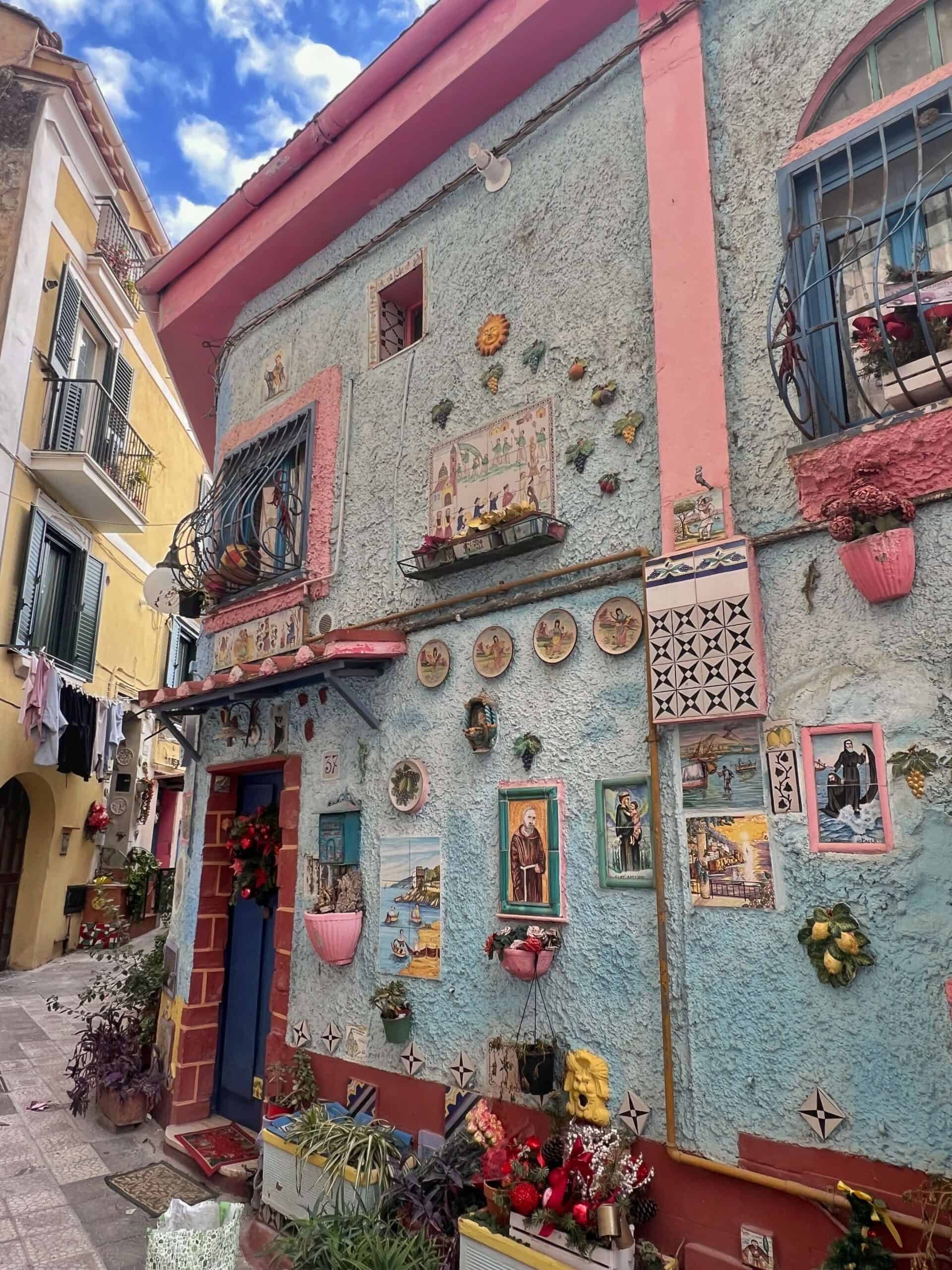
Vietri sul Mare has been making ceramics for centuries. The town has local clay, hills for kilns, and easy access to the sea for trading pieces. Most of the shops are along Via Giuseppe Mazzini and nearby streets. Even if you’re not buying anything, it’s worth walking through and looking in a few shops. In winter, shopkeepers have time to chat, and there’s none of the pressure you sometimes get in summer.
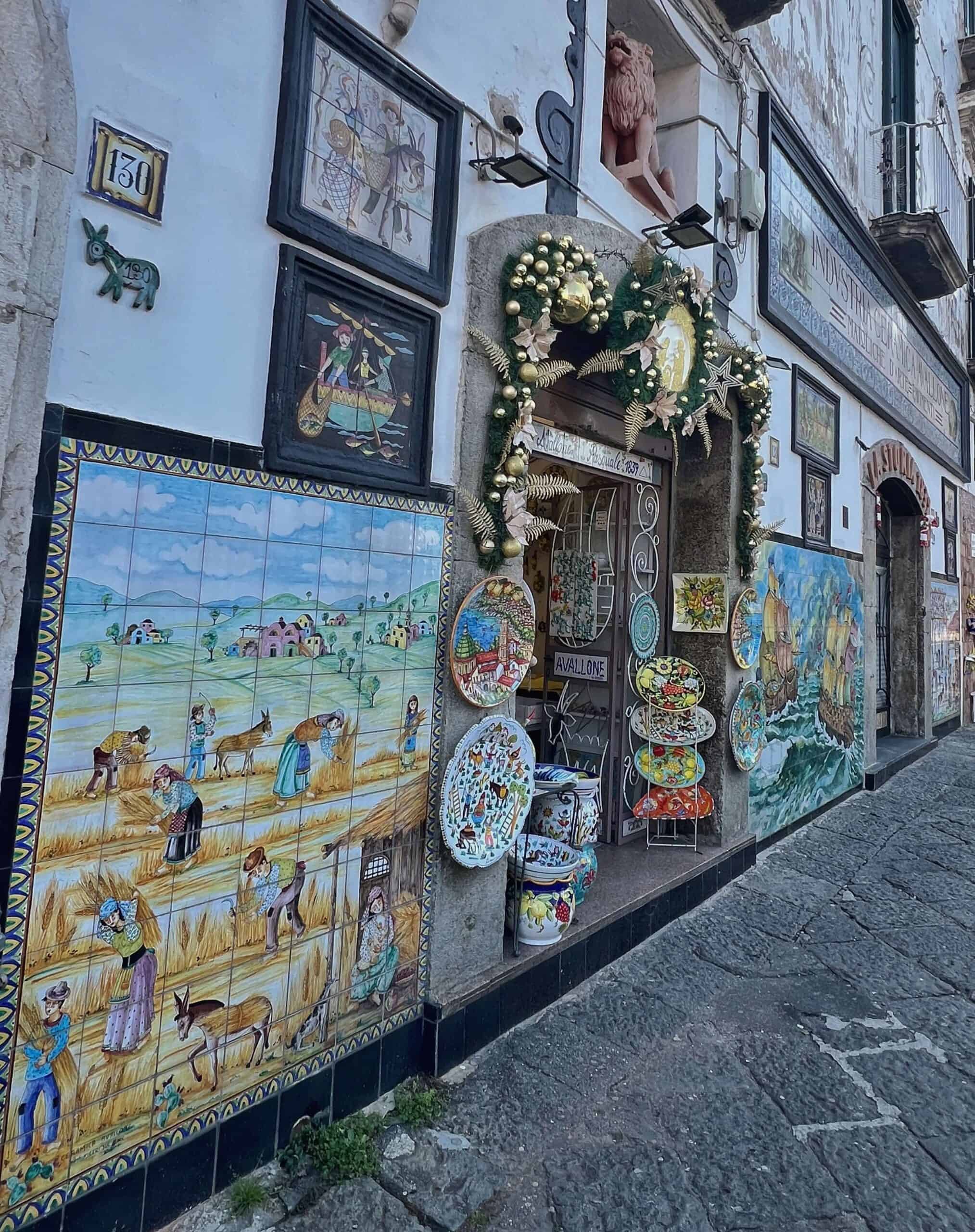
Some of the designs might look familiar if you’ve seen Sicilian ceramics. Both southern Italy and Sicily share Mediterranean influences, like bright colours, bold patterns, and stylised plants, fish, and fruit. Sicilian pieces are often more elaborate and ornate, while Vietri ceramics tend to be a bit simpler and graphic, but you can see the same visual style running through both.
One thing you’ll notice in Vietri is how many donkey motifs there are, in ceramics, tiles, and paintings. Donkeys have been part of life on the Amalfi Coast for centuries, used to carry goods along the steep streets and paths. They’ve become a local symbol, and you see them everywhere — sometimes playful, sometimes stylised — alongside the usual lemons, fish, and flowers.
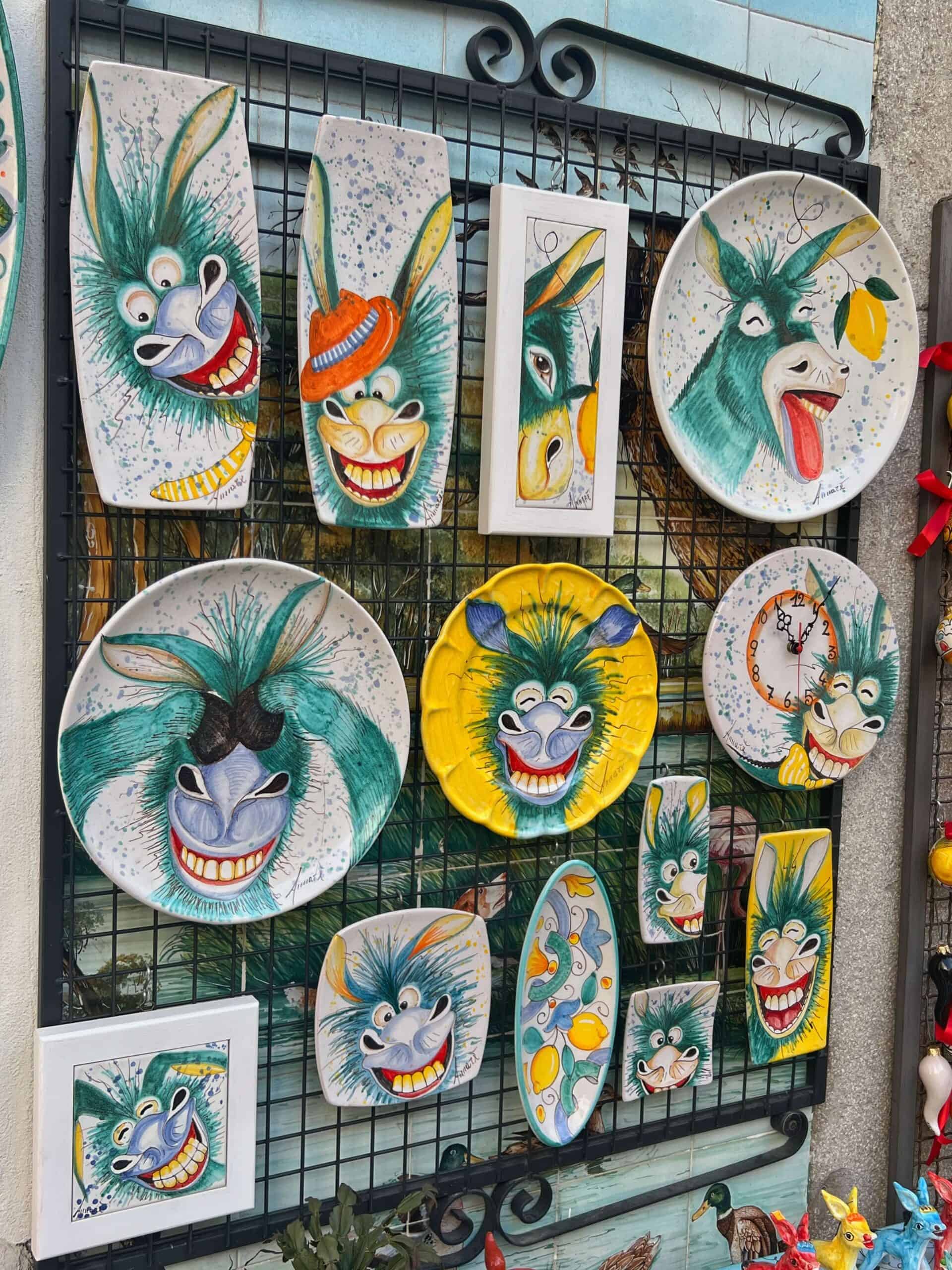
You’ll also find a mix of traditional and modern pieces. Some shops are still working studios, which makes it feel more like visiting a craft town than a souvenir stop.
The Church of San Giovanni Battista
The Church of San Giovanni Battista is hard to miss. Its tiled dome is one of Vietri’s landmarks and a good example of how ceramics are part of everyday life here, not just something sold in shops. Inside, the church is calm and simple. In January it’s likely quiet, which makes it a good place to pause after walking around the town.

Lunch in January
Lunch was one of the highlights. Winter is a good time to eat out in this part of Italy because there are no crowds and no pressure to rush. I had a long, relaxed meal — seafood pasta, local wine, and traditional Campanian dishes.
Some places are closed in January, but the ones that are open are welcoming and reliable. Service is unhurried, which makes it easy to enjoy a proper meal and not just a quick bite.
Down to the Beach
After lunch, I walked down to Marina di Vietri. The walk is short — 10–15 minutes — but steep. At the bottom, the beach felt surprisingly lively for January. People were actually sunbathing, and a few were even swimming in the sea. The water is colder than summer, of course, but the scene was cheerful and relaxed rather than empty.
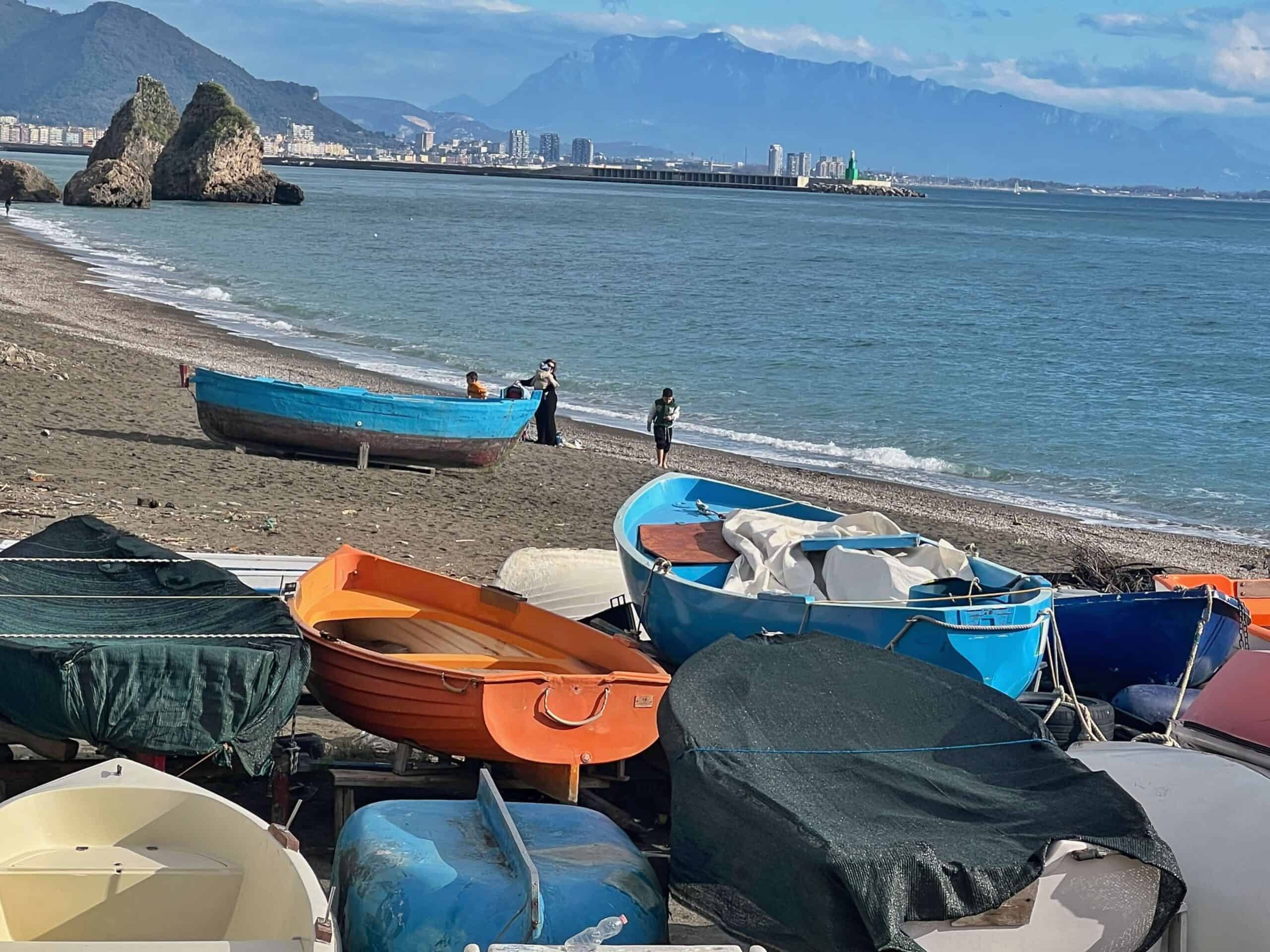
I walked along the promenade toward Crestarella Beach, which is flat and easy. The views of the cliffs and the colourful houses above the water are lovely, and the beach atmosphere adds a completely different side to the town after exploring the streets and shops.
I stopped for a coffee by the sea and stayed longer than planned, just watching the water and the winter sun. It’s rare to have a beach this quiet but still feel lively, and it makes the experience memorable.
Walking Back to Salerno
Later in the afternoon, I walked back to Salerno instead of taking the bus. You can’t follow the coast all the way, so parts of the route go inland. That said, once you’re back in the old town areas, the walk becomes a gentle downhill stroll toward Salerno. It’s easy, well-marked, and feels natural — more like moving from one neighbourhood to another than hiking.
Walking back like this was a nice way to finish the day. You see everyday life, houses, shops, and the busy port that you might miss if you took the bus straight back.
Why Vietri Works Well in Winter
Vietri sul Mare in January is calm but not lifeless. A few restaurants may be closed, but the shops are open, the town feels lived-in, and the beach can still be lively. You can walk at your own pace, talk to people, enjoy the sea, and see the town without crowds.
It’s not flashy in winter, but it’s relaxed, practical, and enjoyable. And seeing people sunbathing and swimming in January is a reminder that the Amalfi Coast never really stops.
Practical Tips for Visiting Vietri sul Mare in Winter
• Getting there: The bus from Salerno is easy and frequent. Tickets can be bought at the station or at local shops. Look for the big letter T. The ride takes around 10-15 minutes.
• Walking around: The historic centre is on a slope. The walk down to the beach takes 10–15 minutes and is quite steep; the walk back up from the beach is harder. If you plan to walk back to Salerno, the route goes inland in parts, but once you reach the old town areas, it’s a gentle downhill stroll.
• Restaurants and shops: Some restaurants close in January, but most shops — especially ceramics — are open. Look for working studios as well as shops selling finished pieces.
• Beach and sea: Even in January, people may be sunbathing or swimming. Dress warmly if you’re just watching the sea, and bring a scarf or hat if it’s windy.
• Ceramics: Don’t miss the donkey-themed ceramics — they’re everywhere and make great souvenirs. Also look for traditional tiles, plates, and modern designs in local workshops.
Other Easy Day Trips From Salerno
Salerno is a great base for exploring the region. When I was there, I also took a day trip to Paestum, home to some of the best-preserved Greek temples in Italy. It’s an easy 40 minute journey by train from Salerno, and visiting in January meant having the site largely to myself experience.
Beyond that, Salerno makes a practical base for bigger-name destinations. Naples, Pompeii, and Herculaneum are all straightforward by train, and ferries (weather permitting) connect Salerno to towns along the Amalfi Coast, including Amalfi and Positano.
The benefit of staying in Salerno is flexibility: you can dip into iconic places for the day, then return somewhere calmer, more affordable, and less crowded in the evenings.
Save This Post For Later