
Last Updated on August 25, 2026 by Sarah Wilson
If you’re drawn to the Amalfi Coast but want something more authentic, affordable, and less crowded, Salerno is an excellent alternative. Located at the eastern edge, it offers history, sea views, and everyday Italian life, without the inflated prices or crowds of places like Positano or Amalfi.
I was there in January, house-sitting for four cats, which shaped the experience in a good way. While not all restaurants were open and ferries depended on sea conditions, the city felt calm and lived-in. Shops were open, locals were out and about, and it was easy to slow down and settle into a more local rhythm.
Wander the Historic Old Town
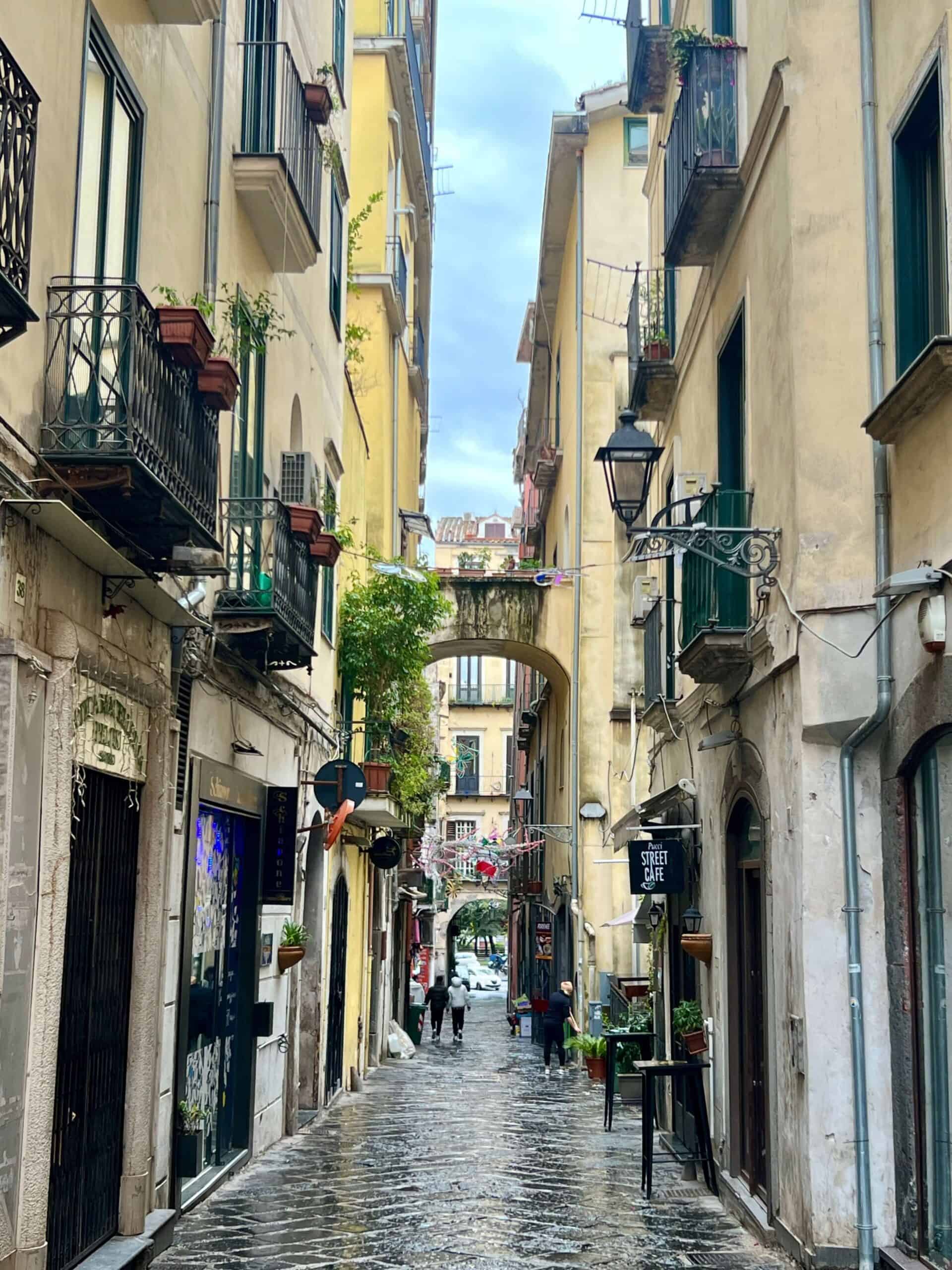
Salerno’s Centro Storico is compact and atmospheric, ideal for wandering without a plan. Narrow streets, old stone buildings, laundry overhead — it feels like a place people actually live, not just pass through.
Please note, though, that many shops close for lunch, roughly between 1pm and 4pm, so mornings and early evenings are best for browsing. There are, however, plenty of lovely coffee shops, and winter is the perfect time to linger over an espresso.
Via dei Mercanti
Via dei Mercanti is one of the oldest streets in the city and runs straight through the heart of the old town. Lined with small shops, arches, and historic façades, it hints at Salerno’s medieval past. Even when some shutters are down, it’s worth walking purely for the atmosphere. From here, look out for unexpected artistic touches.
Poetry on the Walls (Near the Minerva Lift)
Near the lift that takes you up toward Giardino della Minerva, there’s a small area covered in poetry written directly onto the walls. This is part of a wider open-air art project in the old town, particularly in the Fornelle neighbourhood.
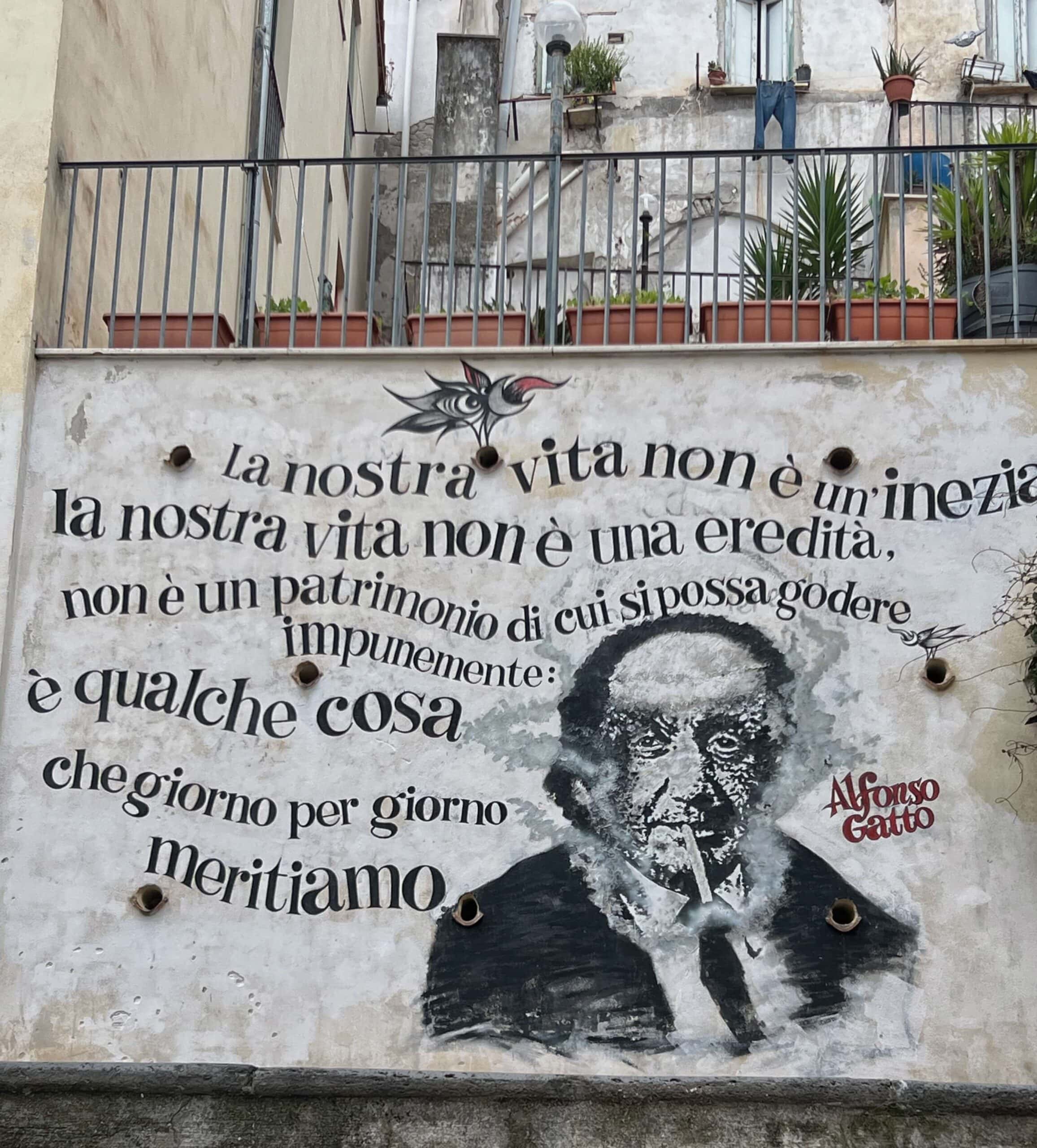
Verses appear on arches, stairways, and building walls, blending into everyday streets rather than being set apart like a gallery. Much of the poetry is by Alfonso Gatto, a poet born in Salerno, and the themes often reference the sea, memory, and place.
Giardino della Minerva Minerva (Minerva’s Garden)
The Giardino della Minerva was one of the highlights of my stay. After immersing yourself in the poetry and narrow streets, the gardens offer a completely different perspective on the city.
This medieval botanical garden unfolds over six levels, offering sweeping views across Salerno and the sea. Even in January, the air was filled with herbal and floral scents.
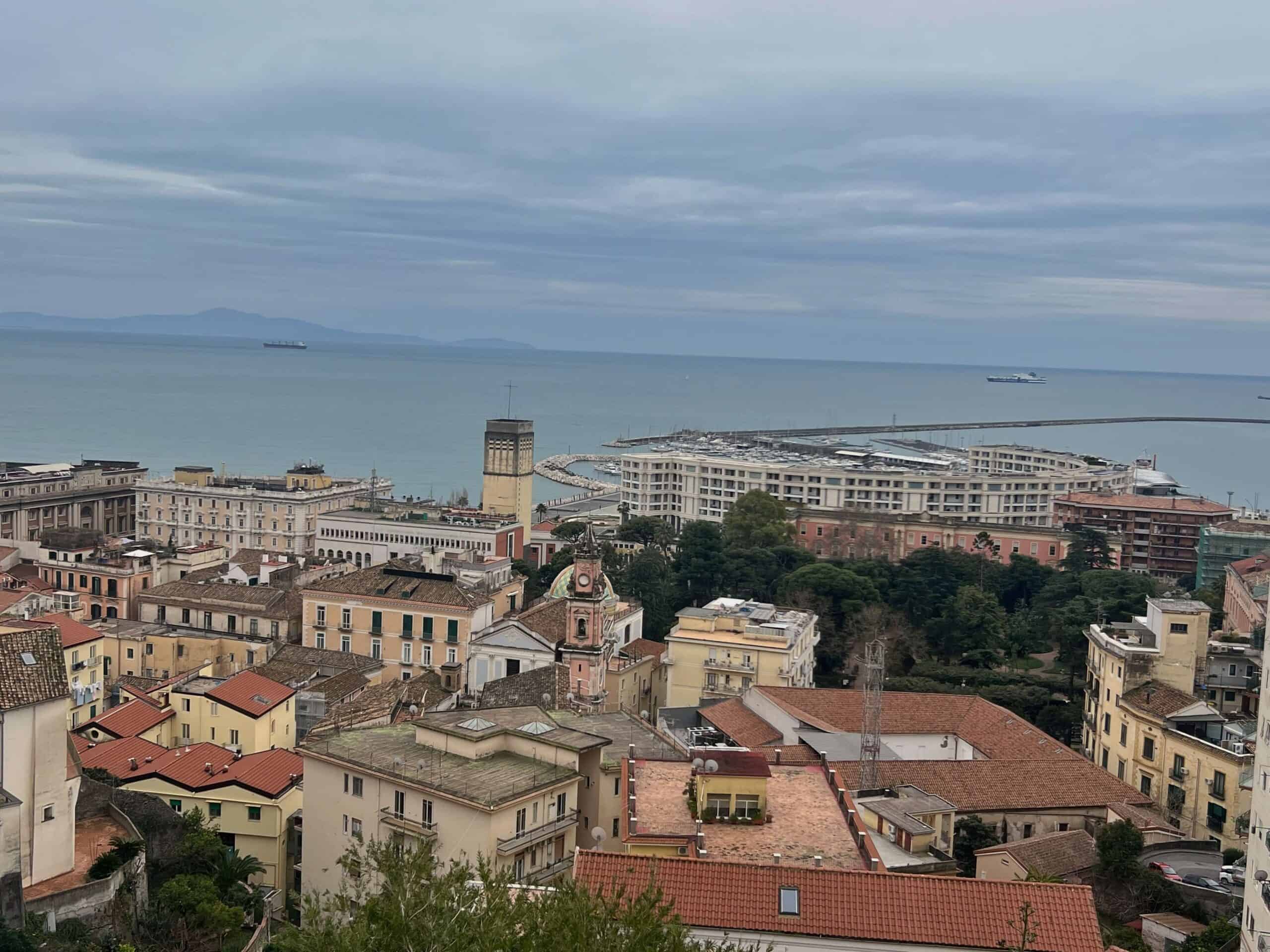
There’s a lift up to the gardens, tucked right in among apartment buildings. It is signposted, though. The lift climbs very slowly, and I did briefly wonder if I might get stuck overnight. Once you’re out, though, it’s just a short, clearly marked walk to the entrance.
At the start of the gardens, there’s a herbal tea shop, and the smell alone made it impossible to walk past. I ordered the speziata — a delicious blend of ginger, cinnamon, cardamom, clove, and star anise — which felt perfectly suited to a winter visit.
The gardens highlight plants historically used for medicine. Even without summer blooms, the structure, scents, and terraces make it a must-see.
Museo della Scuola Medica Salernitana
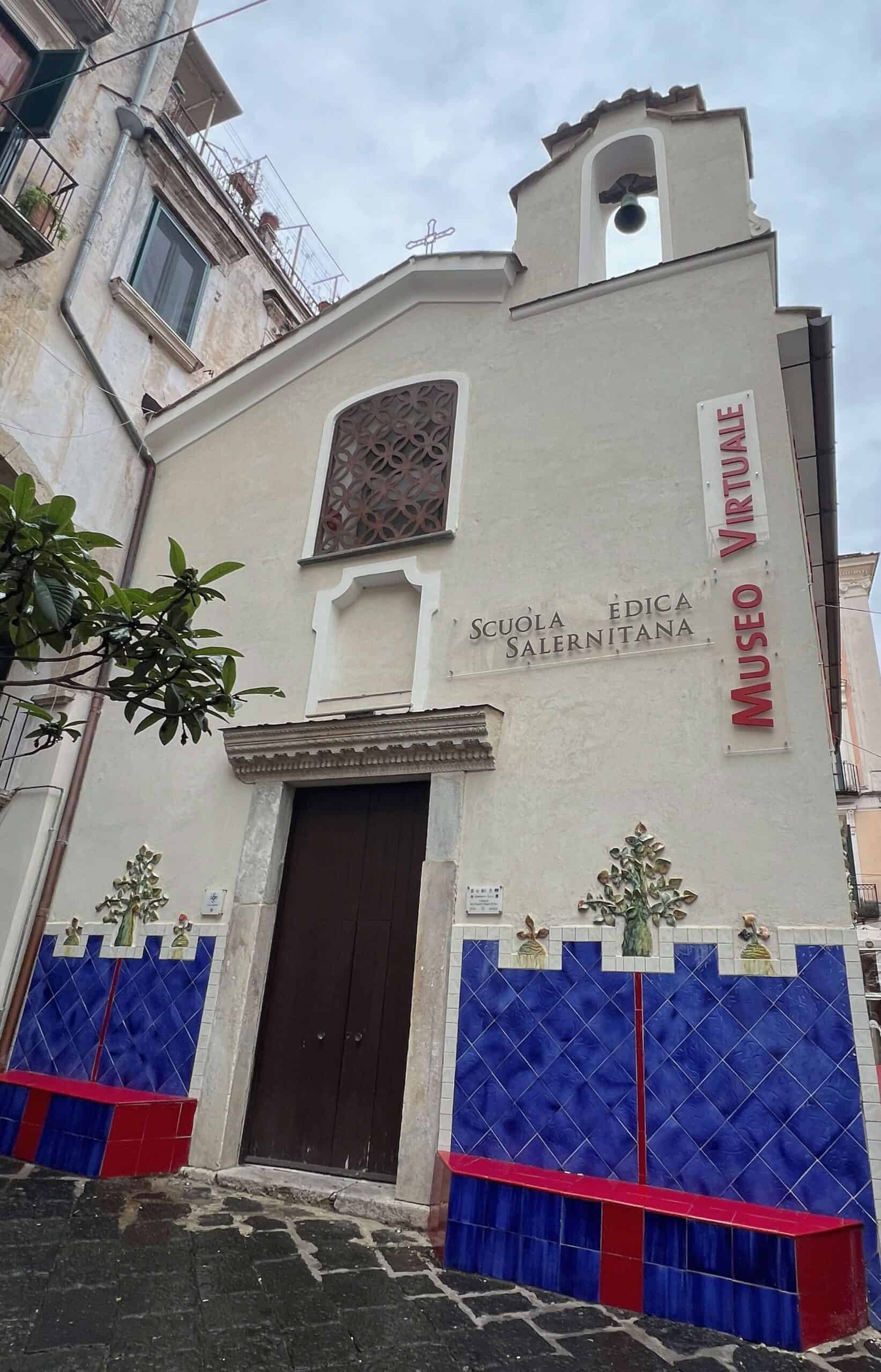
Salerno is home to what’s considered Europe’s first medical school. The Museo della Scuola Medica Salernitana offers a glimpse into that history. The museum is small and manageable. It focuses on medieval medicine, anatomy, and the role Salerno once played as a centre of medical knowledge.
Visiting after the Giardino della Minerva adds extra context — the gardens and the medical school are closely linked through their shared focus on healing plants and early scientific study. It’s a quiet, thoughtful stop rather than a grand one, and particularly well-suited to a winter visit.
Salerno Cathedral & the Crypt
Salerno’s Duomo di San Matteo is impressive without being overwhelming. The mix of architectural influences and the quiet cloister make it a calming place to visit.
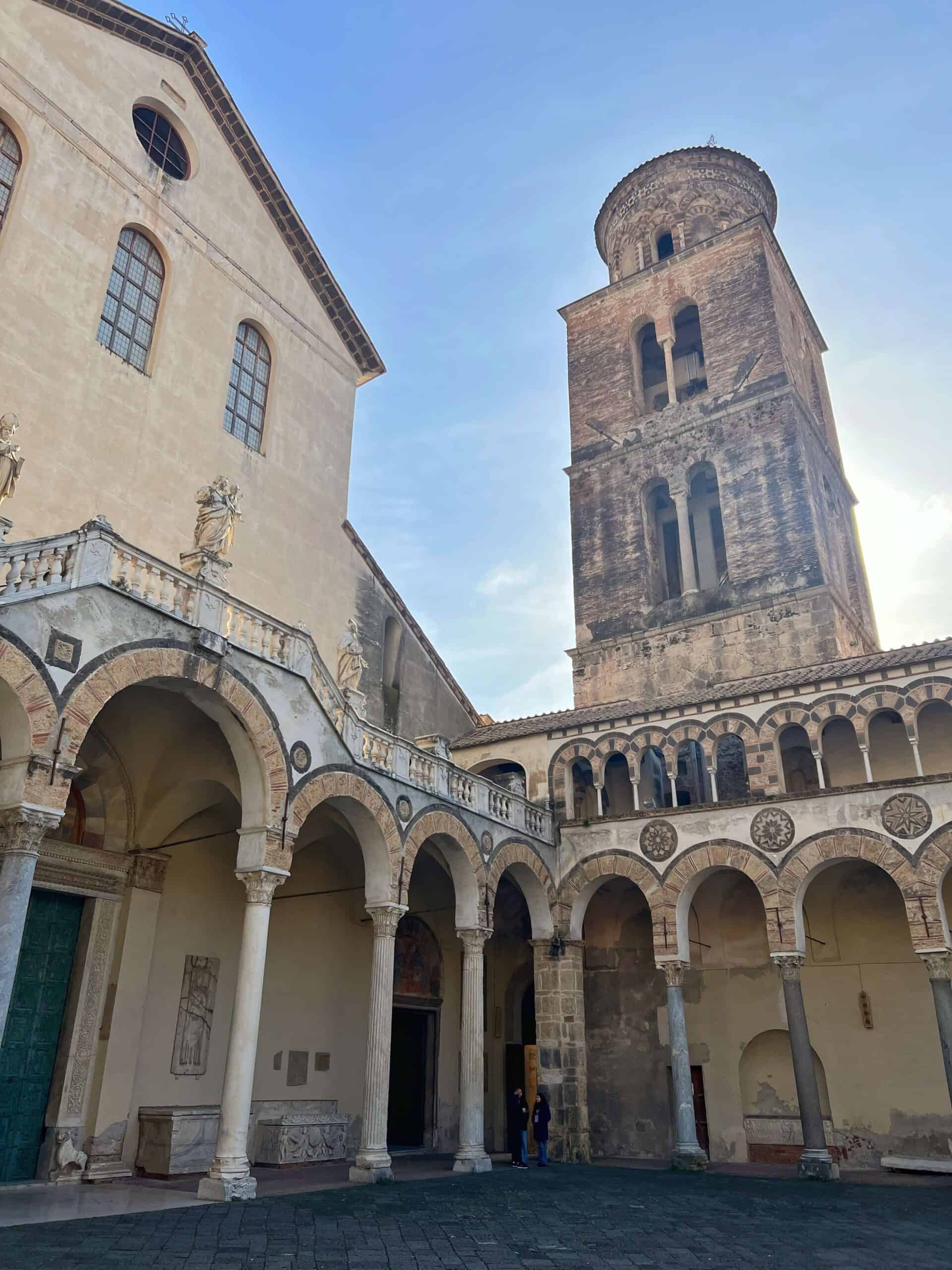
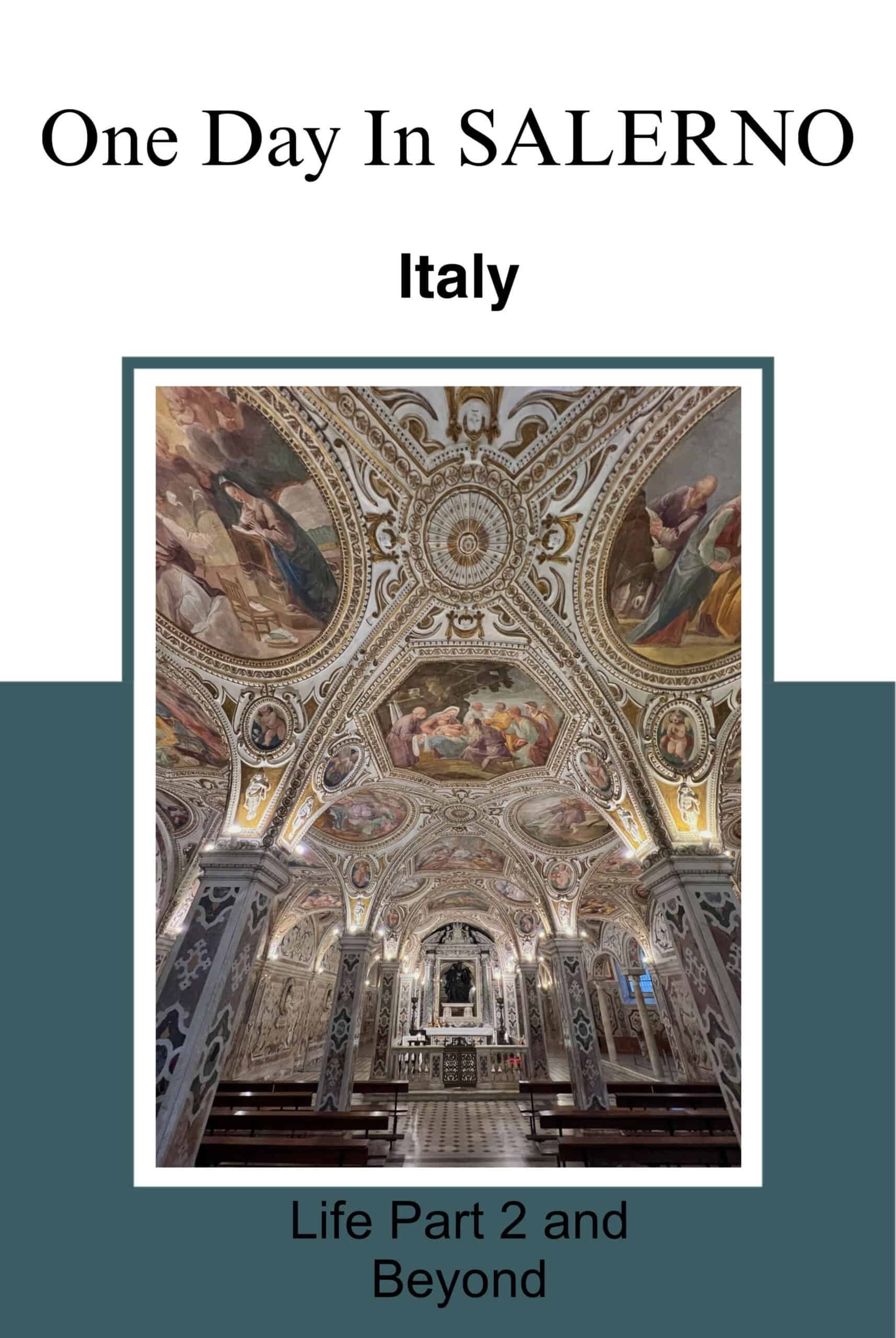
The crypt is a must-see, but you can’t buy a standalone ticket just for the crypt. When I visited, I bought the Full Pass which included access to the cathedral crypt as well as several other sites connected with the cathedral and diocesan complex. The visits don’t need to be completed in one day, so you can spread them out.

Castello di Arechi
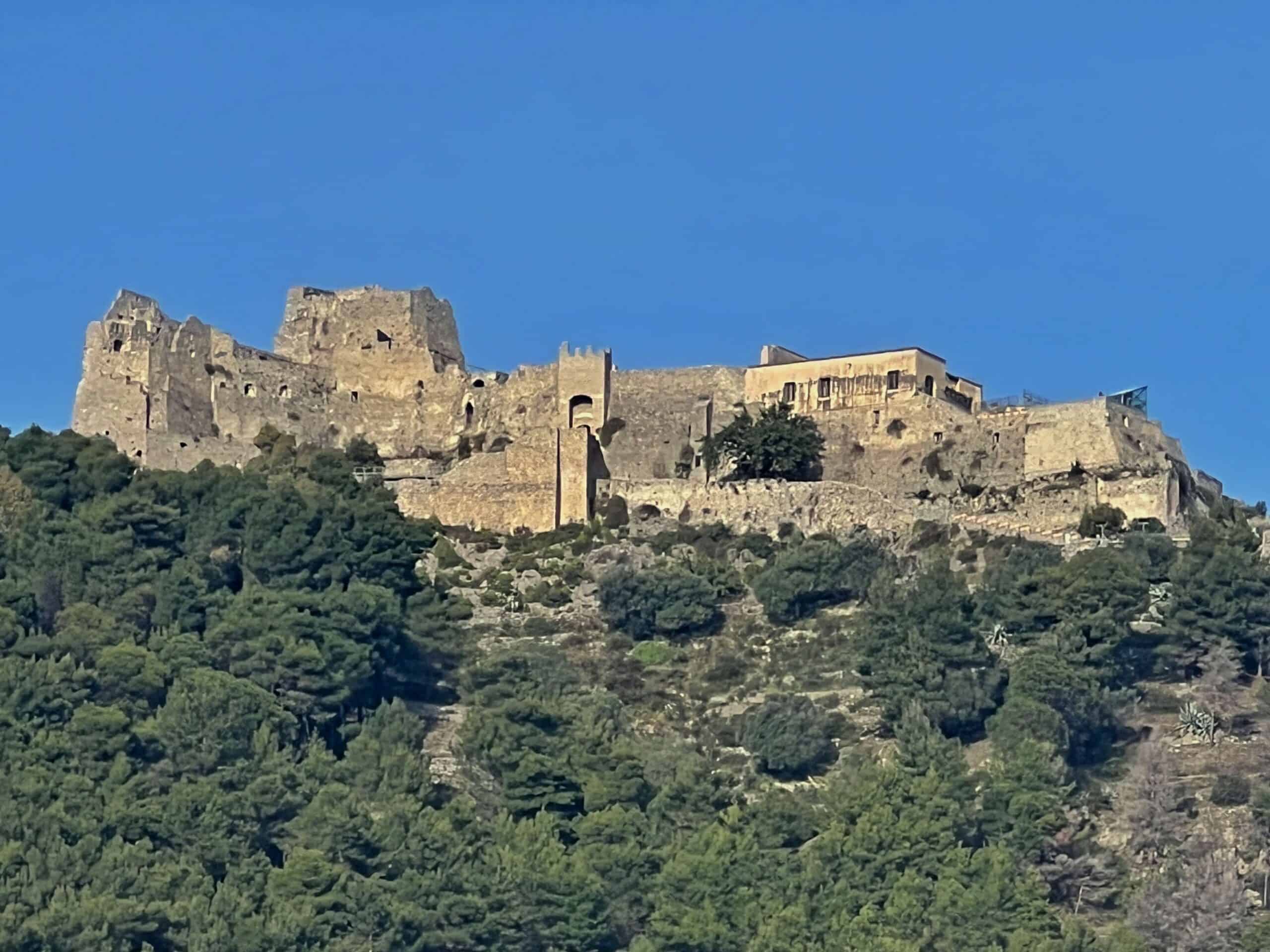
High above the city, Castello di Arechi offers panoramic views over Salerno and the coastline. Visiting in winter meant clearer air and fewer people, making it easy to take your time and really appreciate the scale of the landscape below. The walk through the grounds and the sense of history make it well worth the effort. If you don’t fancy the climb up, take bus 19 from the city centre, but remember you cannot buy a bus ticket on the bus. Tickets can be brought from a “Tabaccheria”, just look for a sign with a large T.
Walk the Lungomare
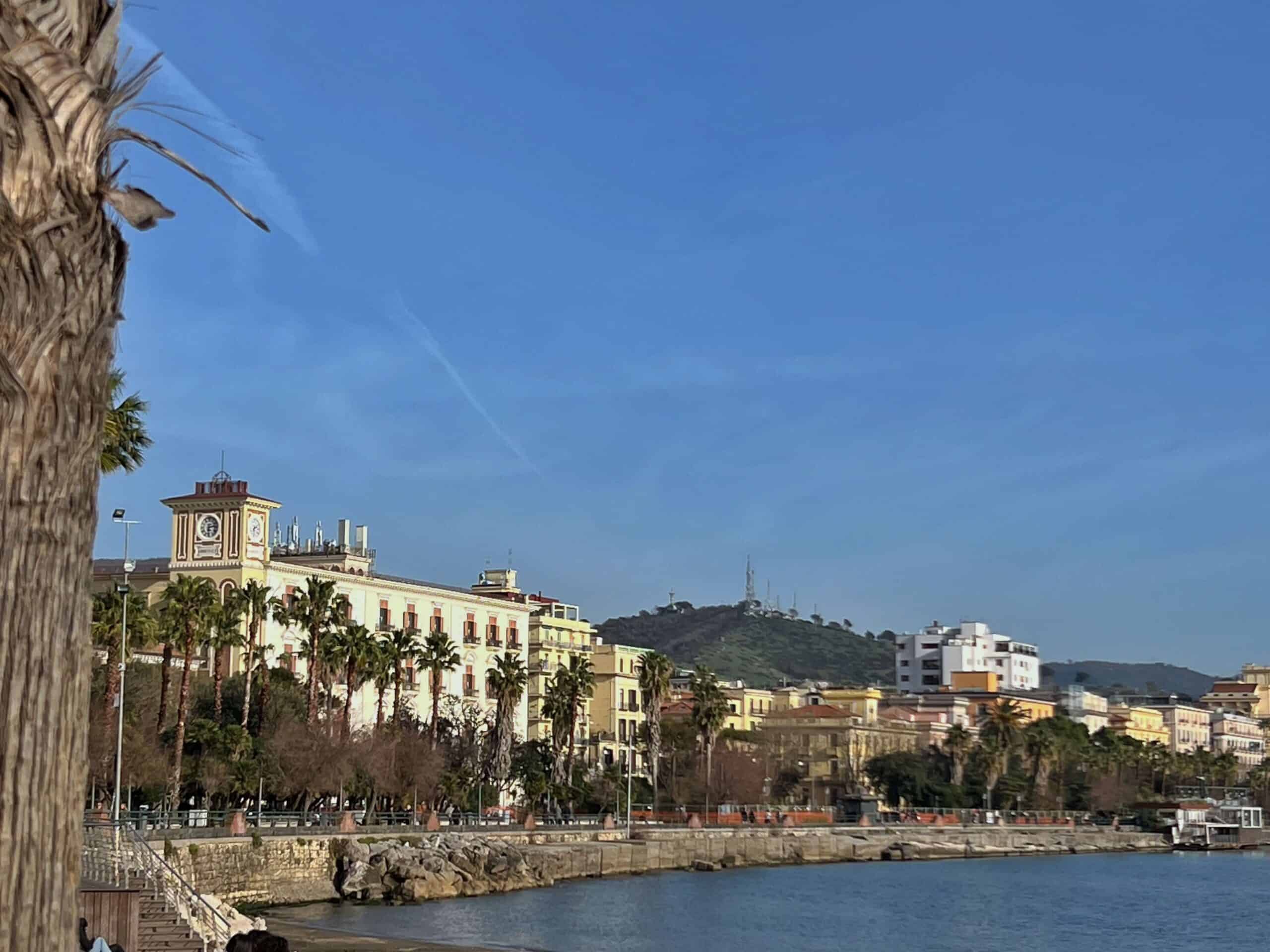
Salerno’s seafront promenade is ideal for a slow walk. Palm-lined and flat, it’s popular with locals year-round. In January, the sea feels more dramatic, and there’s something refreshing about being by the water without summer crowds.
Ferries (Weather Permitting)
Ferries do run in winter, but sea conditions matter, so they’re best treated as a bonus rather than something to plan tightly. When they do run, they offer easy access to the Amalfi Coast, but Salerno’s bus connections mean you’re never short on options.
Eating in Salerno (Out of Season)
January does mean that some restaurants are closed for the season, particularly those aimed at summer visitors. What is open tends to be more local — and that’s where Salerno really shines.
Two places in the old town that I really enjoyed:
At L’Unico, I had a pasta dish with cuttlefish, and it was excellent — simple, well-balanced, and just delicious.
For pizza, Pizzeria Saporito delivered exactly what you want: relaxed, local, and serving great pizza.
Between winter closures and long lunch breaks, flexibility helps — but eating in Salerno feels less about chasing “the best” and more about enjoying what’s open and well-loved by the people who live here.
Easy Day Trips From Salerno
One of Salerno’s biggest advantages is how easy it is to explore the surrounding area without changing bases. With good train connections and seasonal ferries, it works extremely well for day trips — even in winter.
On this trip, I visited Vietri sul Mare, just a short train or bus ride away and famous for its ceramics. It’s an easy, low-effort outing and still feels connected to everyday life rather than mass tourism.
I also took a day trip to Paestum, home to some of the best-preserved Greek temples in Italy. It’s an easy 40 minute journey by train from Salerno, and visiting in January meant having the site largely to myself — a rare and memorable experience.
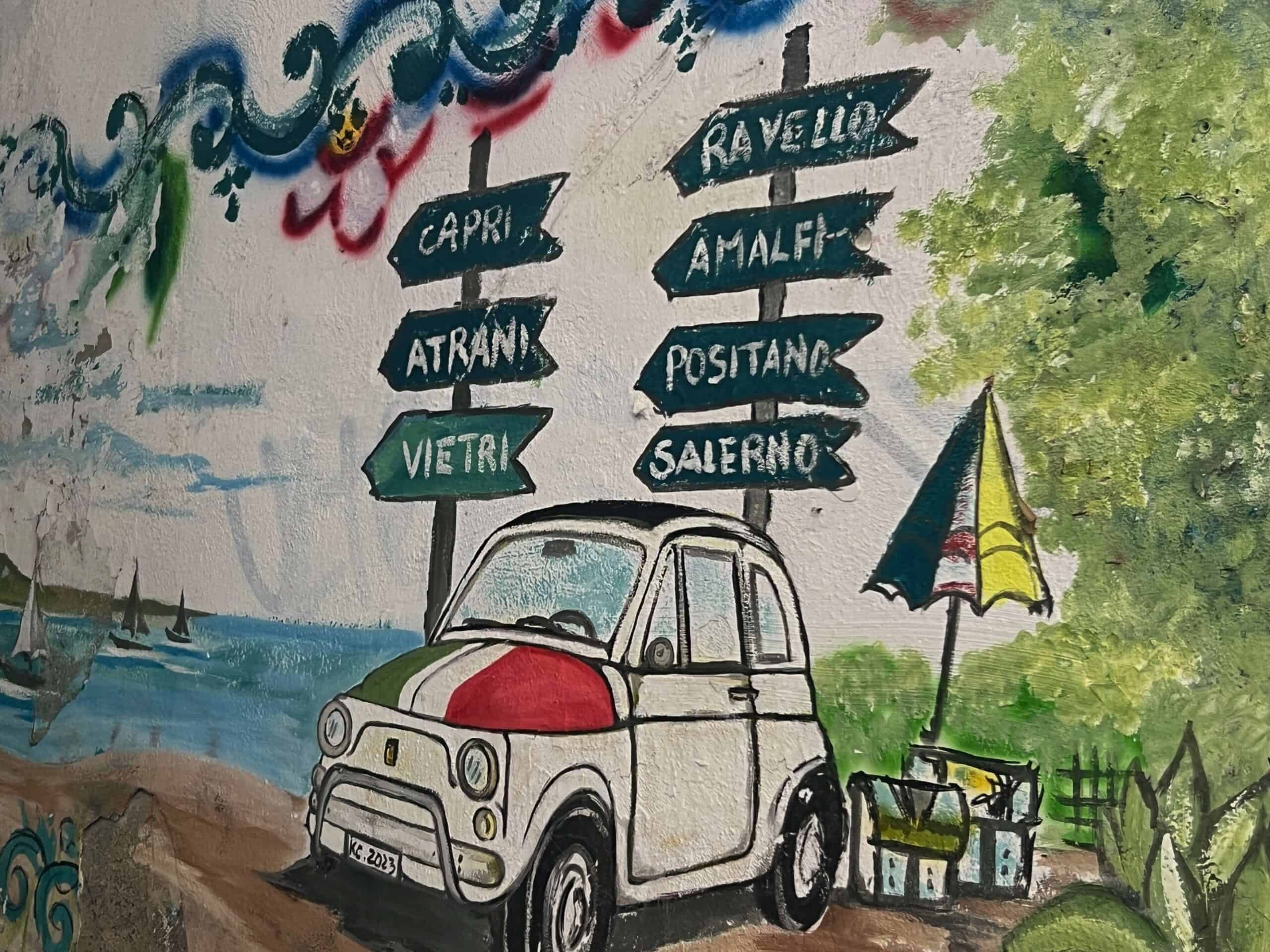
Beyond that, Salerno makes a practical base for bigger-name destinations. Naples, Pompeii, and Herculaneum are all straightforward by train, and ferries (weather permitting) connect Salerno to towns along the Amalfi Coast, including Amalfi and Positano.
The benefit of staying in Salerno is flexibility: you can dip into iconic places for the day, then return somewhere calmer, more affordable, and less crowded in the evenings.
Why Salerno Works So Well
Salerno doesn’t try to compete with the glamour of the Amalfi Coast — and that’s exactly its appeal. It’s more affordable, more authentic, and far easier to enjoy outside peak season. In winter, especially, it’s a city that rewards staying a little longer and paying attention to the quieter details.
Save This Post For Later
Thank you, Sarah, for this current content, as I will be in Sorrento Fall 2026. Saluti!
Have a wonderful time 🙂
Hello Sarah. Thank you for your well written comments. I am on a cruise stopping in Salerno in November, and reading your comments encourages me to stay around the town for the day instead of chasing the tourist routes. Do you have reviews of any other areas nearby, such as Naples,
Palermo, Salerno? We have been to the Amalfi coast before, so any advice besides that would be appreciated. And I see you are from Malta? I have never been. We stop there twice on a cruise next May. I would be interested in any suggestions you could give me.
Palermo is fabulous but on Sicily so won’t work as a cruise stop on this trip. My post on Naples is a bit dated now, but doable but public transport might work against you.
Nearby Vietri sul Mare is nice or Paestum, but if you only have a day, there’s plenty to see in Salerno and its a lot less touristy than the Amalfi coast
Thanks for the info.
Thank you for this thoughtful article. I’m currently staying in Salerno and can echo it’s a fabulous base and lovely place in its own right. It feels a proper lived in town. Contrasting favourably with tourist crowded Amalfi with 6 eur coffees!
Thank you, its a lovely city. I should be back there in March 🙂
Great information. My 1st trip to Salerno November 2026. Excited !