Last Updated on July 15, 2026 by Sarah Wilson
Aosta was my final stop before heading back home to Malta after a wonderful repeat house sit in Champex-Lac, Switzerland. I crossed into Italy by bus for two days of Roman history, mountain scenery and, of course, plenty of good food.
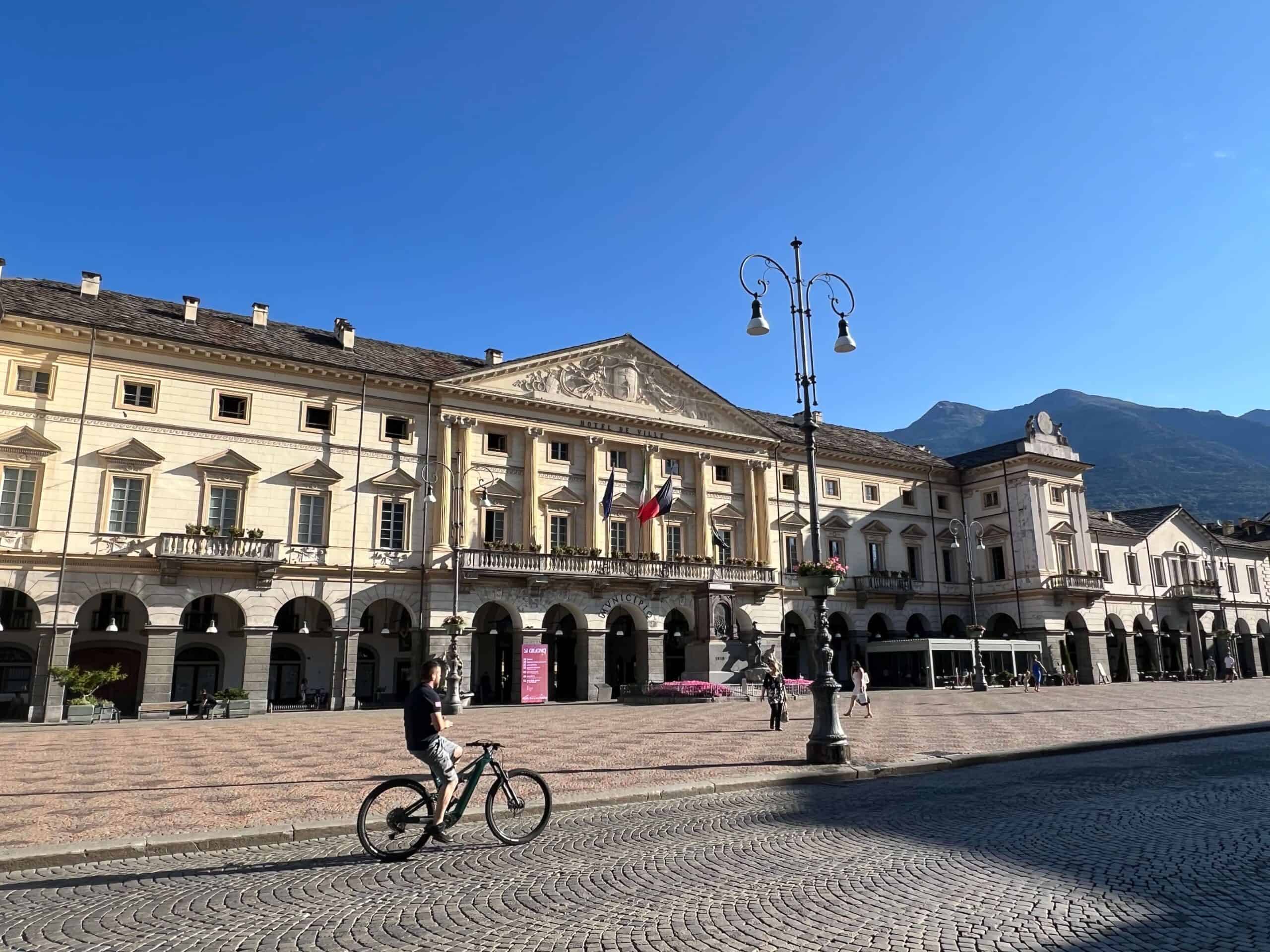
Although it’s one of Italy’s smallest cities, Aosta has plenty to offer. Its compact historic centre is filled with remarkably well-preserved Roman monuments, and the surrounding mountains are never far away.
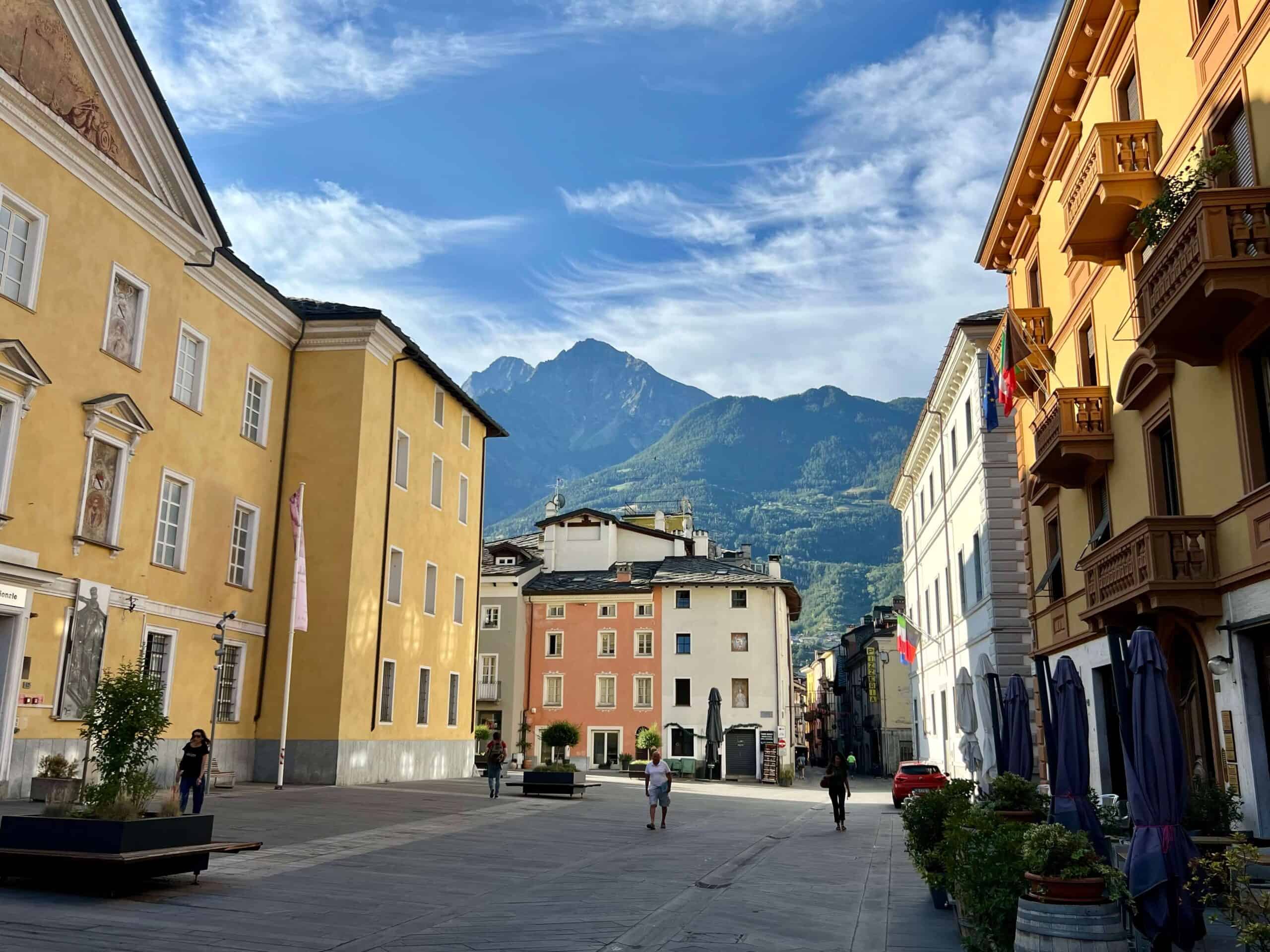
It’s also an excellent base if you want to experience the Alps without committing to strenuous hikes.
Practical Information
How long do you need in Aosta?
Two days are the perfect amount of time to explore Aosta’s Roman sites, enjoy its attractive old town and spend a day in the mountains.
How to get to Aosta
I travelled to Aosta by bus from Champex-Lac in Switzerland and, after my stay, caught a FlixBus to Turin Airport for my flight back to Malta.
If you’re flying, the nearest airports are Turin, Milan Malpensa and Geneva, with Turin usually the most convenient.
I stayed at the Inn Aosta Apartments, a nice reasonably priced apartment in the centre of town.
Getting Around Aosta
The historic centre is compact and largely pedestrianised, so it’s easy to explore on foot.
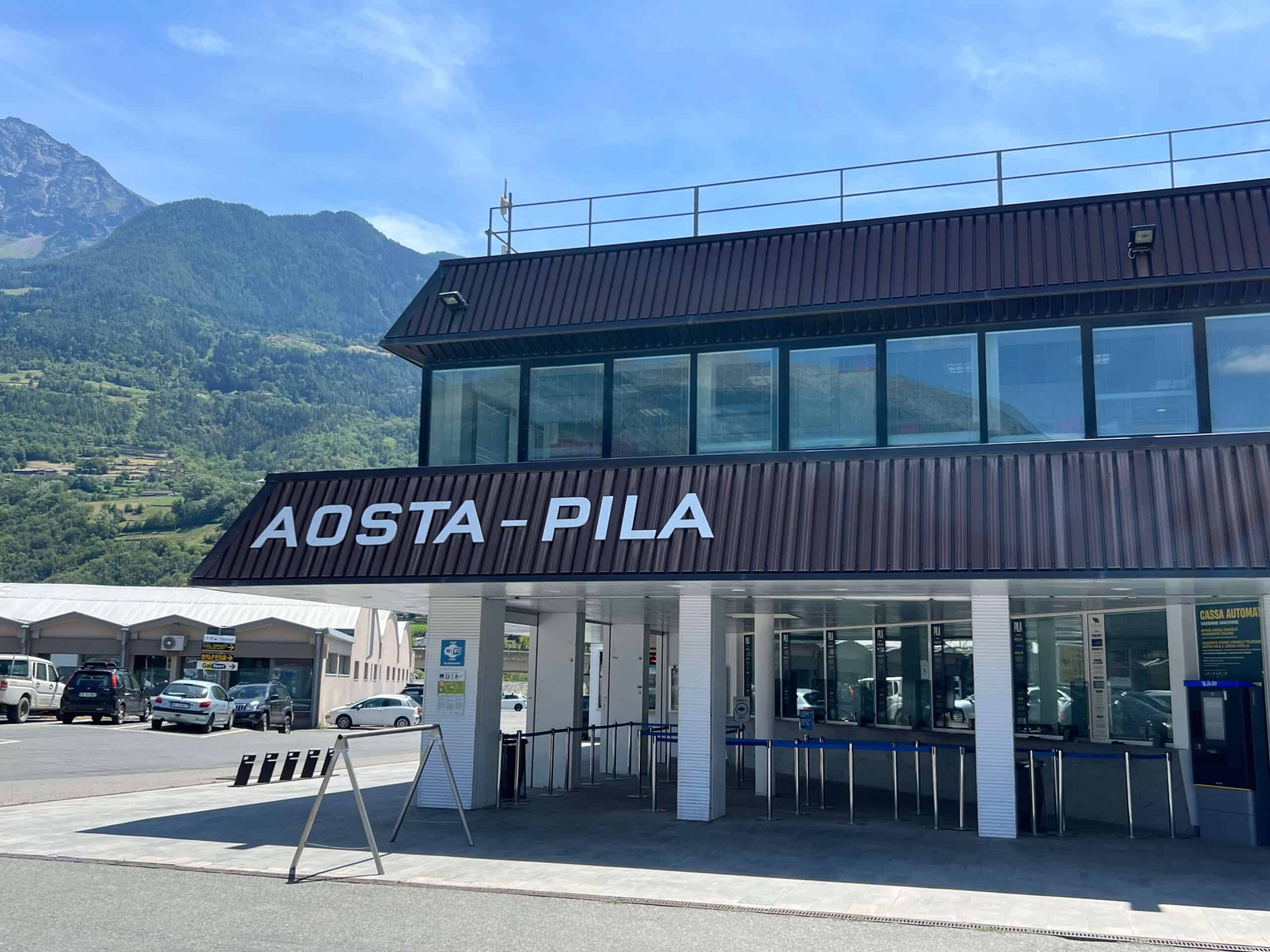
If you’re heading into the mountains, the Aosta–Pila gondola station is only about a 10-minute walk from Piazza Chanoux.
Archaeological Pass
The combined archaeological ticket costs around €10 and is valid for six months. It includes entry to several of Aosta’s Roman sites, including:
● Roman Theatre
● Archaeological Museum
● Cryptoporticus
● Other participating archaeological sites around the city
It’s excellent value if you plan to visit more than one attraction.
Pila or Skyway Monte Bianco?
Many visitors head to Courmayeur to ride the spectacular Skyway Monte Bianco, with its apparently incredible glacier views.
I decided to visit Pila instead. It’s a much more affordable mountain excursion that still offers breathtaking Alpine scenery, panoramic viewpoints, and easy walking trails. If you’re travelling on a budget or simply want a more relaxed day in the mountains, Pila is an excellent choice, and the cable car up is just a short walk from the town. Check here for current prices.
For Pila tickets, you can buy online in advance, but you’ll still need to queue at the ticket office to collect your pass before boarding. If you’re under 24 or over 65, discounted fares are available, so it’s usually better to buy at the station to ensure you receive the reduced price.
Visiting Aosta In The Summer
Summer temperatures can be very high, so I’d recommend starting sightseeing early and slowing down in the afternoon. Although, even in July, it was surprisingly cool and windy at the top of Pila, so don’t forget a fleece or light jacket.
Day 1: Discovering Roman Aosta
Knowing how hot the forecast was, I started the day early with a classic Italian breakfast of coffee and a croissant before heading out.
Often called the “Rome of the Alps”, Aosta has some of the best-preserved Roman remains in northern Italy.
Roman Theatre
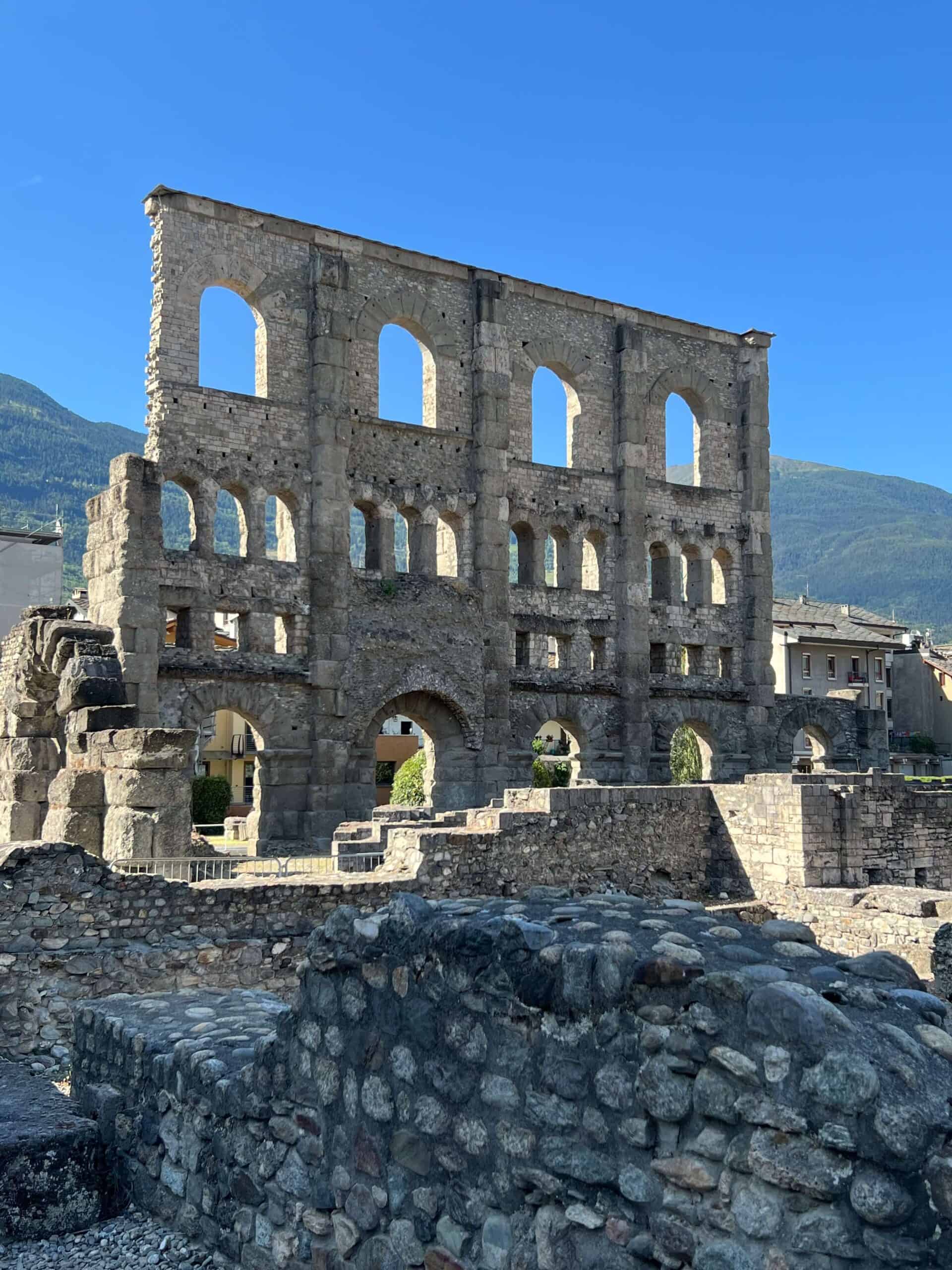
The Roman Theatre is undoubtedly Aosta’s most impressive monument. Although only part of the original structure survives, it’s still an impressive sight and gives a real sense of the city’s Roman past.
Cryptoporticus
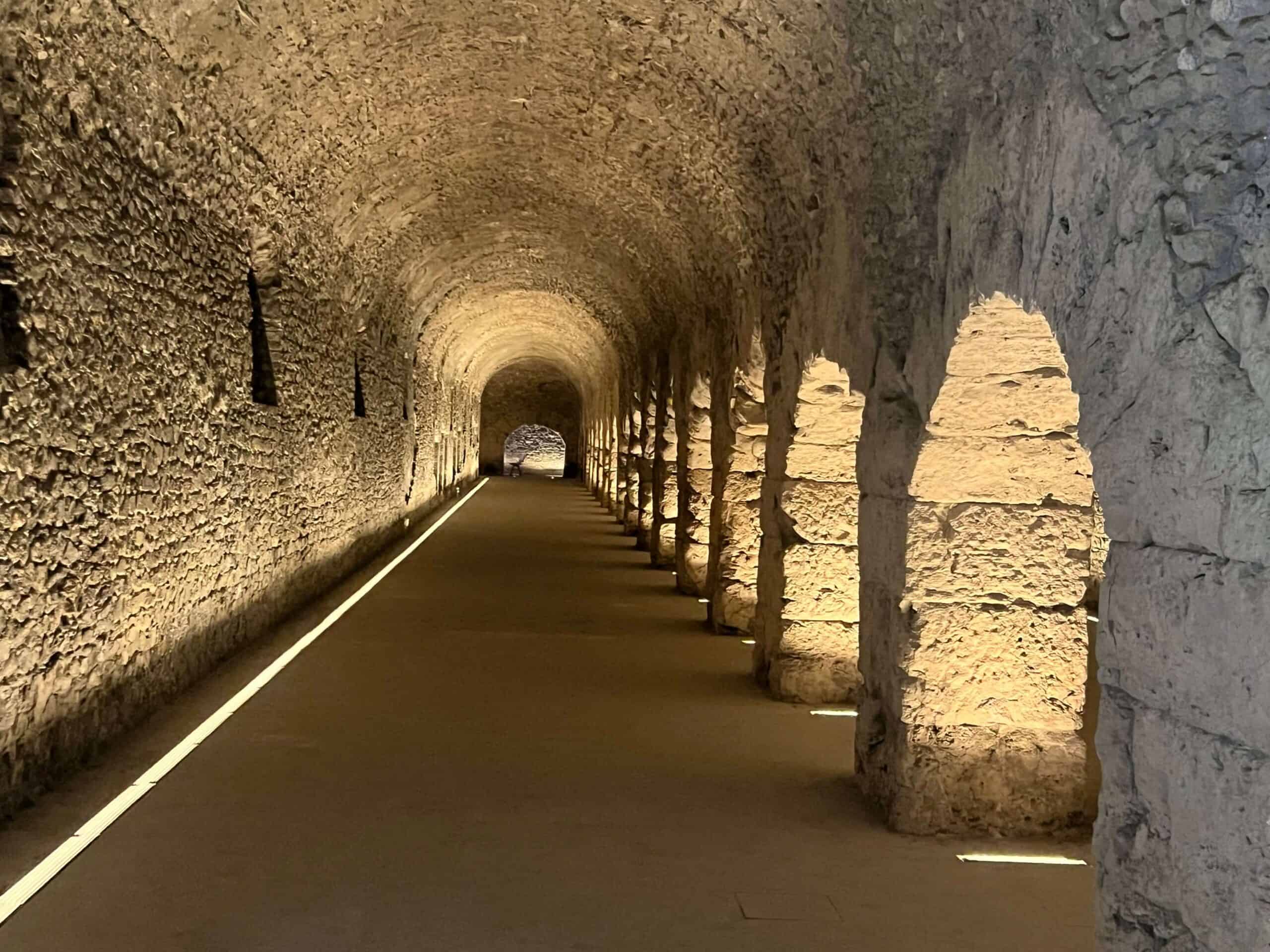
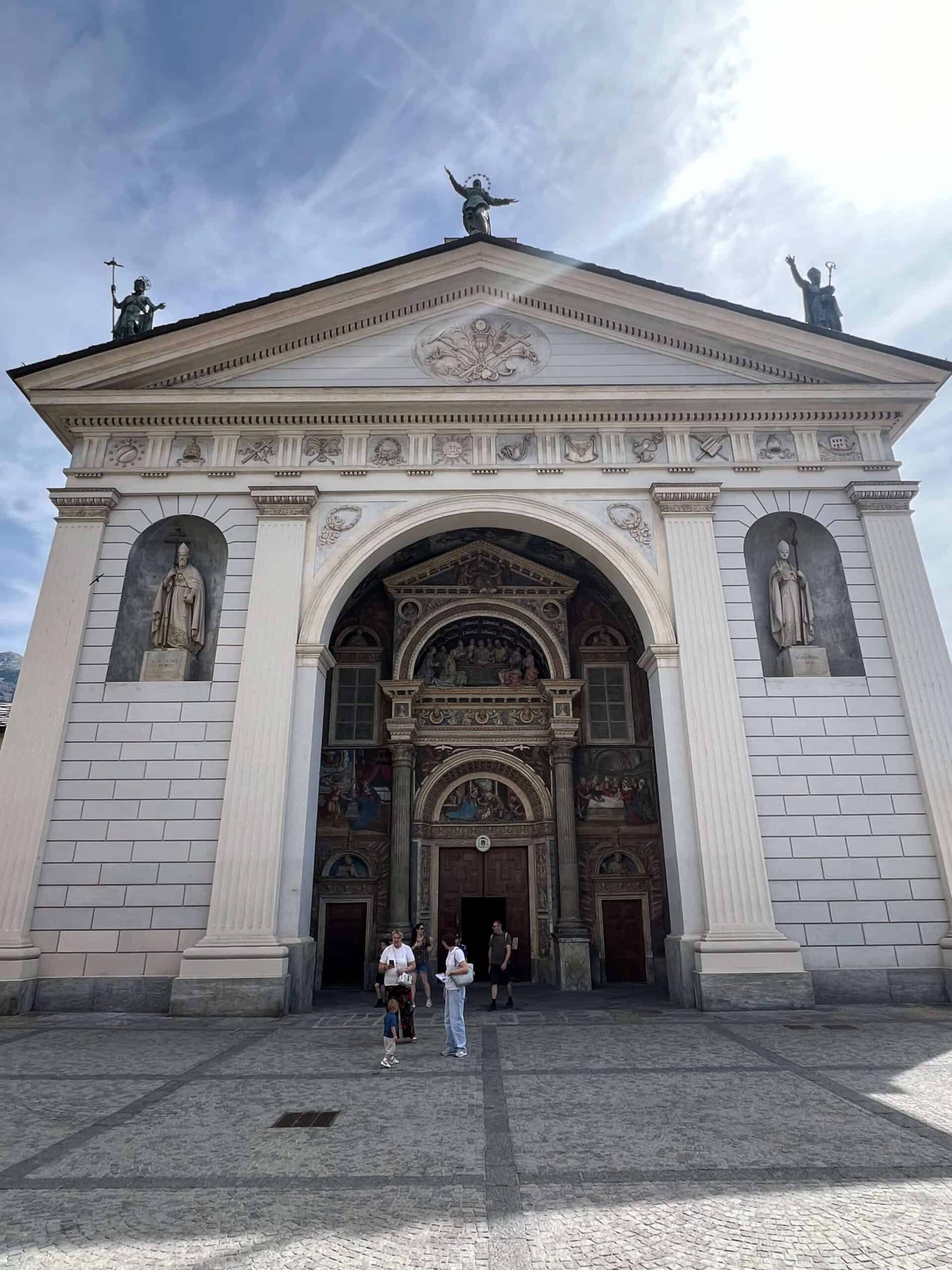
Next to the cathedral you’ll find the Roman Cryptoporticus. It’s quite a quick visit, and there’s not a huge amount to see, but if you have the combined archaeological ticket, it’s worth stepping inside. The cool underground passageways were a welcome escape from the summer heat.
Coffee Break
By now, it was time for a second breakfast, so I stopped at Paola Griffa al Caffè Nazionale in Piazza Chanoux for coffee and a pastry while watching the world go by.
Archaeological Museum
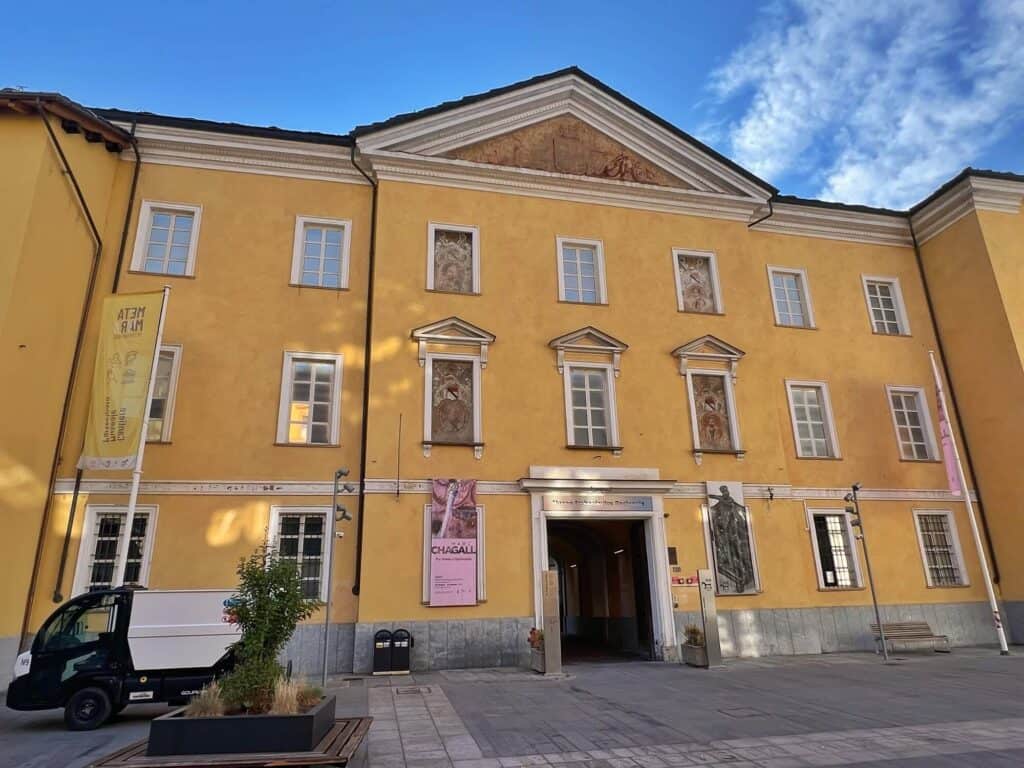
Just a short walk away is the Archaeological Museum, which explains the history of the Aosta Valley from prehistoric times through to the Roman period.
Exploring the Historic Centre
The joy of Aosta is simply wandering its streets.
As I explored, I passed:
● Porta Praetoria
● The Arch of Augustus
● The Roman Bridge
● The Collegiate Church of Saint Ursus (Sant’Orso)
By lunchtime, the heat had intensified, so after eating, I embraced the Italian lifestyle and escaped the afternoon heat with a well-earned siesta.
I didn’t have time to visit the Saint-Martin-de-Corléans Megalithic Area, but apparently it’s worth adding if you’re staying longer or have a particular interest in prehistoric archaeology.
Evening
Once things had cooled down, I headed back into the old town.
The pedestrian streets have a lovely atmosphere in the evening, when locals gather for aperitivo before dinner.
For my first evening meal, I chose Trattoria Praetoria, located beside Porta Praetoria.
I ordered a traditional Valle d’Aosta dish of slow-cooked beef stew served with creamy polenta.
I was so hungry after travelling that I completely forgot to photograph it, but it was exactly the comforting mountain food I needed after arriving from Switzerland.
What To Eat In Aosta?
The Aosta Valley has its own distinctive mountain cuisine, influenced by both Italy and the nearby countries of France and Switzerland.
While you’re there, be sure to try Fontina DOP, the region’s famous creamy cheese, often served melted in dishes such as fonduta or polenta concia. Other local favourites include carbonada, a slow-cooked beef stew made with red wine; seuppa à la valpellinentze, a hearty bread, cabbage, and Fontina soup; and motzetta, air-dried cured meat.
To drink, sample a glass of Torrette wine, produced from local vineyards, and round off your meal with a small glass of the herbal liqueur Génépy, a traditional Alpine digestif.
Day 2: A Day in Pila
After breakfast in Piazza Chanoux, I walked to the gondola station for a day in the mountains.
The gondola station is only about a 10-minute walk from Piazza Chanoux, so you can be in the mountains less than an hour after leaving the centre of Aosta.
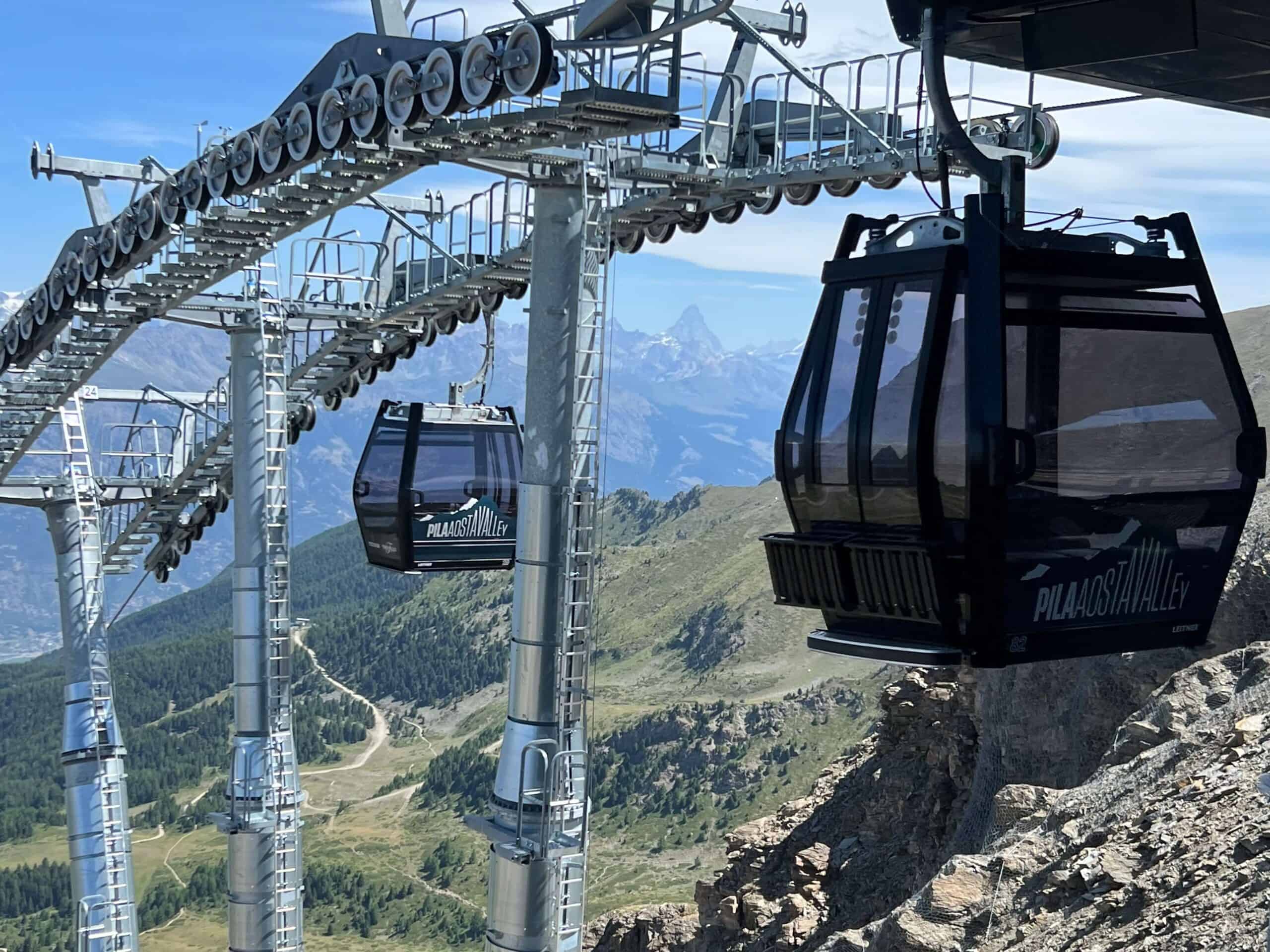
The journey is simple. First, take the enclosed Aosta–Pila gondola before transferring directly onto the Stella gondola, which climbs to an altitude of 2,723 metres.
The views from the panoramic terraces are spectacular, stretching across the Alps towards Mont Blanc and, on a clear day, the Matterhorn.
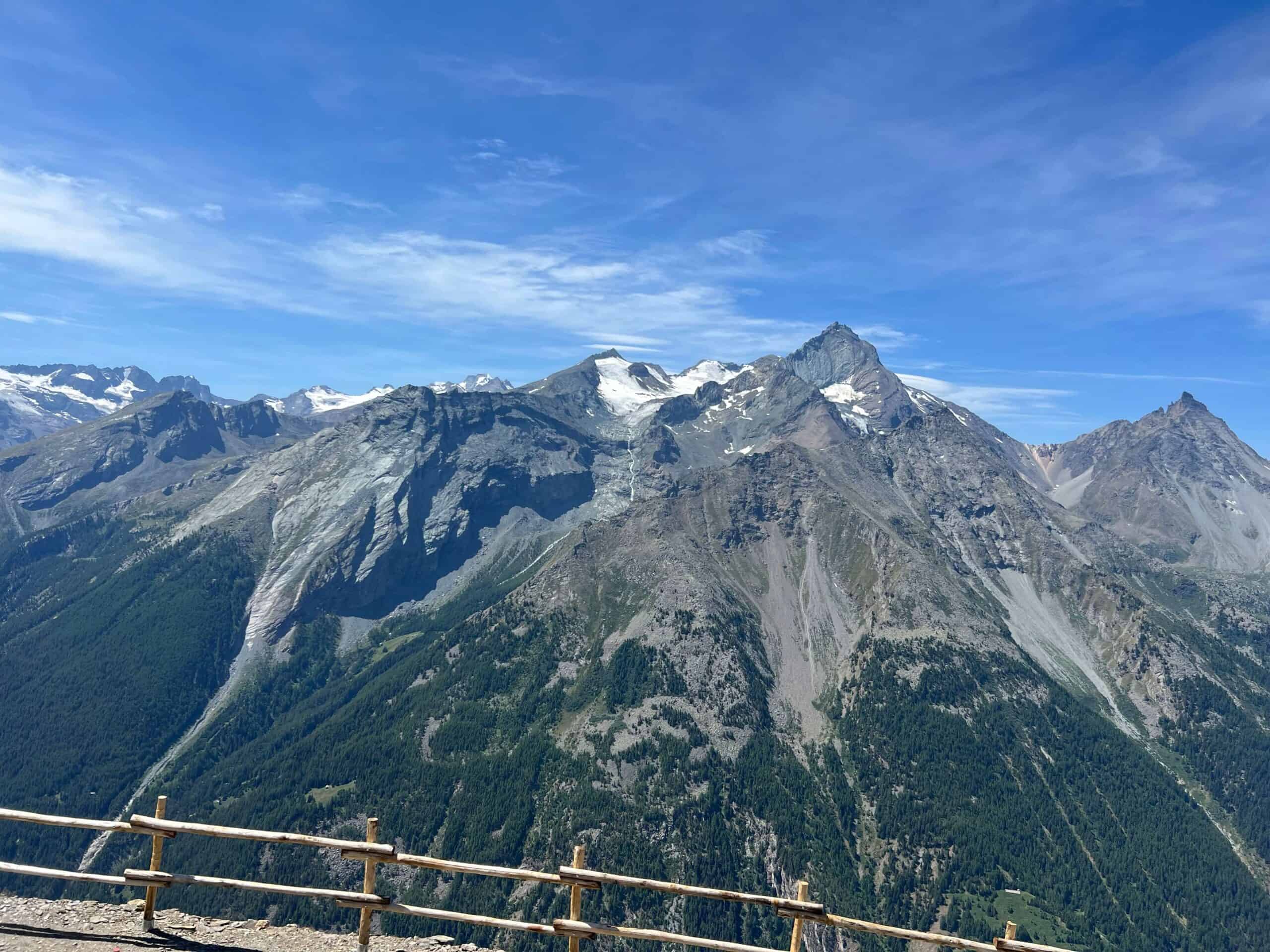
I stopped for a coffee at the Stella di Pila Panoramic Bistrot while soaking up the scenery through its huge picture windows.
Even in the middle of summer, the wind at the summit was surprisingly chilly, so I was glad I’d brought a fleece.
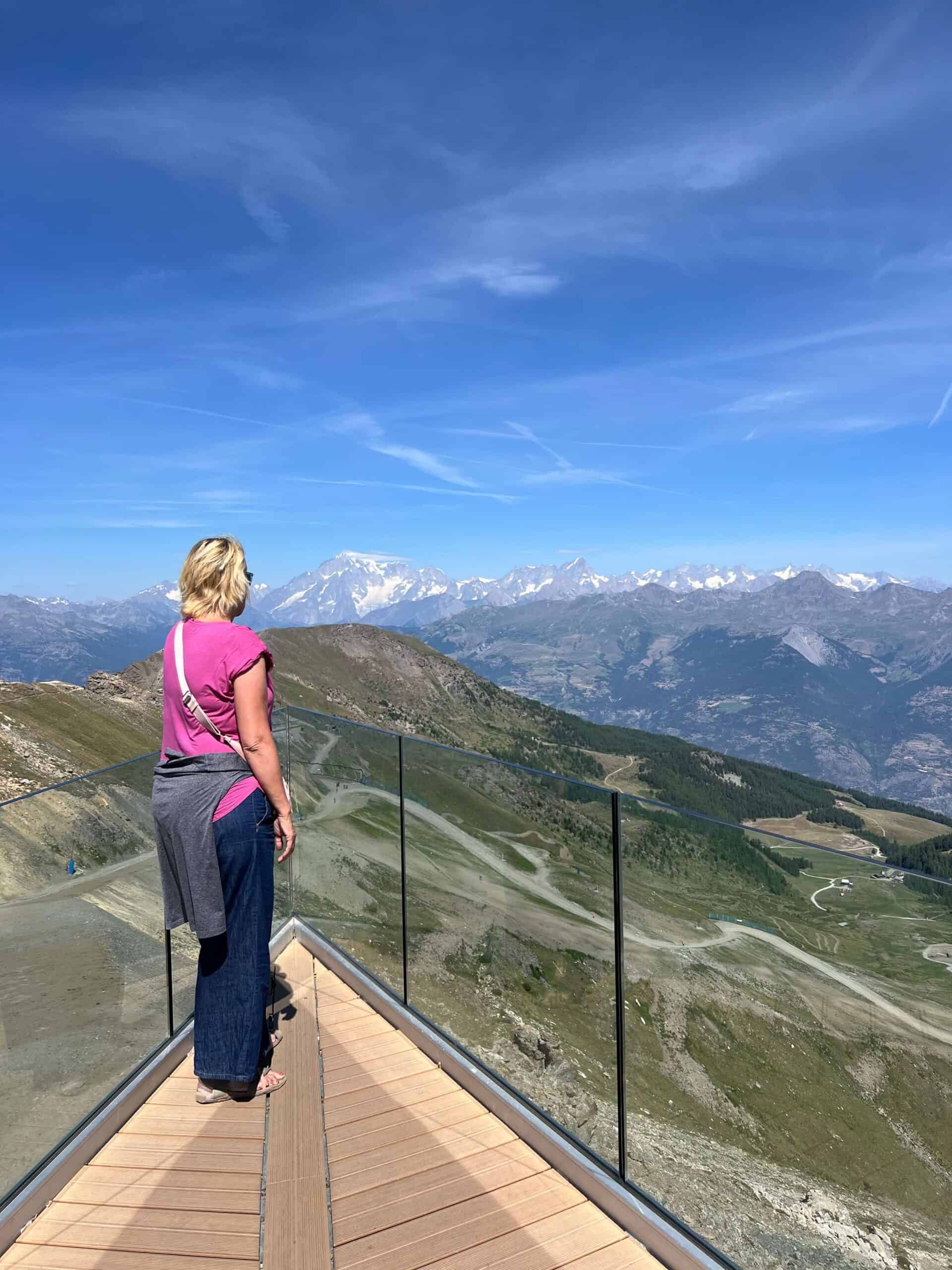
An Unexpected Change of Plan
The journey back down became rather windy, and I’ll admit I get a little nervous when cable cars start swaying.
When ours stopped moving for a short while, I decided I’d had enough excitement for one day and got off at the next station instead!
Fortunately, it wasn’t far to walk into Pila, where I enjoyed lunch at Yeti Restaurant before heading onto one of the easy walking trails.
My original plan had been to walk all the way to the Hermitage of San Grato. It’s only a half-hour walk each way and suitable for all levels of fitness. Unfortunately, part of the forest trail was closed because trees were being cut down, so I couldn’t complete the route.
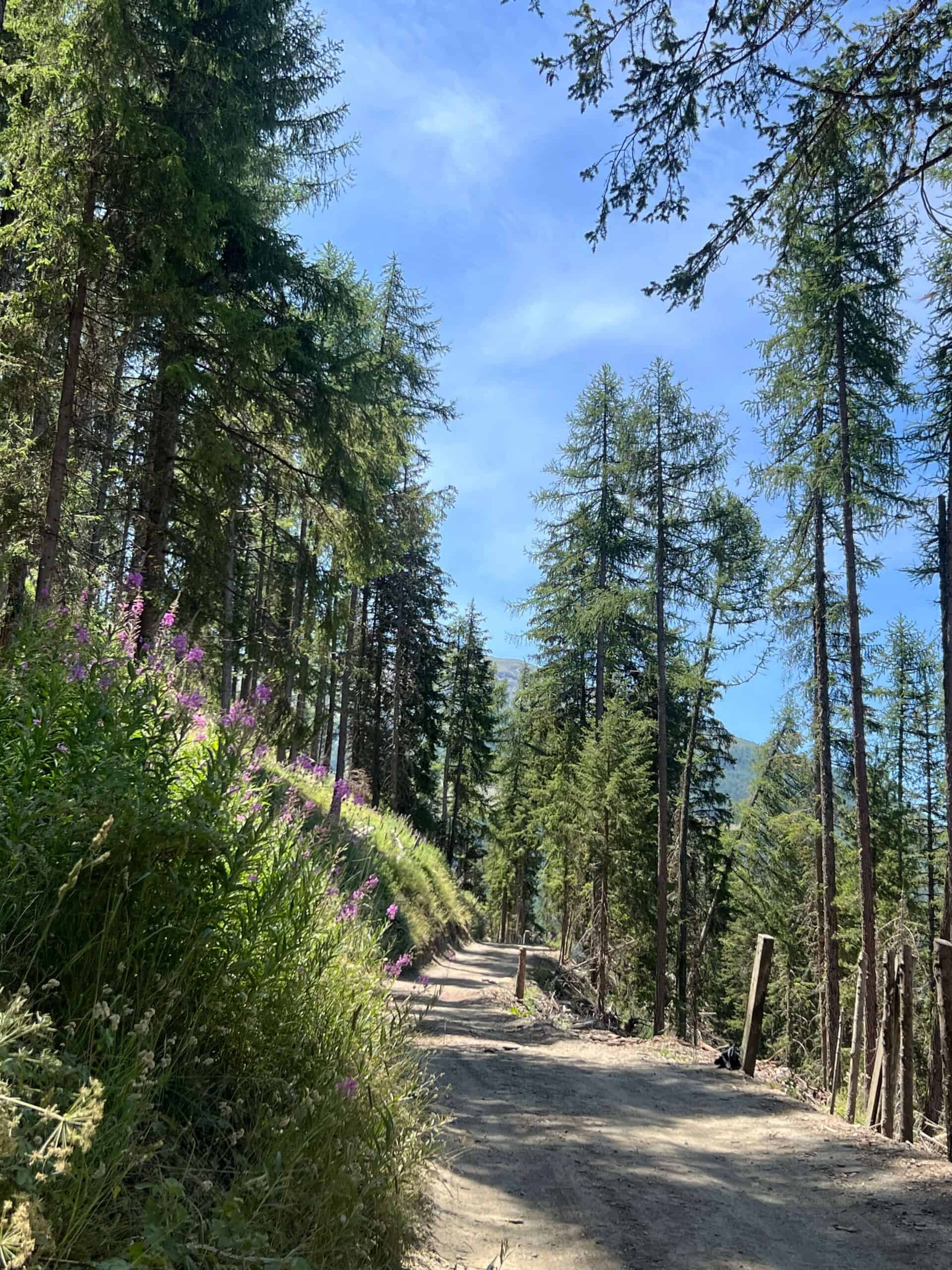
That said, the section I did manage was peaceful and scenic, winding through woodland with lovely mountain views, and I still thoroughly enjoyed the afternoon.
Later, I returned to Aosta by gondola. The second half thankfully was a more gentle journey 🙂
Dinner
For my final evening before travelling home, I had dinner at La Grenette, a lovely restaurant in the heart of the old town and the perfect place to end my stay.
Another Option For A Great Day Trip: Courmayeur
If you have an extra day—or you’re returning to Aosta as I hope to—you might prefer to take the bus to Courmayeur instead.
From there, you can ride the Skyway Monte Bianco, which takes visitors high into the Mont Blanc massif for breathtaking glacier views.
Afterwards, spend some time wandering Courmayeur’s attractive centre before returning to Aosta.
I decided to save that experience for another visit, giving me the perfect excuse to come back.
Is Two Days in Aosta Enough?
Absolutely.
Two days give you enough time to explore Aosta’s fascinating Roman history, enjoy its attractive old town and experience the surrounding mountains.
For me, Pila was the ideal choice. It offered stunning scenery and gentle walking without the higher cost of the Skyway Monte Bianco, showing that you don’t have to spend a fortune to enjoy the beauty of the Aosta Valley.
I arrived expecting a pleasant stopover before heading home and left wishing I’d stayed just a little longer.