
Last Updated on June 25, 2026 by Sarah Wilson
After Togoville, I travelled on to Ouidah — a place known both for its deep spiritual traditions and its painful history. It turned out to be one of the most fascinating days of my trip, with moments I absolutely did not expect, such as a python around my neck, which definitely wasn’t on my itinerary.
But before diving in, it’s worth explaining something important.
What Voodoo (Vodun) Actually Is And Why It’s Not What Hollywood Shows
Since both Togo and Benin are centres of Vodun (often written as “Voodoo” in the West), Ouidah is the perfect place to clear up the confusion.
Vodun is NOT:
- dolls with pins
- casting curses
- Hollywood “black magic”
Those are Western inventions and have very little to do with the real belief system.
Vodun is:
- an organised, ancestral West African religion
- based on respect for spirits, nature, ancestors, and community
- practised openly and peacefully
- deeply woven into daily life
It’s not spooky or sinister. It’s spiritual, symbolic, and community-centred. In places like Ouidah, Vodun isn’t a performance — it’s simply part of life.
The Python Temple: Fascinating… But I Still Didn’t Want One on Me
I did want to visit the Temple of Pythons — it’s one of Ouidah’s most iconic Vodun sites — but I definitely did not want or plan on having a python draped around my neck.
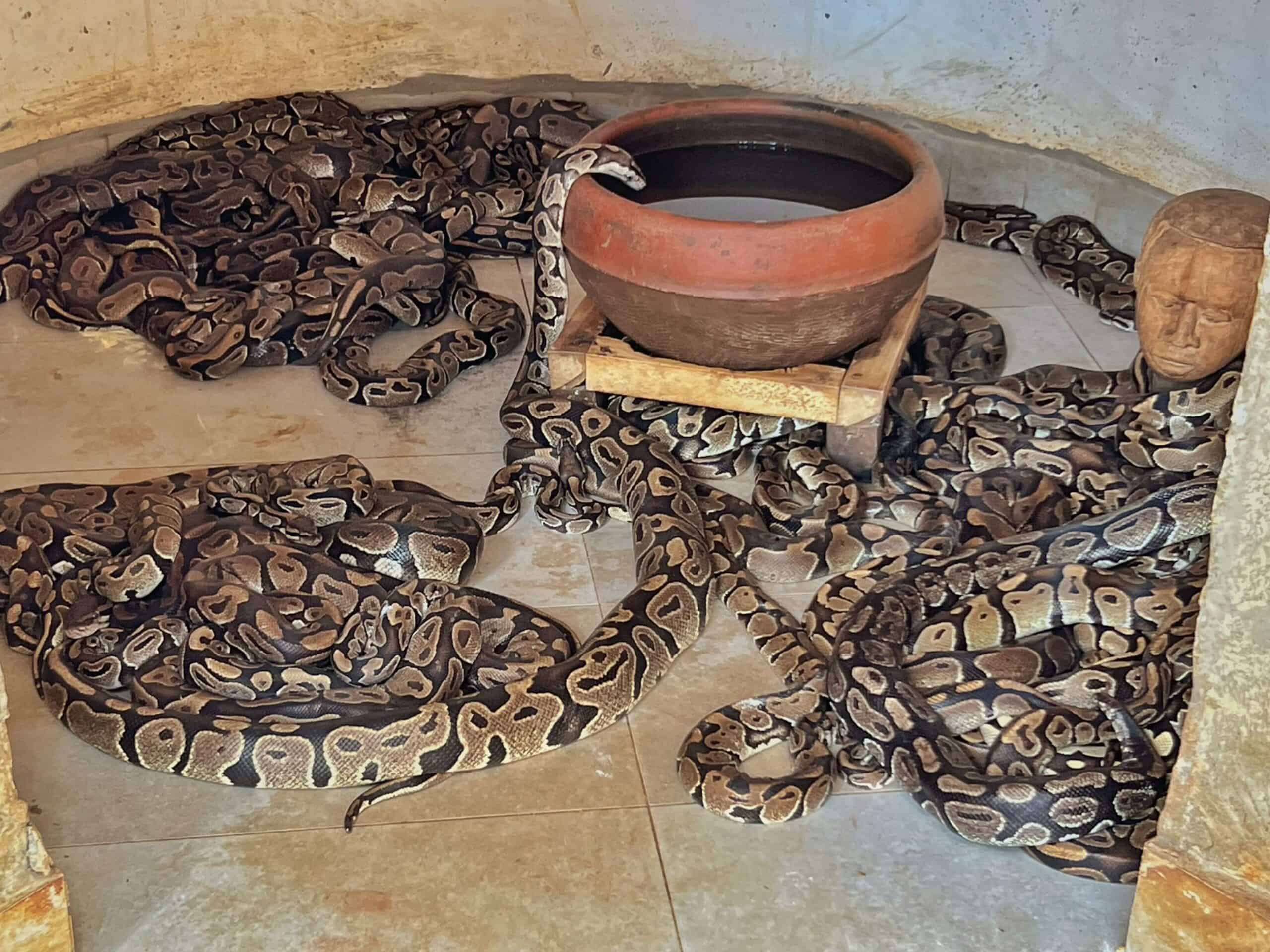
Inside the temple is a small chamber where around 50 royal pythons live peacefully. They are considered sacred in Vodun, symbolising protection, healing, and renewal. Once a month, they are released into the town to hunt naturally, before eventually finding their way back to the temple.
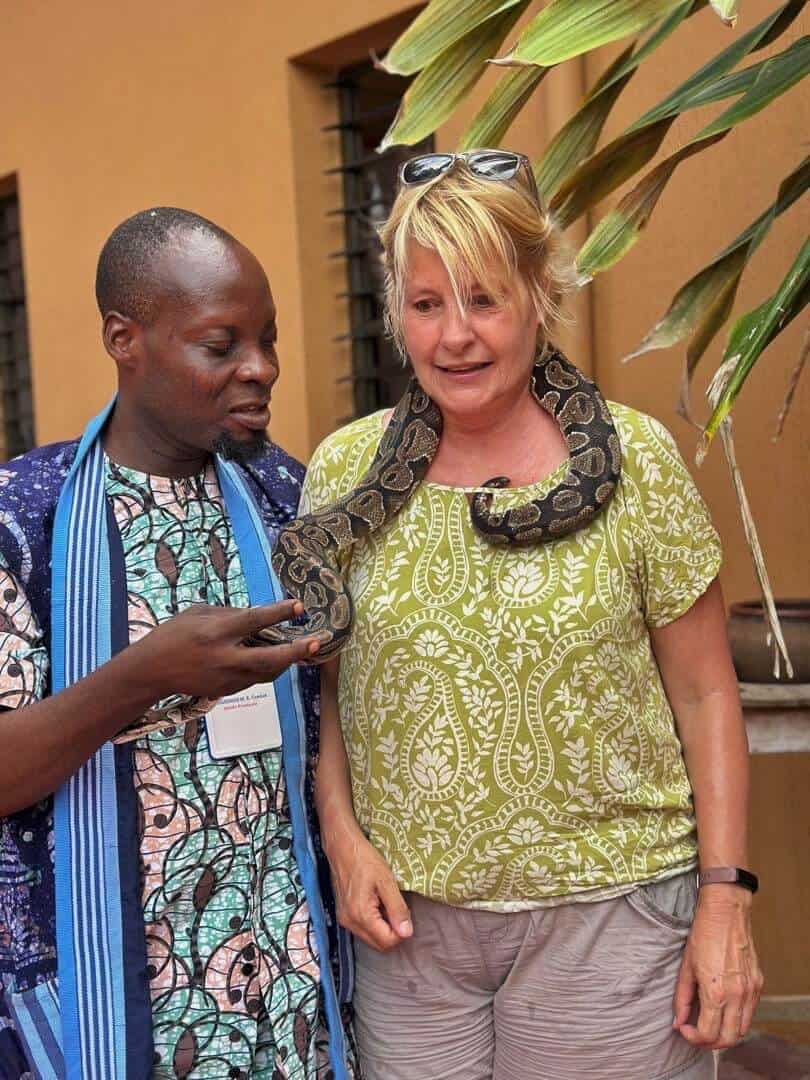
Even knowing all that, I still wasn’t keen on wearing one. But somehow the moment took over, and before I knew it, a calm, cool python was placed gently on my shoulders. In my photo, I look absolutely terrified — which is probably the most accurate reflection of how I felt in that moment.
Is It Safe To Interact With The Pythons?
For most visitors, yes. The pythons at the temple are generally considered harmless and are accustomed to human interaction. During my visit, handlers carefully supervised all contact, and visitors were able to hold the snakes and take photos without incident.
That said, a few common-sense precautions are worth keeping in mind:
Always follow the instructions of the temple guides and handlers.
Let the handlers place the snake on you rather than attempting to pick one up yourself.
Avoid sudden movements that could startle the animal.
If you’re uncomfortable around snakes, there’s no pressure to hold one—you can still observe and learn about the temple’s traditions. In reality, if you prefer not to interact with the pythons, it helps to be clear, polite, but firm with the guides. Try saying, “No, thank you, I would rather just watch,” or “I’m not comfortable holding the snake, but I would like to learn about the temple.”
If someone insists, you can gently repeat your preference or take a small step back to show you mean it. Most staff appreciate direct honesty and will respect your boundaries if you are clear. I said no, but somehow a python still ended up on me—so trust your instincts, and don’t hesitate to assert yourself more than I did, if needed.
How To Visit The Python Temple :
I visited as part of my tour with Undiscovered Destinations, but for those visiting independently, simply arrive at the entrance opposite the Ouidah Basilica. No advance booking is required.
Cost: Entry is approximately 2,000 CFA (about $3.30 USD) per person. This usually includes permission to take photos and the opportunity to hold the temple’s harmless pythons.
Guides: Local guides are available at the entrance. Many are knowledgeable about Vodun traditions and will explain the temple’s history and significance while ensuring visitors can safely interact with the snakes.
Opening hours: Daily from 8:00 AM to 7:00 PM. It’s best to avoid Sunday mornings, as certain areas may be reserved for worship and religious ceremonies.
The Sacred Forest of Kpassè
Next, we visited the Sacred Forest of Kpassè, a quiet and important spiritual site in Ouidah. It’s said to be the resting place of King Kpassè, and the forest contains shrines and statues representing Vodun deities.
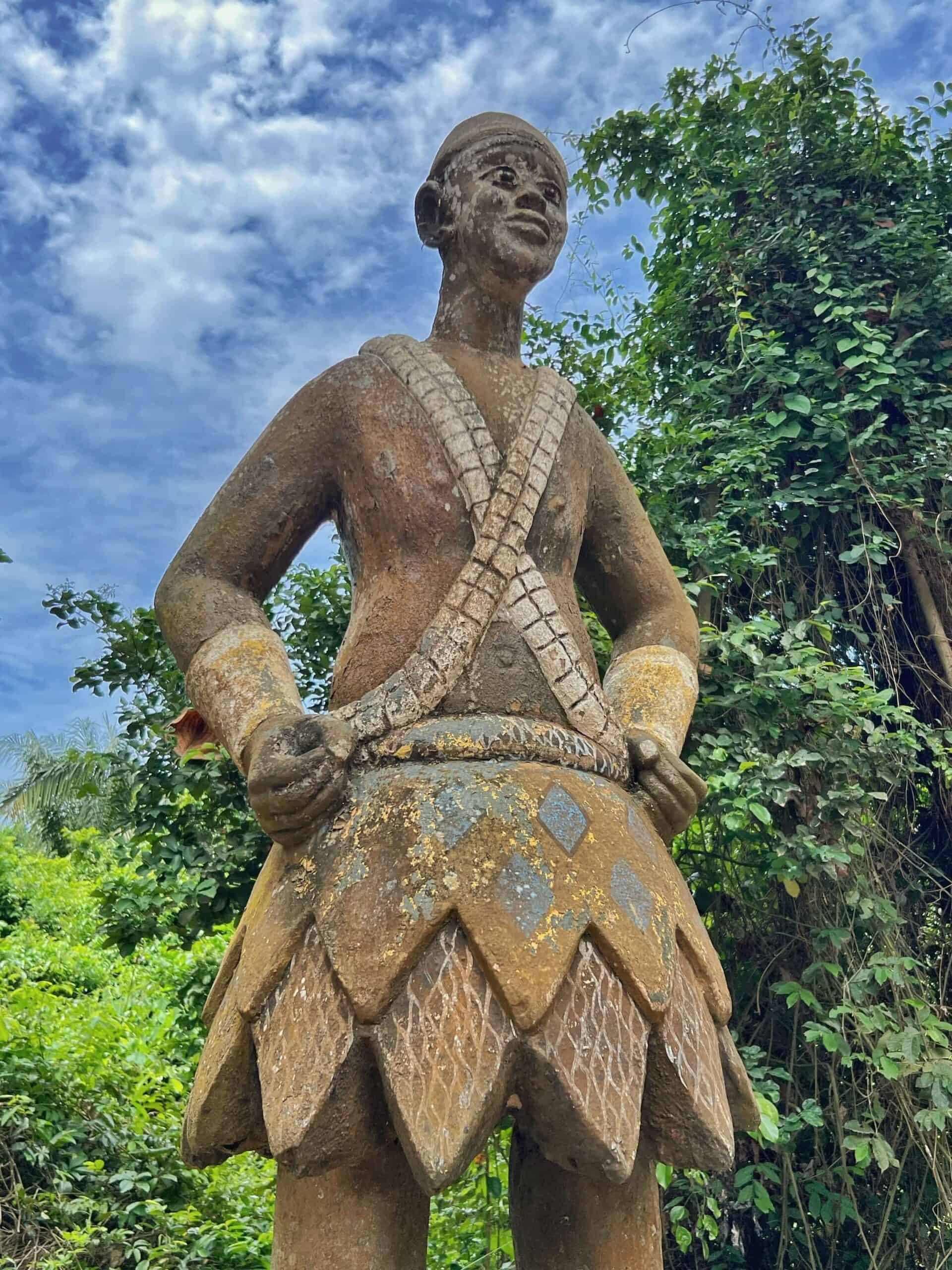
You’ll also notice trees wrapped in cloth, linked to local beliefs and rituals. It’s not a staged attraction; this is a place that still holds meaning for the community, and it’s treated with respect. When visiting, dress modestly and avoid loud behaviour. Always ask before taking photos and never touch the shrines or ritual objects. A little extra respect goes a long way here.
How to visit: Located near Ouidah, the forest can be reached on foot or by local transport. Many visitors combine it with a visit to the Python Temple.
Cost: A modest entrance fee applies, typically between 1,000 and 2,000 CFA.
Guides: While advance booking isn’t necessary, visiting with an official guide is highly recommended. The forest contains numerous Vodun shrines, statues, and ceremonial sites whose cultural and spiritual significance can only be fully appreciated with knowledgeable guidance.
The Slave Route and the Door of No Return
Ouidah was a major hub of the transatlantic slave trade, and parts of that history remain visible today. Walking the historic route gives you a strong sense of the scale and sadness of what happened here.

At the coast stands the Door of No Return — a stark, symbolic arch marking the final point where enslaved people were forced onto ships. It’s one of those places where you naturally pause. You can feel the weight of history in the air.
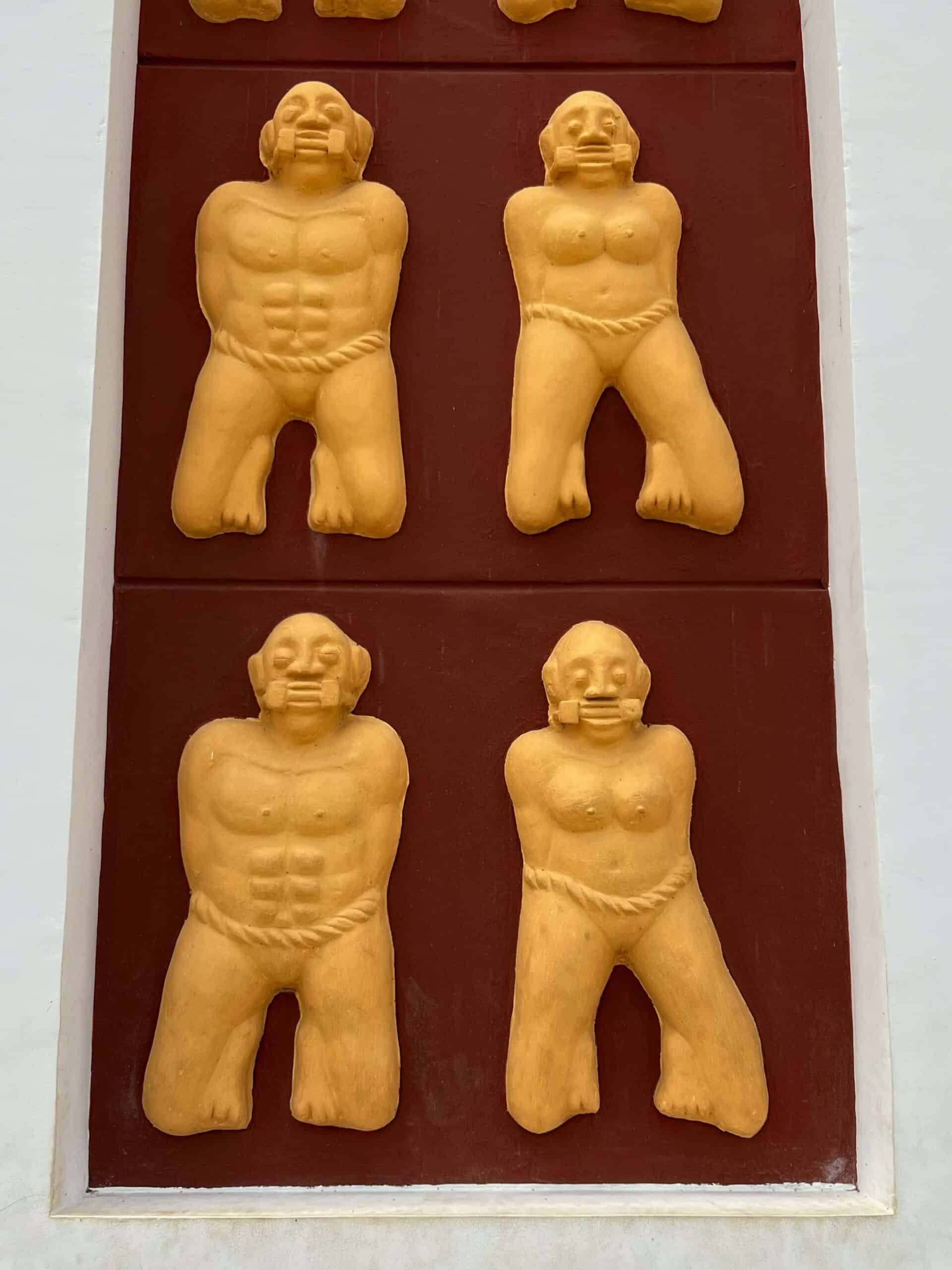
There are active plans to build a new slave museum in Ouidah to preserve and present this history more fully. Construction has already begun, and once completed, it will provide much-needed context and remembrance.
A Lighter Moment: Salt Production and Lunch
After the emotional weight of the slave memorial, the next stop was thankfully much lighter: a traditional salt-producing area. The method here is quite different from typical sea salt production. Instead of simply evaporating seawater, they use brackish water, which is boiled down to produce salt that naturally contains higher levels of iodine.
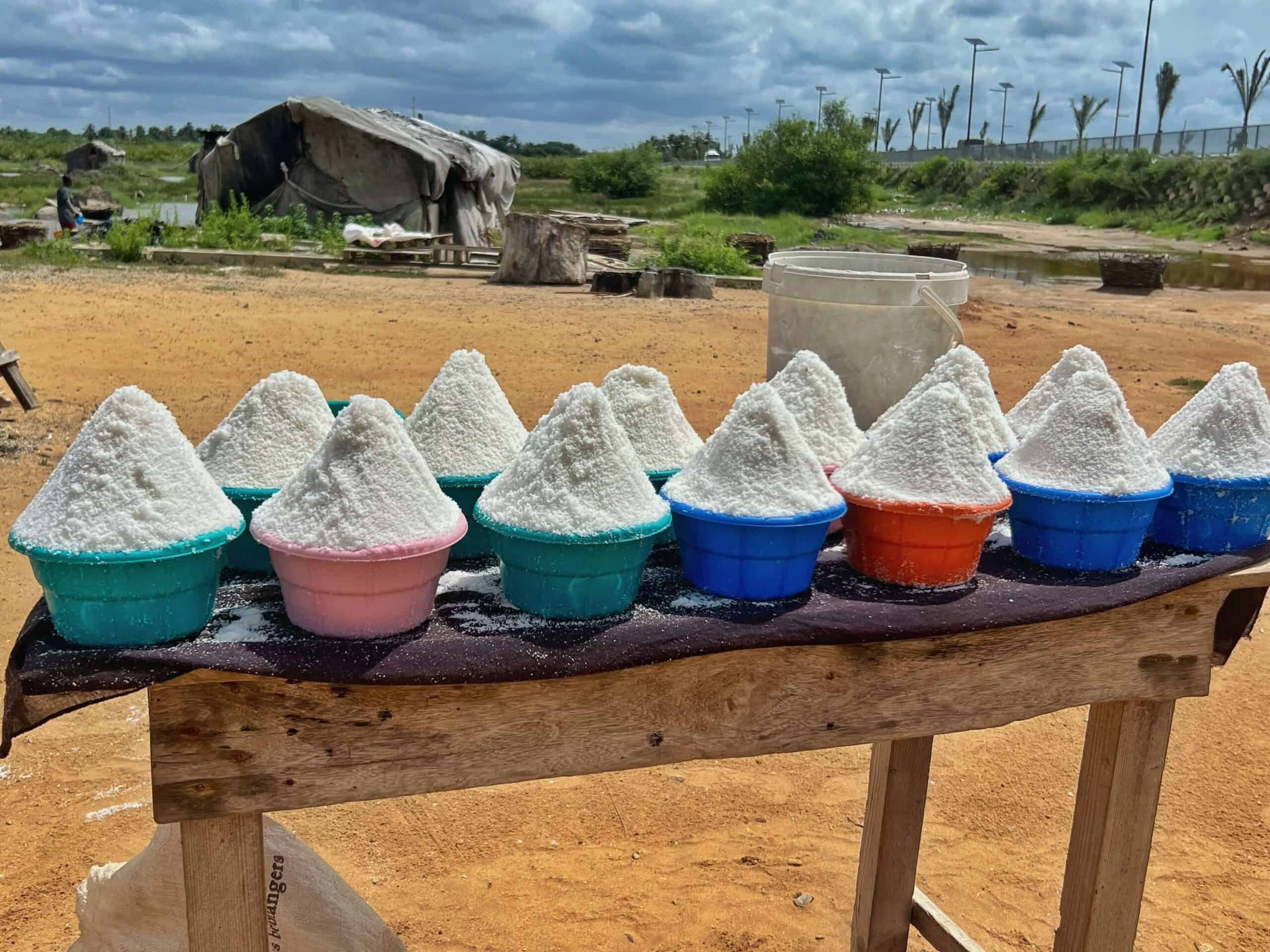
It’s a slow, hands-on process that hasn’t changed much over time, and the people working there clearly take pride in keeping the tradition going.
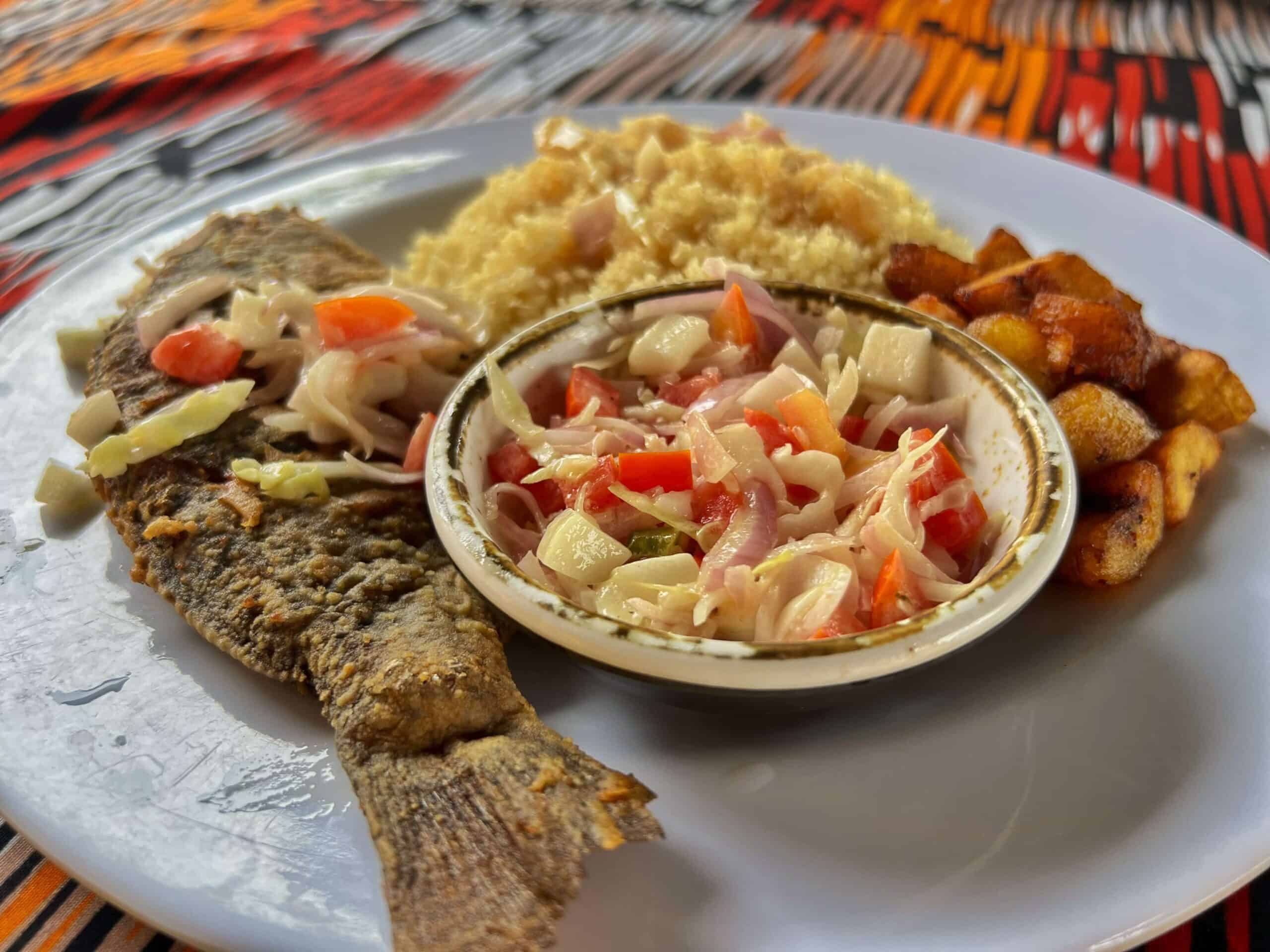
Lunch was Attiéké — cassava with grilled fish and plantain. It’s traditionally eaten with your hands, which makes it wonderfully messy and somehow tastes even better.
Customs and Dress Codes at Spiritual Sites in Ouidah
Ouidah is one of the spiritual centres of Vodun (Voodoo) culture in Benin, and visitors should approach its sacred sites with the same respect they would show at any place of worship.
Dress modestly. Lightweight clothing that covers the shoulders and knees is generally appropriate. While there is no strict dress code for most visitors, overly revealing clothing may be considered disrespectful, particularly at active religious sites.
Always ask before taking photographs. Photography is usually permitted at the Python Temple, but restrictions may apply during ceremonies or at certain shrines. Your guide can advise on what is acceptable and whether any additional fees apply.
Respect ongoing ceremonies. If you encounter worshippers, rituals, or offerings, observe quietly and follow your guide’s instructions. Some areas may be temporarily off-limits to non-participants.
Do not touch sacred objects unless invited. Many statues, altars, shrines, and ritual items have religious significance. It’s best to admire them without touching unless a guide specifically indicates otherwise.
Follow your guide’s lead. At places such as the Sacred Forest of Kpassè, guides help visitors understand local customs and identify areas that may be restricted or especially sacred.
Be mindful of offerings and ritual spaces. You may see food, drinks, cloth, candles, or other items left as offerings. Avoid moving, photographing closely, or disturbing these objects.
Most visitors find the atmosphere welcoming and educational. Showing curiosity, respect, and sensitivity to local beliefs will go a long way toward ensuring a positive experience for both visitors and the communities that maintain these important spiritual sites.
On to Cotonou
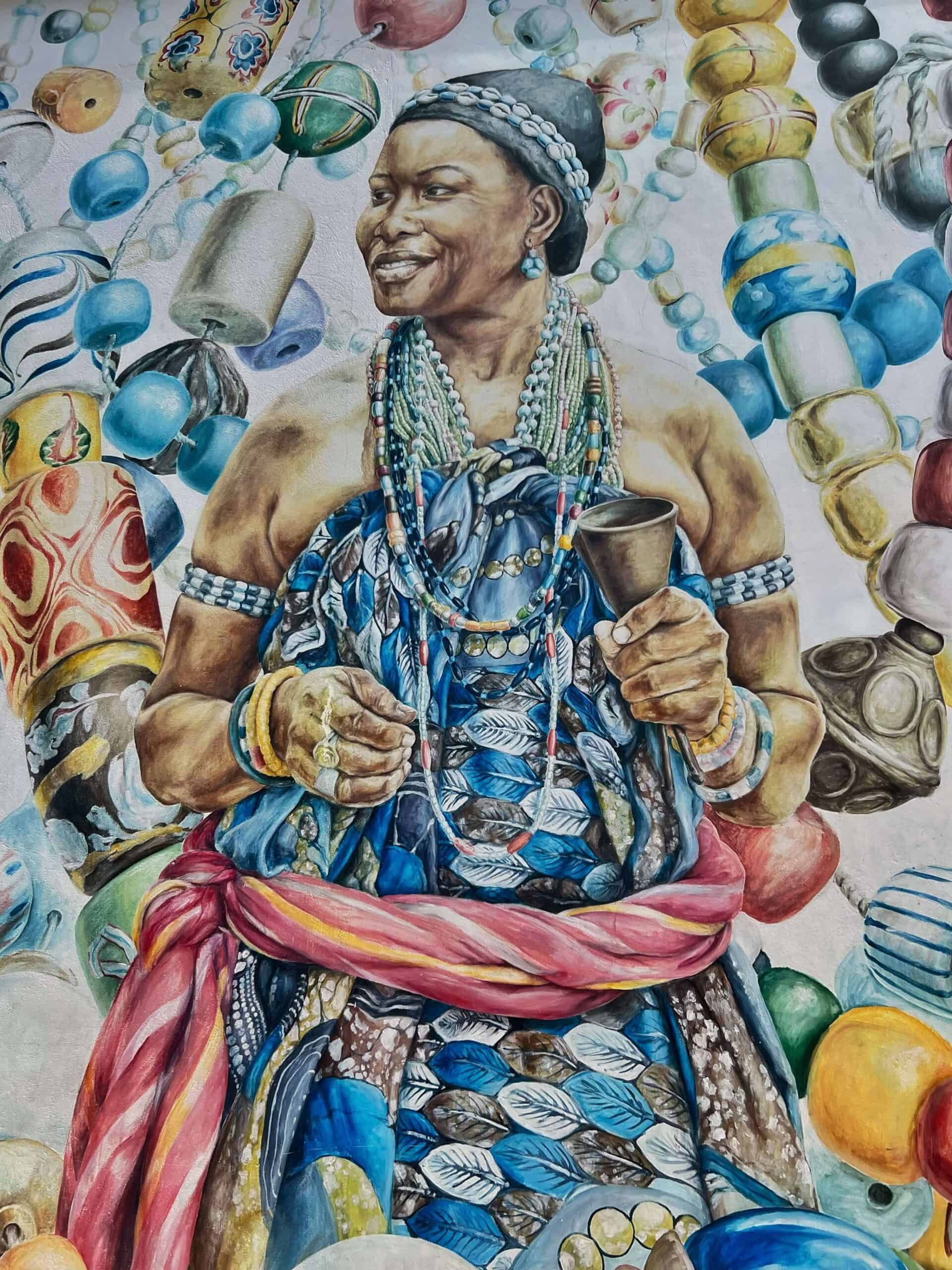
From Ouidah, we drove on to Cotonou. One of the highlights was the Amazon Statue — a 30-metre monument representing the legendary women warriors of the former Kingdom of Dahomey. It’s huge, elegant, and impossible to miss. Nearby, a colourful mural by the port added a bright burst of street art to the end of the day.
Best Time to Visit Ouidah for Festivals and Cultural Events
If your goal is to experience Ouidah’s rich cultural and spiritual traditions, January is by far the most rewarding time to visit.
Vodun Days (formerly Voodoo Festival) – January 9–10
Held annually in Ouidah, this is Benin’s most famous cultural celebration. The festival brings together Vodun practitioners, musicians, dancers, and visitors from around the world.
Expect colourful ceremonies, traditional drumming, masked performances, processions, and rituals that showcase the country’s spiritual heritage. The main celebrations take place around the beachfront and sacred sites throughout the town.
January to February
The weeks surrounding the festival often feature additional cultural events, performances, and an especially vibrant atmosphere as visitors and pilgrims arrive from across West Africa and the African diaspora.
November to February
More generally, this is an excellent period to visit. The weather is typically drier and less humid, making it more comfortable for exploring sites such as the Python Temple, the Sacred Forest of Kpassè, and the Route of the Slaves.
March to July and September to October
These months can bring heavier rains, which may make sightseeing less pleasant, although you’ll encounter fewer tourists and a quieter atmosphere. I visited at the end of April and didn’t experience much rain but I loved not seeing many other tourists.
Travel tip: If you’re planning to visit during the January Vodun celebrations, book accommodation well in advance. Ouidah is relatively small, and hotels can fill quickly during festival week.
I visited outside the festival period and still found the cultural sites fascinating, but if you’re particularly interested in Vodun traditions, January offers a unique opportunity to see Ouidah at its most vibrant and spiritually significant.
So, Is Ouidah Worth Visiting?
Absolutely — especially if you want a place that stays with you.
Ouidah is raw, real, and layered with meaning — not a destination for beaches or cafés, but for understanding tradition, spirituality, and history.
You’ll find:
- meaningful spiritual sites
- one of the clearest, most respectful ways to understand Vodun
- an important connection to the transatlantic slave trade
- small, everyday experiences that round out the day
And yes… sometimes you’ll end up doing things you definitely didn’t plan on — which is part of the story.
For More Posts On Africa, Check These Out.
Planning On Visiting Madagascar?
Best National Parks in Botswana
Best Things To Do In Rabat Morocco
A Day Trip To Victoria Falls From Botswana
Kolmanskop: A Ghost Town In Namibia’s Desert
One Day in Chefchaouen- Morocco’s Blue City
Visit Atlas Studios – The Hollywood of Morocco
Amazing Pictures of the Temple of Kom Ombo, Egypt
Temple of Isis at Philae, Egypt


